The story
In 2017 a team led by Patrick McGovern reported tartaric acid and other grape-related acids in jar sherds from Gadachrili Gora and Shulaveris Gora, two Neolithic villages about 50 km south of Tbilisi. In PNAS they called it the earliest biomolecular evidence for grape wine in the Near East, dated to about 6,000–5,800 BC.1,2
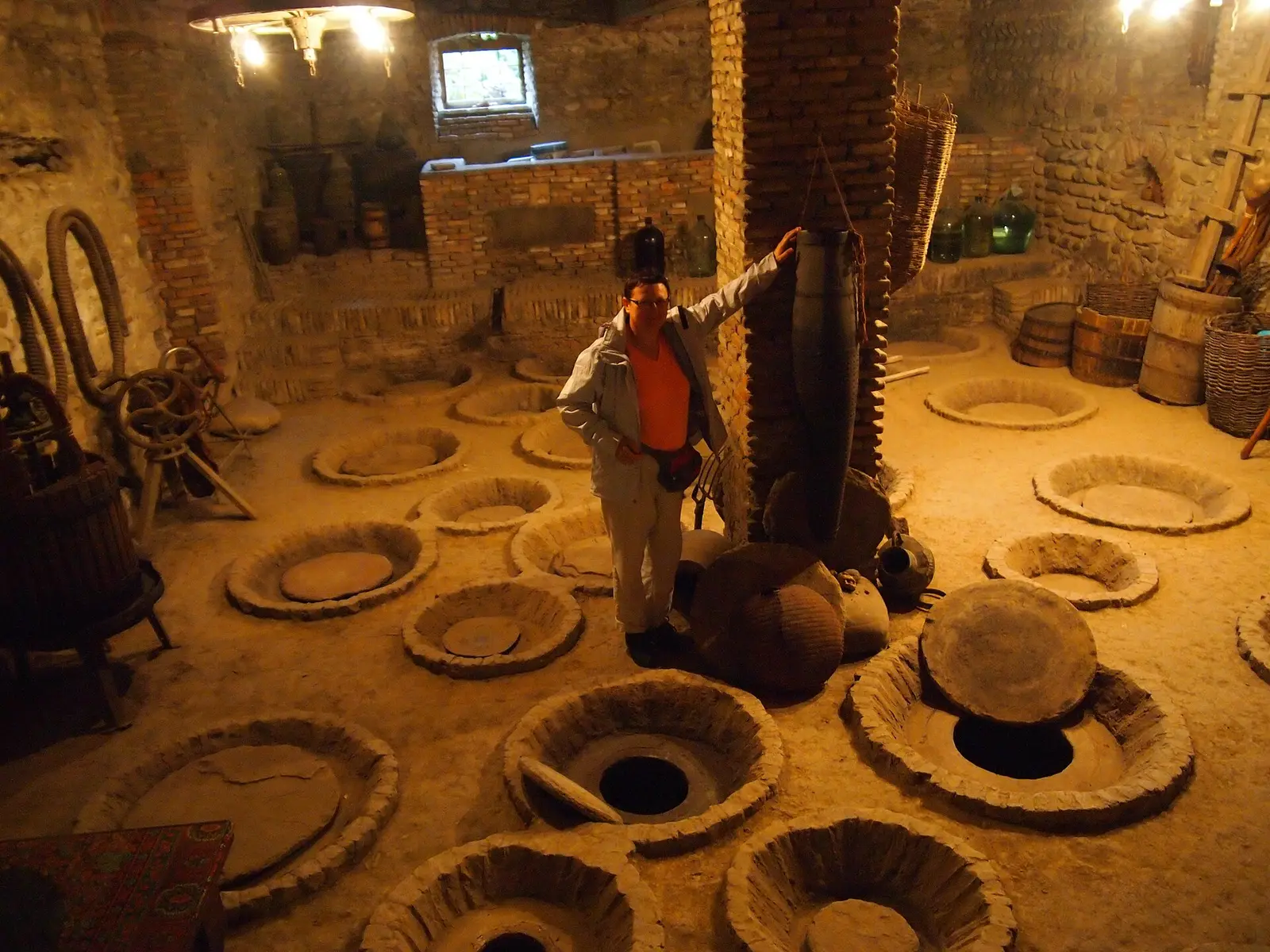
Some of the jars held over 300 liters and stood nearly 1 meter tall, and clay blobs around their mouths have been read as grape clusters. The authors call their result a working hypothesis and say it is not yet clear whether the grapes were wild or domesticated.1
No tree resin turned up in the residues, unlike the resinated jars from Hajji Firuz Tepe in Iran, which held the previous record at about 5,400–5,000 BC. McGovern told National Geographic this may point to early experiments with winemaking.1,2
Sources differ on when the qvevri itself appeared. The PNAS authors date the earliest archaeological evidence for qvevri winemaking in Georgia to the Iron Age, while the National Wine Agency dates the familiar egg-shaped qvevri to about the 3rd millennium BC.1,3
After the Soviet invasion of 1921, vineyards were nationalized and many family grape varieties were replaced with a few, for mass-market wine. A state body called Samtrest took control of Georgian viticulture and winemaking in 1929.4,5,6
Qvevri winemaking was sidelined commercially for about seven decades, but farmers kept it alive at home, even under the 'dry' laws of the 1980s. From 1990 the church began restoring monastery cellars, and the Alaverdi cellar reopened in 2006.4,6
In 2006 Russia banned imports of Georgian wine, and producers turned to new markets, where qvevri became a selling point. Output fell to 22 million liters in 2009 and had quadrupled by 2014; Russia lifted the ban in 2013.4,5
Georgia's tourism board says 525 grape varieties are unique to the country. In Georgian tradition, God created the vine before people.7
Recognition
In 2013 UNESCO inscribed the Ancient Georgian traditional Qvevri wine-making method on its Representative List of the Intangible Cultural Heritage of Humanity. In 2021 Georgia registered 'Qvevri' as its first non-agricultural geographical indication.15,16
Signature styles
- Qvevri amber Rkatsiteli (full-bodied orange, crisp): Rkatsiteli fermented in qvevri with its skins turns dark golden to tea-colored. The National Wine Agency calls it more powerful and moderately tannic, with crisp acidity and flavors of honey, dried orange peel, spice and apricot.3,9,10
- Saperavi dry red (red, crisp, dry): Dry Saperavi is inky and often opaque, sappy and tannic with considerable acidity, at 12% to 14% alcohol, with dark berry, licorice and spice aromas. Serious examples can age for ten years or more; Mukuzani and Napareuli are dry Saperavi appellations.8
- Mtsvane Kakhuri dry white (Manavi) (white, crisp, dry): Manavi is a dry white made only from Mtsvane Kakhuri, a grape that keeps high acidity. In the European style the young wine is greenish-straw, with white peach, floral, citrus and tropical aromas over a light mineral note.9
- Kindzmarauli semi-sweet red (red, crisp, sweet): Kindzmarauli is a semi-sweet Saperavi appellation with crisp, fresh acidity. Semi-sweet Saperavi is meant to be drunk young, usually within one to two years of bottling.8
Grapes to know
- Saperavi (red): Georgia's leading red grape, with about 10% of plantings (over 4,000 ha). It is made dry, semi-sweet, sweet or fortified, and is behind the Mukuzani, Napareuli, Akhasheni and semi-sweet Kindzmarauli appellations.8
- Rkatsiteli (white): Native to Kakheti and Georgia's leading white grape, with about 43% of plantings (over 20,000 ha in 2014). Made in qvevri with full skin contact it gives a fuller, more tannic, darker golden wine.9,10
- Mtsvane Kakhuri (white): Its name means 'green Kakheti,' and it is thought to be older than Rkatsiteli. It is the only grape in the Manavi appellation and can make up to 20% of Tsinandali.9
- Kisi (white): A Kakheti grape that nearly disappeared by 2000, after Soviet-era preference for Rkatsiteli; only about 20 ha were planted in 2004. The agency describes its qvevri versions as amber, with apricot, orange and walnut notes.9
- Khikhvi (white): A Kakheti grape with only about 1 ha in production nationwide in 2004. It ripens early and is used in the fortified Kardenakhi appellation.9
- Chinuri (white): From Kartli, made as still, sparkling and qvevri wine. It is the main grape of Atenuri, a sparkling appellation.9
- Tsolikouri (white): A western Georgian grape grown in Imereti and Racha-Lechkhumi. The Tvishi micro-zone gives a naturally semi-sweet Tsolikouri, and the Sviri appellation blends it with Tsitska and Krakhuna.11
- Mujuretuli (red): Grown mainly along the Rioni River in the Ambrolauri and Tsageri districts, usually interplanted with Aleksandrouli. The two grapes together make Khvanchkara.8
- Aleksandrouli (red): A Racha-Lechkhumi grape and Mujuretuli's partner in Khvanchkara, one of the region's appellations.8,11
- Ojaleshi (red): A Samegrelo grape on the Black Sea side of Georgia. Salkhino Ojaleshi is a registered appellation.11,12
Where it grows
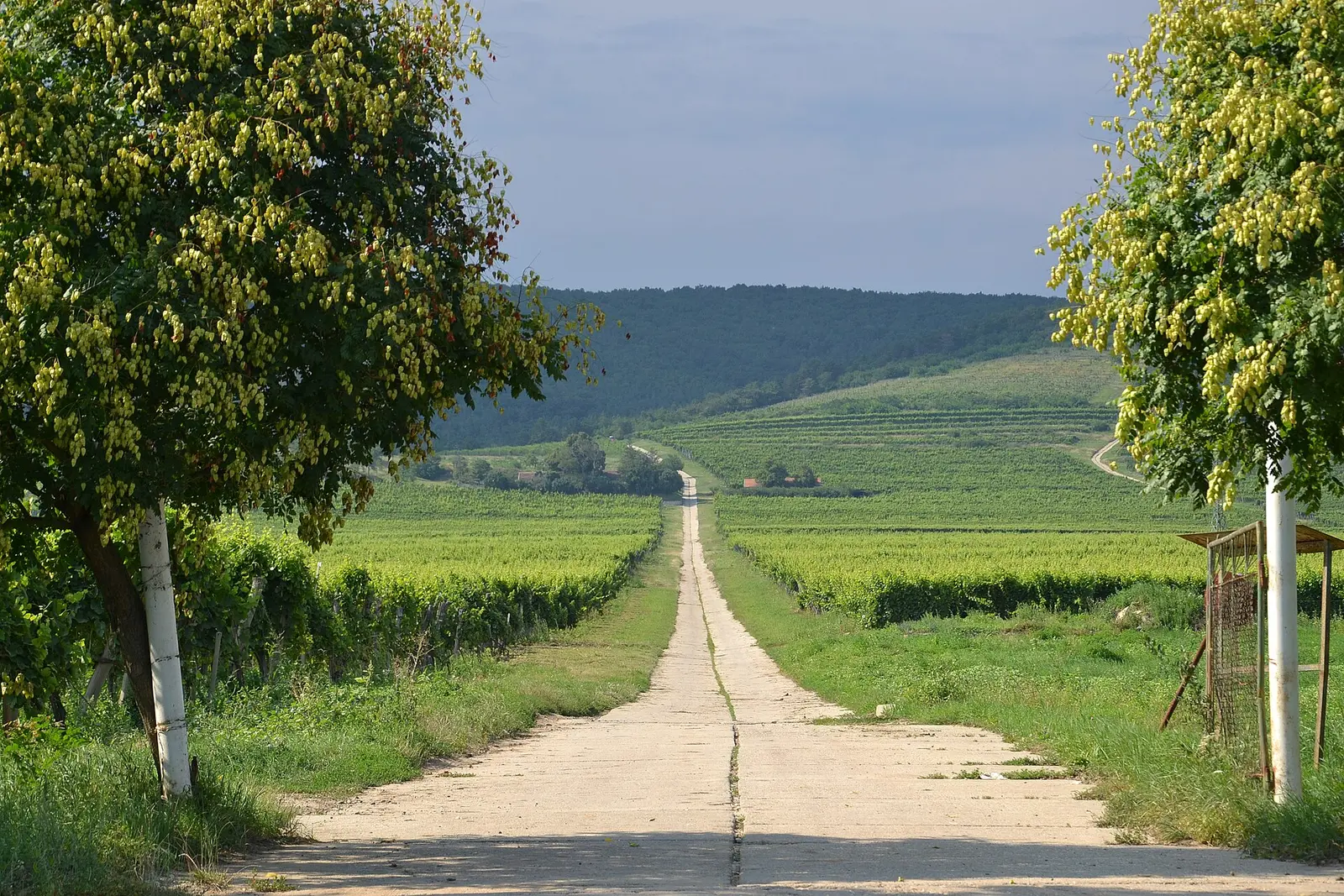
- Kakheti: The main wine region, in the east, with its best vineyards in the Alazani and Iori basins at 400–700 m. It is known for qvevri winemaking and for Saperavi, and holds appellations such as Tsinandali, Mukuzani, Kindzmarauli and Napareuli.11
- Kartli: Known for European-style and sparkling wines from vineyards along the Mtkvari River at 450–700 m, with grapes such as Chinuri and Goruli Mtsvane. The Atenuri appellation is made only here, and the 2017 Neolithic wine sites lie in Kvemo Kartli.1,11
- Imereti: A diverse western region where the qvevri is called churi locally. Winemakers add at most a third of the skins and stems to the juice, and grapes include Tsolikouri, Krakhuna and Tsitska; Sviri is its appellation.3,11
- Racha-Lechkhumi: A small mountain region with few vineyards and rare grapes, mostly on the slopes of the Rioni gorge. Its appellations include Khvanchkara and Tvishi.11
- Black Sea coastal zone: Guria, Samegrelo, Abkhazia and Adjara, with vineyards from near sea level to about 500 m. The harvest starts late, from November and sometimes into late January.11
- Meskheti: Vines grow at 900–1,700 m, mostly on terraces, which the agency says is probably the highest viticulture region in the world. Some scientists think Saperavi and Khikhvi may have originated here.11
- Protected appellations (PDOs): The National Wine Agency lists 33 protected names, from Khvanchkara (registration no. 1, 2005) and Mukuzani, Tsinandali and Akhasheni (2005) to Sazanos Otskhanuri (2025). Others include Kindzmarauli, Manavi, Atenuri, Tvishi, Kisi Magraani, Racha and Lechkhumi.12,13,14
Visiting
The harvest, called rtveli, starts in September with Rkatsiteli in Kakheti and ends in December with Chkhaveri in Guria and Ajara. Timing varies by area because sugar levels depend on sunlight.17
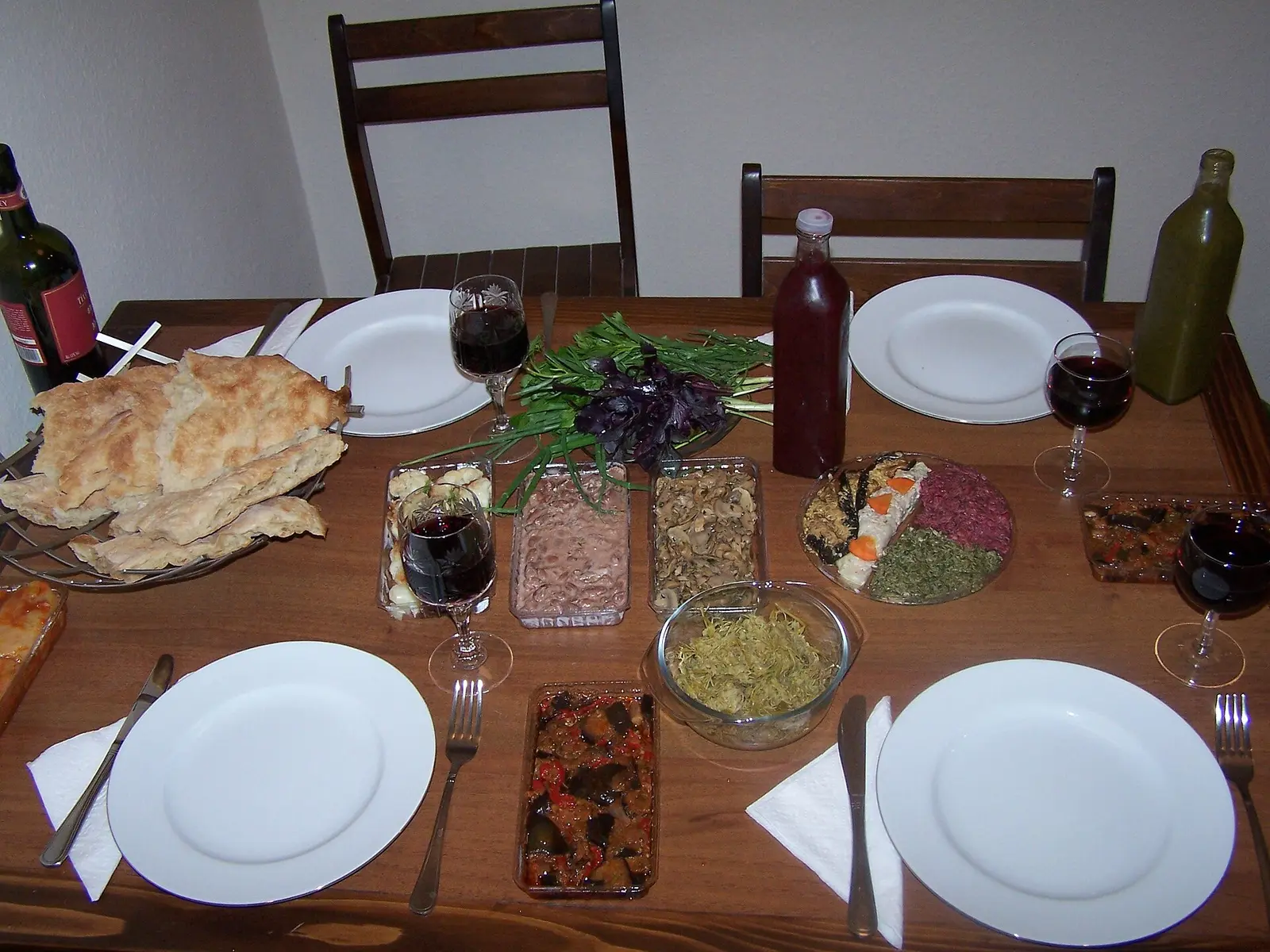
Families pick early in the morning and press the grapes the same day, often by foot in a wood, clay or stone press called a satsnakheli. The day ends with a supra feast: tone bread in the east, khachapuri in the west.17
The Gurjaani Wine Festival has been held each October since 2019 in Akhtala Park in Kakheti. Visitors can compare qvevri and European-style wines and try churchkhela and Kakhetian shoti bread.18
'Wine Route' signs appear in nearly every region and lead to large producers and small family cellars, many of which serve local food.19
In parts of Kakheti, some winemakers still roll the heaviest member of the harvest crew across the vineyard after the last grapes are picked, a custom believed to bring a plentiful next vintage.10