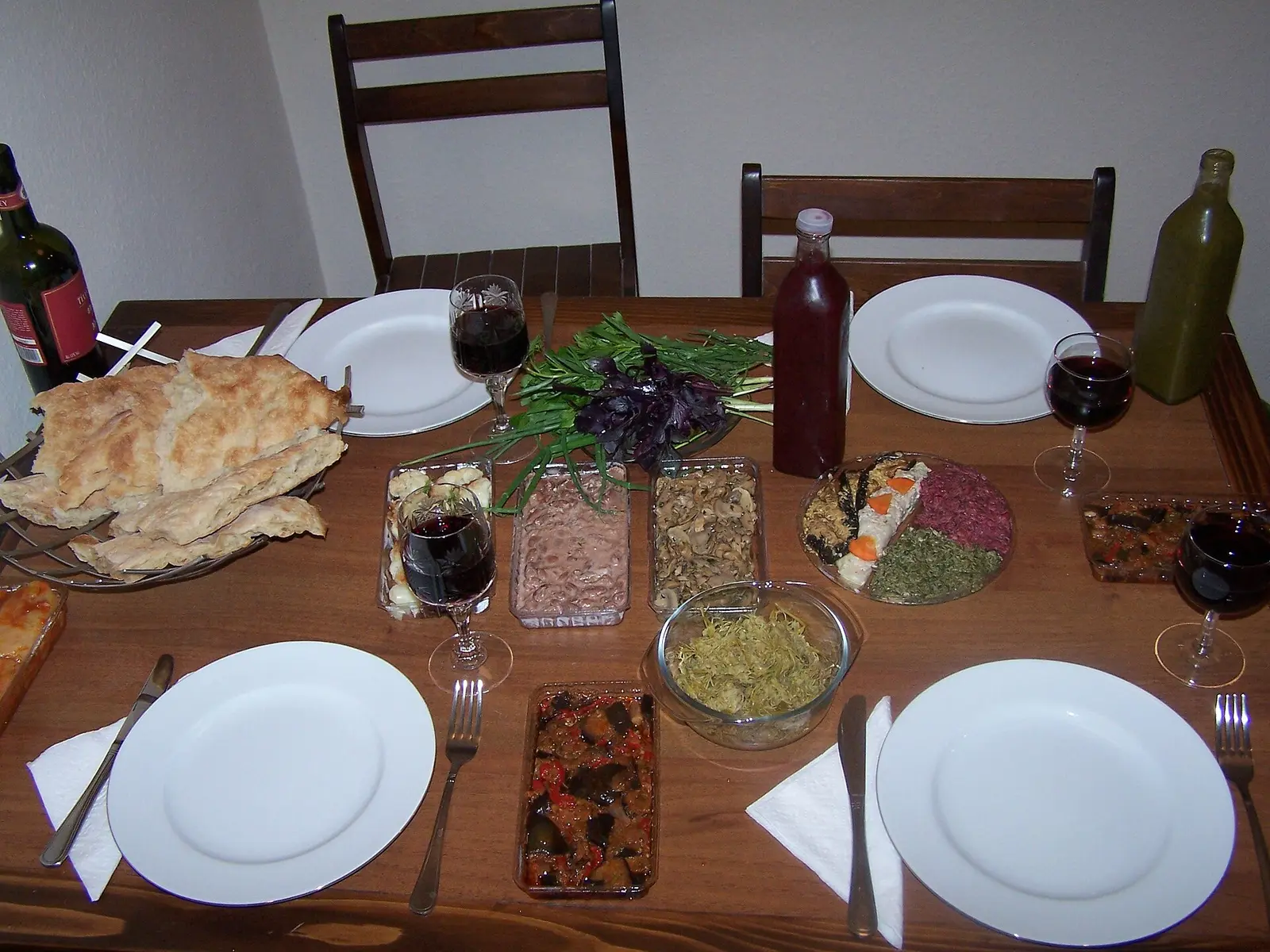
The Georgian supra
supra (სუფრა)
A supra is a Georgian feast where a toastmaster, the tamada, leads a set order of toasts through a long meal of shared dishes, wine and often song.
History
The word supra means tablecloth. In the medieval Georgian translation of the Persian epic Shahnameh it meant only the tablecloth or dining table, like its Persian source sufre, and older Georgian words for a feast were nadimi and puroba.1
Medieval Georgian courtly literature, including The Knight in the Panther's Skin, describes feasting and wine but no toastmaster or toasts like today's. The words tamada and tolumbasi for the toastmaster are not recorded before the 19th century, according to anthropologist Kevin Tuite.1
The Georgian scholar Levan Bregadze concluded that the supra took its present form in the early 19th century, after Russia annexed Georgia, and had spread everywhere by century's end. A 2024 paper by Giorgi Kipiani disputes this, citing 15th- to 17th-century travel accounts and a poem by King Teimuraz II as evidence of older, mainly religious themed toasts.1,2
Anthropologist Florian Mühlfried writes that under Tsarist rule after 1801 the supra became a marker of Georgian difference, and that Soviet authorities called it a "harmful custom" in 1975. Paul Manning studied how the Soviet Georgian satirical magazine Niangi mocked it as wasteful private consumption.1,3
Mühlfried writes that the wine shared at a supra stands for Georgian blood, so those who share it become "virtual kinsmen." Food historian Darra Goldstein told Atlas Obscura the supra is a way of remembering history and the distinctiveness of Georgian culture.3,4
In March 2017, Georgia's National Agency of Cultural Heritage Protection granted the culture of the traditional Georgian supra the national status of a monument of intangible cultural heritage.5
Who does what
- Toastmaster (tamada): The tamada leads every supra, proposing each toast on a theme suited to the occasion. Tuite writes that the ideal tamada is knowledgeable, witty and articulate, and Georgia's tourism agency adds that the tamada also guides the stories, poems and songs.1,6
- Choosing the tamada (tamada): The host usually appoints the tamada, or the guests elect one. There are no toastmaster schools, and the eldest or most well-spoken man often takes the role, though women serving as tamada is a rare but growing practice.3,4,7
- Wine-pourer (merikipe): The merikipe is the tamada's assistant who keeps glasses filled. A large supra may name more than one, according to anthropologist Laura Linderman.8,9
- Passing the toast (alaverdi): The tamada can offer a guest an alaverdi, the chance to expand on the toast just made and add personal thoughts. Linderman traces the word to Turkish, and Tuite notes that 19th-century visitors heard the phrase "Allah verdi" exchanged over toasts.1,6,8,10
- Guests: After the tamada introduces a theme, other guests speak one after another on that same theme. Guests may also add personal toasts in a freer middle stretch of the meal.1,8
- Hosts and cooks: Linderman describes the cooking and table service as mostly women's work, shared by neighbors and relatives for days before a wedding supra. She also found women-only supras more common than earlier studies suggested.8
How to do it at home
- Choose a tamada before the meal. In Georgia the host appoints one or the guests elect one, usually an articulate, respected person, and at a supra dinner in Greenville, South Carolina, the host leads the toasts himself.3,6,7,9
- Set much of the table before guests arrive. Georgian hosts lay out bread, vegetable dishes and other room-temperature foods ahead of time, then add hot dishes such as khinkali later, putting new plates beside the old ones rather than replacing them.8,11
- Follow a toast order. Sources describe opening with thanks to the guests or a toast to peace, moving through themes such as God, Georgia, parents, women and friendship, and including a toast to the departed.8,9,10,12
- Let guests build on each theme. The tamada sets the topic and can pass the floor with an alaverdi, and at the Greenville supra guests added their own stories, including saying aloud the names of people they had lost.1,6,9
- Pace toasts with the food. A supra in a private home often runs three or four hours, and Linderman notes that a good tamada reads the mood of the table and slows or speeds the toasts to match.1,8
- Make room for guests who skip a toast. Linderman describes guests who sit out toasts staying part of the ritual, with the merikipe adding just a symbolic drop to their glass, and the Greenville host does not ask guests to finish their glasses.8,9
- Close the evening the traditional way. Georgia's tourism agency says the supra ends with a toast to all the saints, kvelatsminda, followed by the guests' toast to the tamada.6
Drink responsibly. Never drink and drive. If you're pregnant, don't drink alcohol.
Food
Georgia's tourism agency lists supra foods including cheese, bread, pickles, edible greens, boiled meats such as khashlama, mtsvadi grilled over grapevine twigs, kupati sausages, khachapuri, chicken in blackberry sauce, chakapuli stew and khinkali dumplings.6
Sweets at a supra can include buffalo-milk matsoni with nuts and honey, tatara grape pudding, churchkhela and dried fruit, according to the same agency.6
Khachapuri cheese bread and grilled meat with sour plum sauce are common, and large khinkali dumplings are often served later in the meal.11
The table should look endlessly full, so no dish may run out and new foods are added rather than swapped in. Linderman notes an unspoken rule against finishing the last of a dish unless a hostess offers it.8
Dishes vary by region. At a family supra in mountainous Racha, the khachapuri was round and stuffed with beans, smoked ham and the spice blend khmeli suneli.10
Mourning supras have their own ritual foods. Mühlfried names kolio and shilaplavi among them.3
Vessels and serving
Wine is the centerpiece of the supra, and Georgia's tourism agency names local grapes such as Rkatsiteli, Mtsvane, Kisi and Saperavi.6
The khantsi is a goat's or ram's horn, often trimmed in silver with a chain, and a traditional feature of the supra. Because a horn cannot stand on its own, Atlas Obscura notes that many people choose a small one.10,13
The azarpesha is a long-handled silver vessel for drinking wine, usually gilded and inlaid with black niello. Its handle is often engraved with a short poem of praise.14
At one Racha supra, toasts began with small stemless glasses, and larger wooden cups and a horn came out later for special toasts.10
Even at modern city supras, a libation is common: a few drops of wine poured onto a piece of bread, a custom Tuite links to older offerings to the deceased.1
Etiquette
Wine is drunk only after a toast. Each round starts with the tamada's toast, and guests follow on the same theme.1,8
Eat slowly. Supras can run late into the night, and guests are advised to pace themselves and save room for dishes that arrive later.11
Try every dish. Linderman writes that skipping a dish can offend the cooks, and that respectful guests show restraint and praise dishes they enjoy.8
Have a few words ready. The tamada may call on you, and a toast to your hosts and to Georgia is a safe choice.11
Speak sincerely when given the floor. Georgia's tourism agency encourages guests not to be shy and welcomes international guests' own versions of traditional toasts.6
Toasts often close with gaumarjos, which Mühlfried glosses as "victory to" its subject. At a mourning supra, guests instead say a phrase meaning "may he or she be remembered."3
Hospitality runs both ways. Georgians say "a guest is of God," and Tuite notes that tradition sets obligations for guest as well as host.1
Mühlfried separates celebratory supras from mourning ones and calls the keipi a more informal festive banquet. A supra held after a funeral is called a kelekhi, and at mourning supras the dead are toasted first and the order is strictly kept.3,7
Expect song. Speeches and polyphonic singing between toasts set the rhythm of the meal, and UNESCO proclaimed Georgian polyphonic singing a masterpiece of intangible heritage in 2001, inscribing it on its Representative List in 2008.4,7,15
A toast can cue a particular song. A toast to long life calls for a mravalzhamieri, and a toast to the departed can call for a religious chant.16
More on the place: Georgia.
Questions people ask
What is a Georgian supra?
A supra is Georgia's traditional feast. The word means tablecloth. A toastmaster, the tamada, leads a series of toasts through a long meal of shared dishes and wine, for weddings, birthdays, funerals or simply to welcome a guest.1,11
What does a tamada do?
The tamada is the toastmaster. The tamada proposes each toast on a theme suited to the occasion, invites guests to add their own, and guides the stories, poems and songs. The host usually appoints the tamada, or the guests elect one.1,3,6
What is alaverdi?
Alaverdi is when the tamada passes the floor to a guest, who then expands on the toast just made with personal thoughts, keeping to the same theme. The word comes from Turkish.6,8
Sources
- The Autocrat of the Banquet Table: the political and social significance of the Georgian supra, Université de Montréal (author's manuscript; published 2010 in Language, History and Cultural Identities in the Caucasus, ed. K. Vamling) (2008). Accessed 2026-11-17.
- The Tradition of Thematic Toasts and a Discussion on the Roots of the Georgian Supra (abstract, IV International Kartvelological Congress), Ivane Javakhishvili Tbilisi State University repository (2024). Accessed 2026-11-17.
- Sharing the same blood: culture and cuisine in the Republic of Georgia, Anthropology of Food (S3) (2008). Accessed 2026-11-17.
- Why the World's Greatest Toasts Happen in Georgia, Atlas Obscura (Gastro Obscura) (2018). Accessed 2026-11-17.
- Order No. 2/20 of 2017 of General Director of National Agency of Cultural Heritage Protection of Georgia on Granting Status of Monument of Intangible Cultural Heritage (FAOLEX record), UNEP Law and Environment Assistance Platform / FAOLEX (2017). Accessed 2026-11-17.
- Georgian Supra, Georgian National Tourism Administration (Georgia Travel). Accessed 2026-11-17.
- The supra, an important aspect of traditional Georgian social culture, europalia georgia (archive). Accessed 2026-11-17.
- The Gendered Feast: Experiencing a Georgian Supra, Anthropology of East Europe Review 29(2) (2011). Accessed 2026-11-17.
- A Greenville Restaurant Showcases the Magic of a Supra Dinner, Garden & Gun (2026). Accessed 2026-11-17.
- Breaking bread: experiencing a supra like a true Georgian, National Geographic (2023). Accessed 2026-11-17.
- Supra, Atlas Obscura (Gastro Obscura) (2018). Accessed 2026-11-17.
- A toast to tradition: DC restaurant hosts family-style Georgian feasts, WTOP (2019). Accessed 2026-11-17.
- Khantsi, Atlas Obscura (Gastro Obscura) (2018). Accessed 2026-11-17.
- Azarphesha, Georgian Encyclopedia (Georgian National Academy of Sciences). Accessed 2026-11-17.
- Georgian polyphonic singing, UNESCO Intangible Cultural Heritage (2008). Accessed 2026-11-17.
- How Iberi's new album was inspired by the food, wine and glorious musical harmonies of Georgia, Songlines (2022). Accessed 2026-11-17.
More traditions
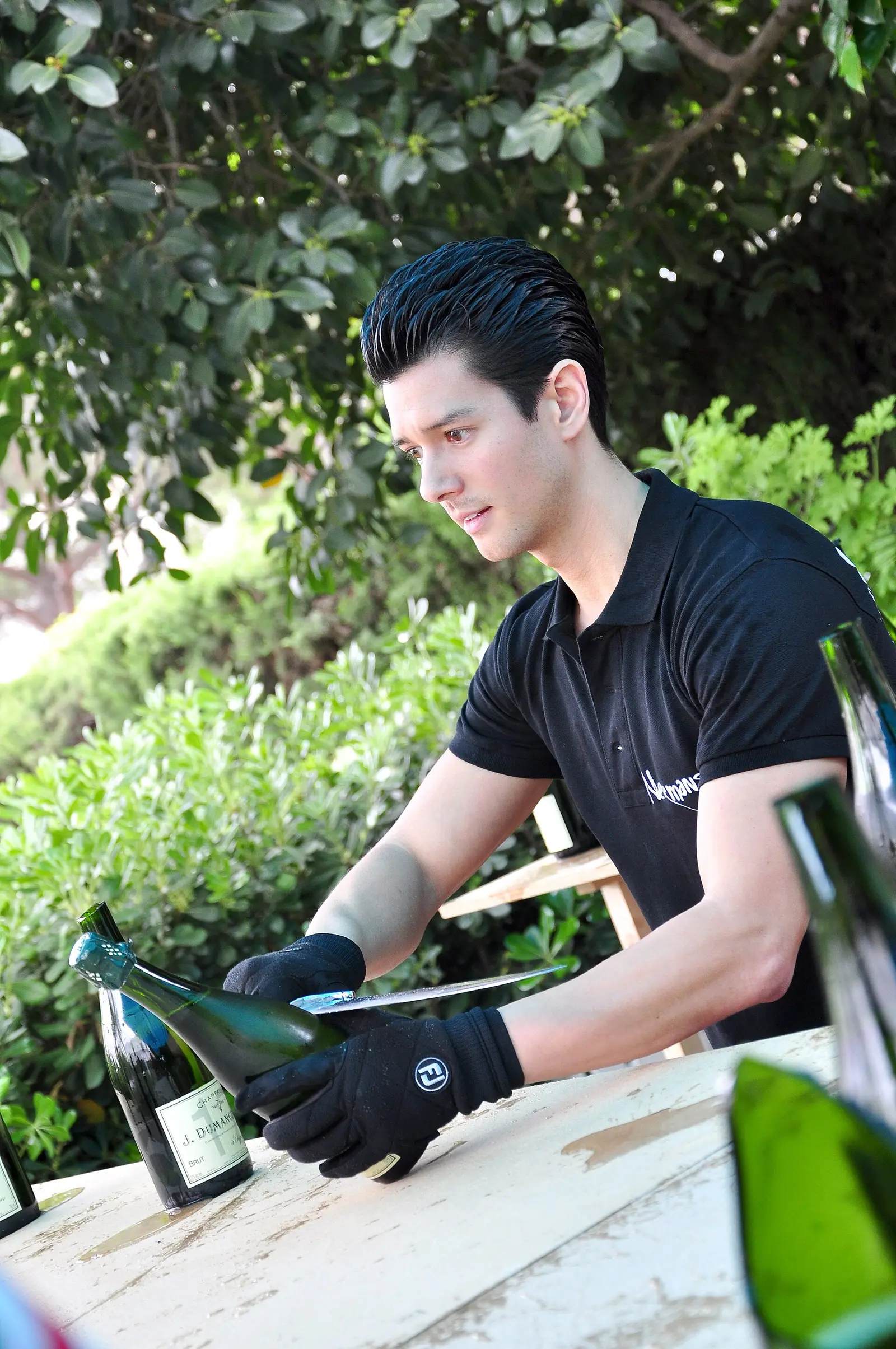 France
Champagne sabrage
Opening Champagne with a sabre: a ceremonial trick tied to Napoleon's cavalry, and why safety comes first.
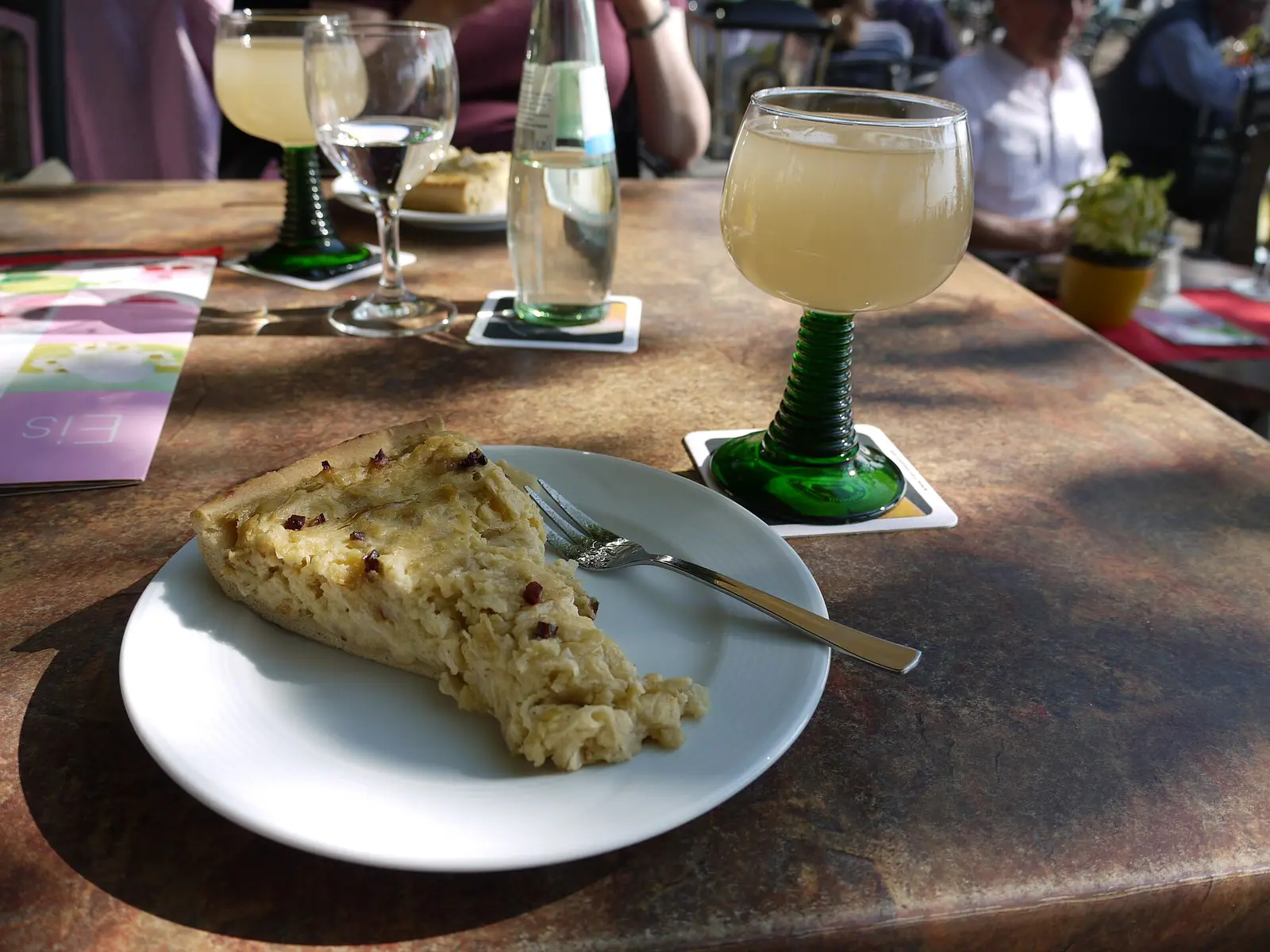 Germany
's wine festivals
Bad Dürkheim's 600-year-old Wurstmarkt, wine queens, seasonal taverns and autumn Federweißer with onion tart.
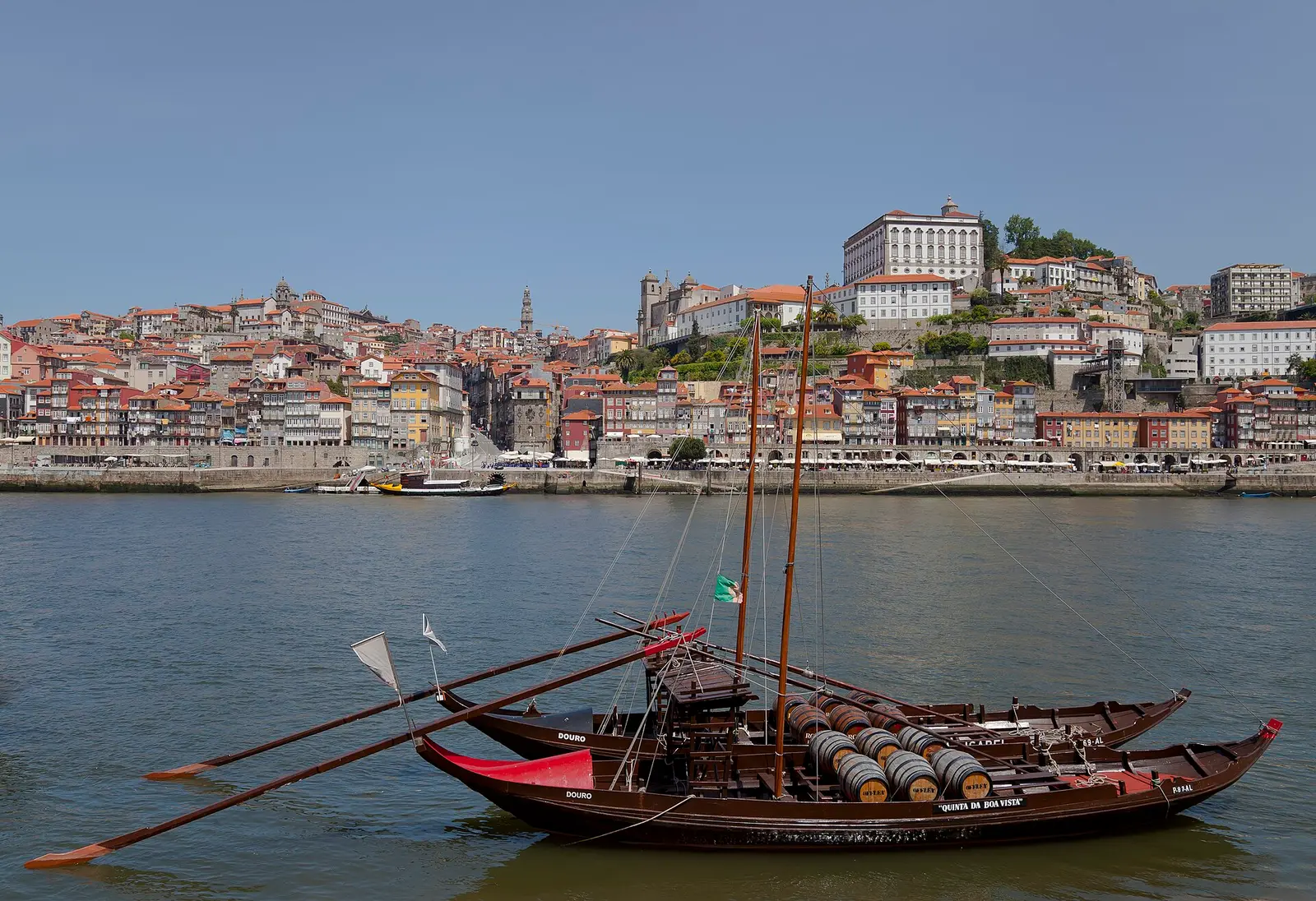 Porto and Vila Nova de Gaia, with the Douro Valley, Portugal
Port in Porto
Port ages in the riverside lodges of Vila Nova de Gaia, and by British custom the decanter goes to the left.
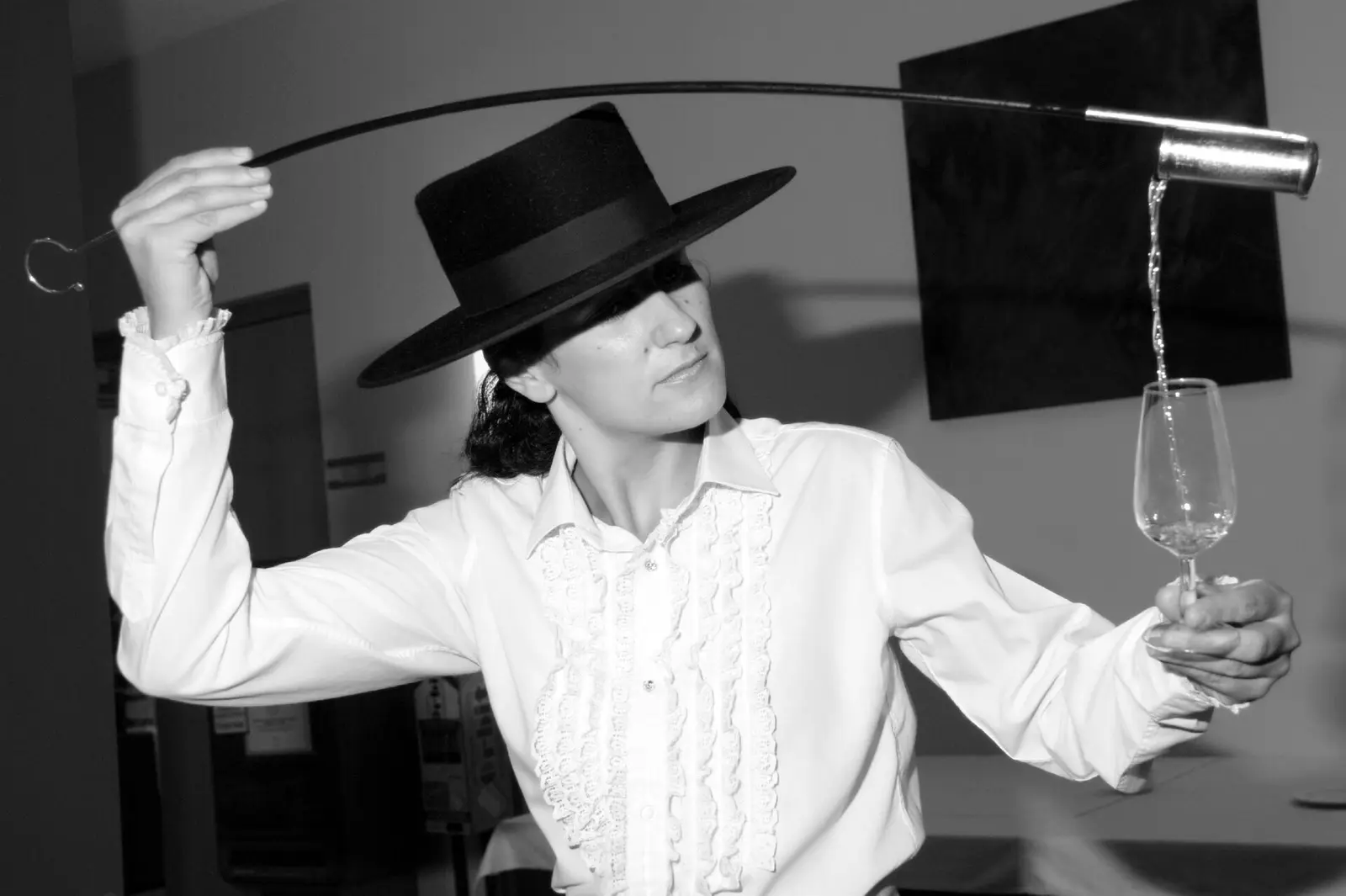 Jerez de la Frontera and Sanlúcar de Barrameda, Andalusia, Spain
Sherry and tapas in Jerez
In Jerez, sherry comes with small plates: chilled fino with ham and olives, richer styles with heartier tapas.