Germany's wine festivals
Weinfeste
German wine villages hold hundreds of festivals a year, led by Bad Dürkheim's Wurstmarkt, plus wine queens, seasonal taverns and autumn Federweißer.
History
The Dürkheimer Wurstmarkt grew out of pilgrimages to a chapel on the Michelsberg on St. Michael's Day, 29 September. A leather bill found in an archive shows the Michaelismarkt existed in 1417, and the vineyard below, Monte sancti Michaeli, was first recorded in 1155.1
In the mid-15th century church authorities moved the fair to the meadows at the foot of the hill, where it became a folk festival. Locals renamed it the Wurstmarkt, reportedly for all the sausages eaten there, and records from the early 1800s use both names.1
In 1910 the festival moved to the second and third Sundays of September, made official in 1913, and has run nine days since 1985. It paused during World War II, returned as a simple autumn festival in 1947, was held as a "fish market" in 1948 because of food shortages, and resumed fully in 1949.1
The Deutsches Weininstitut calls the Mosel Germany's oldest wine region. The Romans brought winegrowing there on a large scale, and several Roman wine presses have been found.2
The Palatinate has chosen wine queens since 1931/32, and the national title is now in its 78th edition of German wine majesties.3,4
German federal law lets the states allow growers to serve their own wine without a restaurant license in seasonal taverns called Straußwirtschaften, for up to four months a year (six where state law already allowed it), in one or two stretches.5
Who does what
- German Wine Queen and princesses (Deutsche Weinmajestäten): A queen and two princesses serve a one-year term as ambassadors for German wine. For 2026/27 they are Paula Löber of Saale-Unstrut, with princesses Kathrin Knierim and Natalie Schäfter, who are touring all 13 German wine regions.4
- Regional wine queens (Weinhoheiten): Wine regions crown their own representatives. The Palatinate's 2026/27 team of a queen, a princess and a male Weinhoheit represents the region's wine at events and fairs in Germany and abroad, after an election event in Neustadt an der Weinstraße.6
- Wheelbarrow stand growers (Schubkärchler): The Wurstmarkt's stands are named for the growers who once pushed their wine to the grounds in wheelbarrows, then turned the barrows over to hold the barrels. Thirty-six stands are rebuilt each year following old tradition.7
- Tavern-keeping growers (Straußwirt): In a Straußwirtschaft, growers serve their own wine for a limited season, and state rules can set what food may be served and how the tavern runs.5,8
How to do it at home
- Wait for the harvest. Federweißer appears once the first grapes of the new vintage are picked, and it is sold across Germany in supermarkets and wine shops.8,9
- Carry it upright. Federweißer keeps fermenting in the bottle, so it has a closure that lets gas escape, and the bottle should stay upright at all times.9
- Taste before you chill. The Deutsches Weininstitut advises tasting a little at home: if the balance is right, refrigerate it, since cold stops fermentation; if it is still too sweet, leave it at room temperature and taste again after six to eight hours.9
- Know what you are pouring. Federweißer is best halfway between grape juice and wine, when sweetness, fruit acidity and alcohol are in balance, at about 5% alcohol.9
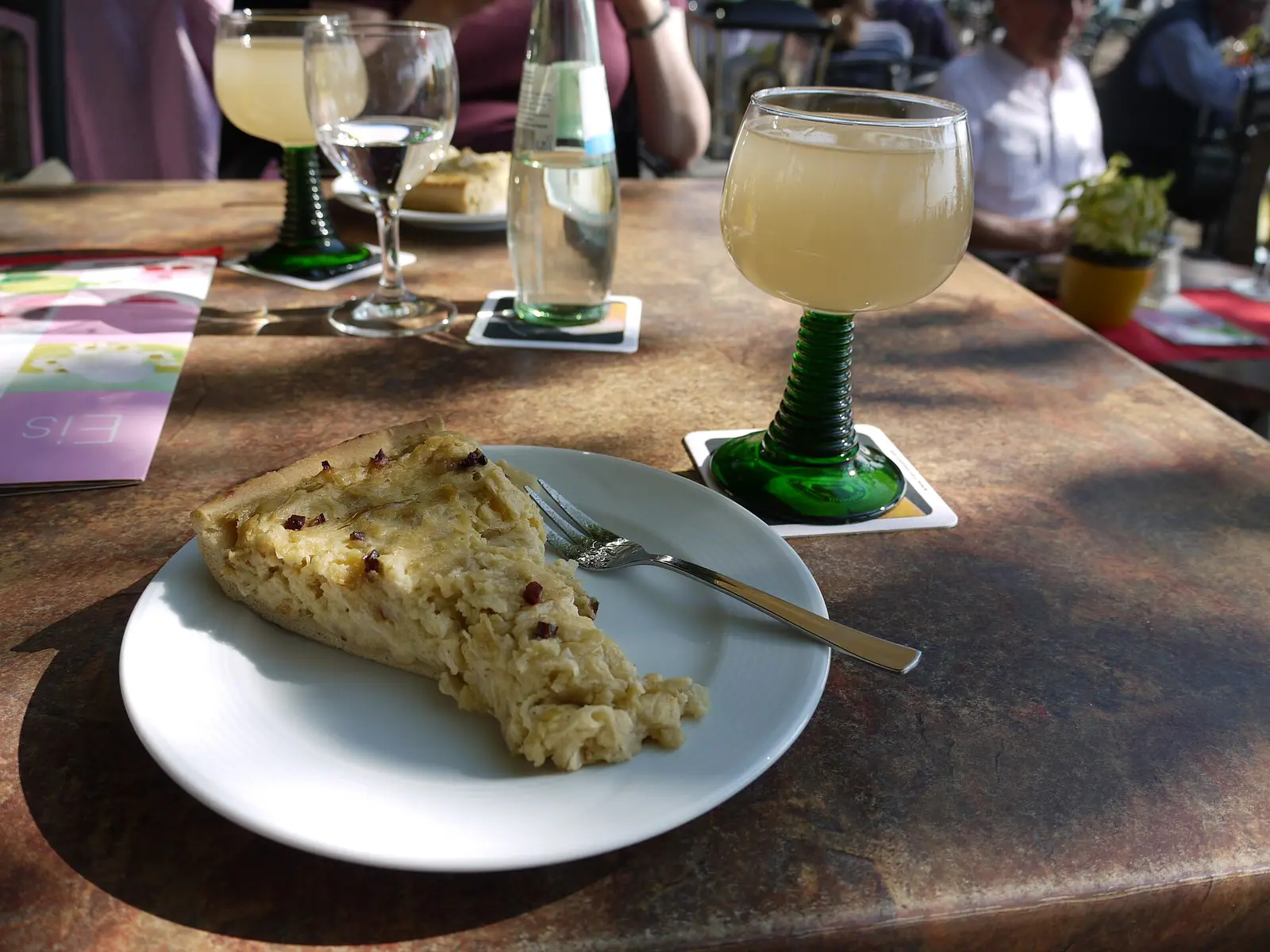
- Serve it with onion tart. The Deutsches Weininstitut calls Federweißer an autumn pleasure as much as a good onion tart, and presents the two as a pairing.9
- Add more Palatinate dishes if you like: a Pfälzer Teller of bratwurst, liver dumplings, sauerkraut and bread, which the region's tourism board pairs with a Riesling spritzer, or chestnuts, since autumn is chestnut season there.8,10
- Borrow the festival layout. At the Wurstmarkt's stands, guests sit close together on narrow wooden benches at narrow tables.7
Drink responsibly. Never drink and drive. If you're pregnant, don't drink alcohol.
Food
Federweißer and onion tart are autumn's classic pairing, according to the Deutsches Weininstitut.9
Saumagen is the best-known dish of Palatinate cooking, and the hearty Pfälzer Teller of bratwurst, liver dumplings, sauerkraut and bread is still served in many restaurants and hikers' huts.10
The Wurstmarkt's Literarischer Frühschoppen, a morning of dialect readings and songs on the first Monday, has a motto praising liver sausage and good Palatinate wine. Guests bring their own cold breakfast, since gas cookers are banned for safety.7
In the Palatinate, autumn brings Federweißer festivals such as the Fest des Federweißen in Landau, and Straußwirtschaften, restaurants and Weinstuben serve regional autumn dishes.8
Vessels and serving
The Wurstmarkt offers about 300 wines and sparkling wines, all award-winning and from local vineyards, at 36 traditional stands.1
Wurstmarkt photos show Riesling spritzer served in the festival's Dubbeglas, and a 1931 photo shows guests clinking Dubbegläser at a wheelbarrow stand.1,11
Federweißer comes in bottles with a vented closure because it is still fermenting. Grapes used include Riesling, Silvaner, Scheurebe and Pinot Noir, and regional names for it include Rauscher, Sauser and Brauser.9
Red Federweißer, called Federrot, is also poured in the Palatinate in autumn.8
Etiquette
Expect a mixed crowd. The Palatinate holds more than 200 wine festivals a year from March into autumn, from big events to small ones at wineries, and families, friends and neighbors mix easily.12
Leave the car behind. Entry to the Wurstmarkt is free, and organizers strongly recommend public transport, with trams, buses and trains running late during the festival.11
The Wurstmarkt opens on its first Friday with a concert, a parade, an opening play, the tapping of a barrel and three ceremonial cannon shots, and it closes with fireworks.11
Mosel festivals run mainly in July and August, with harvest festivals in September. They include the Weinfest der Mittelmosel in Bernkastel-Kues, with a parade and fireworks, the Saarweinfest in Saarburg and the Schwarze Katz festival in Zell.13
Wine country is meant for exploring between festivals: the German Wine Street links 130 wine villages over about 85 km, and the Mosel has 125 wine towns and signposted wine routes.2,14
More on the place: Germany.
Questions people ask
What is the Dürkheimer Wurstmarkt?
A wine festival in Bad Dürkheim in the Palatinate, held over two September weekends. It began as a pilgrims' market recorded in 1417 and now draws more than 600,000 visitors. Its hosts call it the largest wine festival in the world.1,11
What is Federweißer?
A young, partly fermented wine sold at harvest time, best when halfway between grape juice and wine. It keeps fermenting in the bottle, so it is sold with a vented cap and carried upright. It is traditionally paired with onion tart.9
What is a Straußwirtschaft?
A seasonal tavern where growers serve their own wine. Federal law lets German states allow these without a restaurant license for up to four months a year, split into one or two periods.5
Sources
- Wallfahrt wird zum größten Weinfest der Welt! (Dürkheimer Wurstmarkt: Historisches), Stadt Bad Dürkheim. Accessed 2026-11-18.
- Mosel, Deutsches Weininstitut (Wines of Germany). Accessed 2026-11-18.
- Pfälzische Weinköniginnen seit 1931, Pfälzische Weinhoheiten (official site). Accessed 2026-11-18.
- Deutsche Weinmajestät, Deutsches Weininstitut (2026). Accessed 2026-11-18.
- Gaststättengesetz § 14: Straußwirtschaften, Bundesministerium der Justiz (gesetze-im-internet.de). Accessed 2026-11-18.
- Pfälzische Weinhoheiten, Pfälzische Weinhoheiten (official site) (2026). Accessed 2026-11-18.
- Schubkarchstände und Literarischer Frühschoppen, Stadt Bad Dürkheim. Accessed 2026-11-18.
- Herbstgenuss in der Pfalz, Pfalz.de (Palatinate tourism). Accessed 2026-11-18.
- New wine: Federweißer, Deutsches Weininstitut (Wines of Germany). Accessed 2026-11-18.
- Pfälzer Spezialitäten, Pfalz.de (Palatinate tourism). Accessed 2026-11-18.
- Häufig gestellte Fragen zum Dürkheimer Wurstmarkt, Stadt Bad Dürkheim. Accessed 2026-11-18.
- Pfälzer Weinfeste, Pfalz.de (Palatinate tourism). Accessed 2026-11-18.
- Weinveranstaltungen an der Mosel, visitmosel.de (Mosel regional tourism). Accessed 2026-11-18.
- Pfalz, Deutsches Weininstitut (Wines of Germany). Accessed 2026-11-18.
More traditions
 France
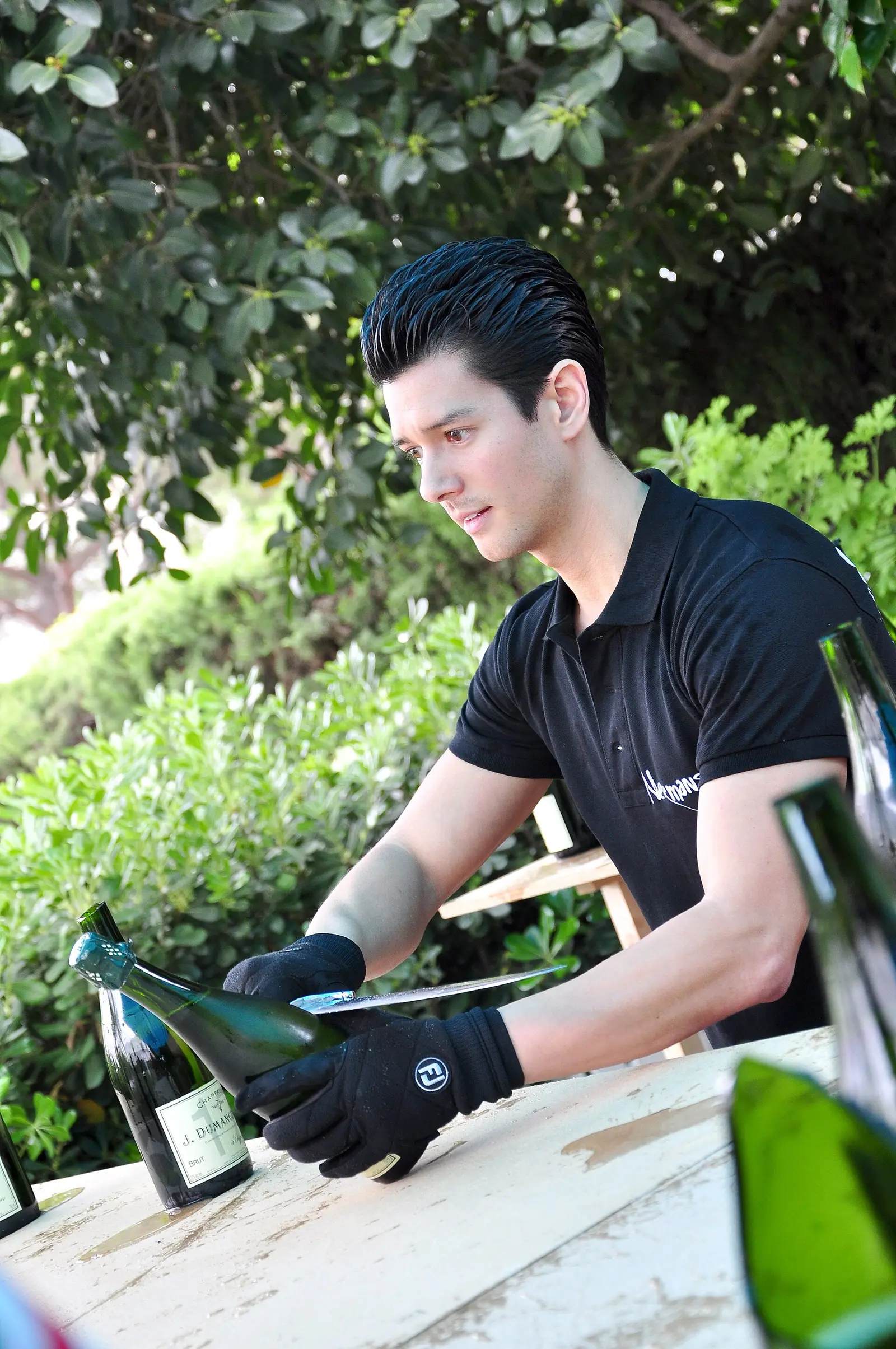
Champagne sabrage
Opening Champagne with a sabre: a ceremonial trick tied to Napoleon's cavalry, and why safety comes first.
 Porto and Vila Nova de Gaia, with the Douro Valley, Portugal
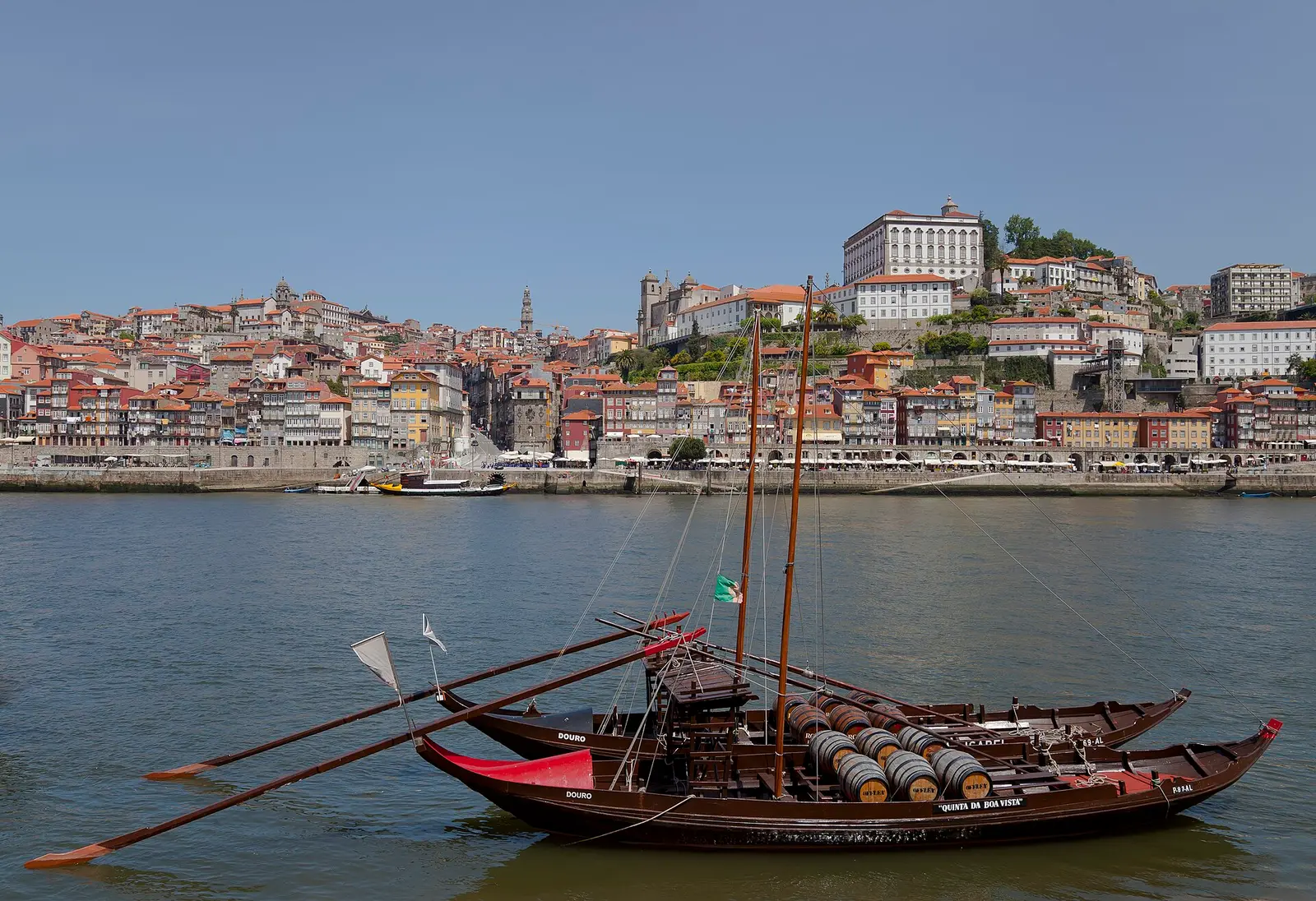
Port in Porto
Port ages in the riverside lodges of Vila Nova de Gaia, and by British custom the decanter goes to the left.
 Jerez de la Frontera and Sanlúcar de Barrameda, Andalusia, Spain
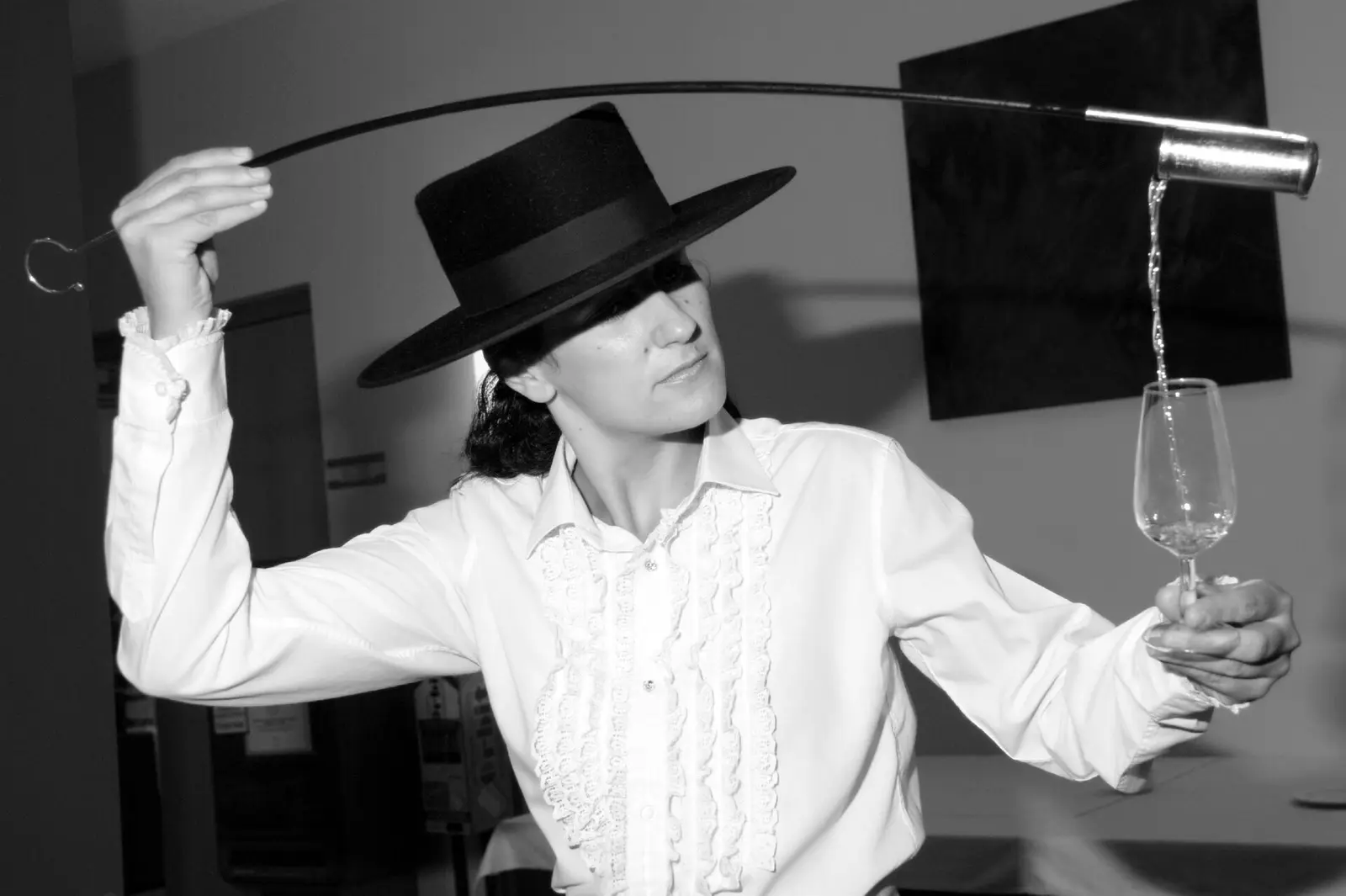
Sherry and tapas in Jerez
In Jerez, sherry comes with small plates: chilled fino with ham and olives, richer styles with heartier tapas.
 Argentina
The Argentine asado and Malbec
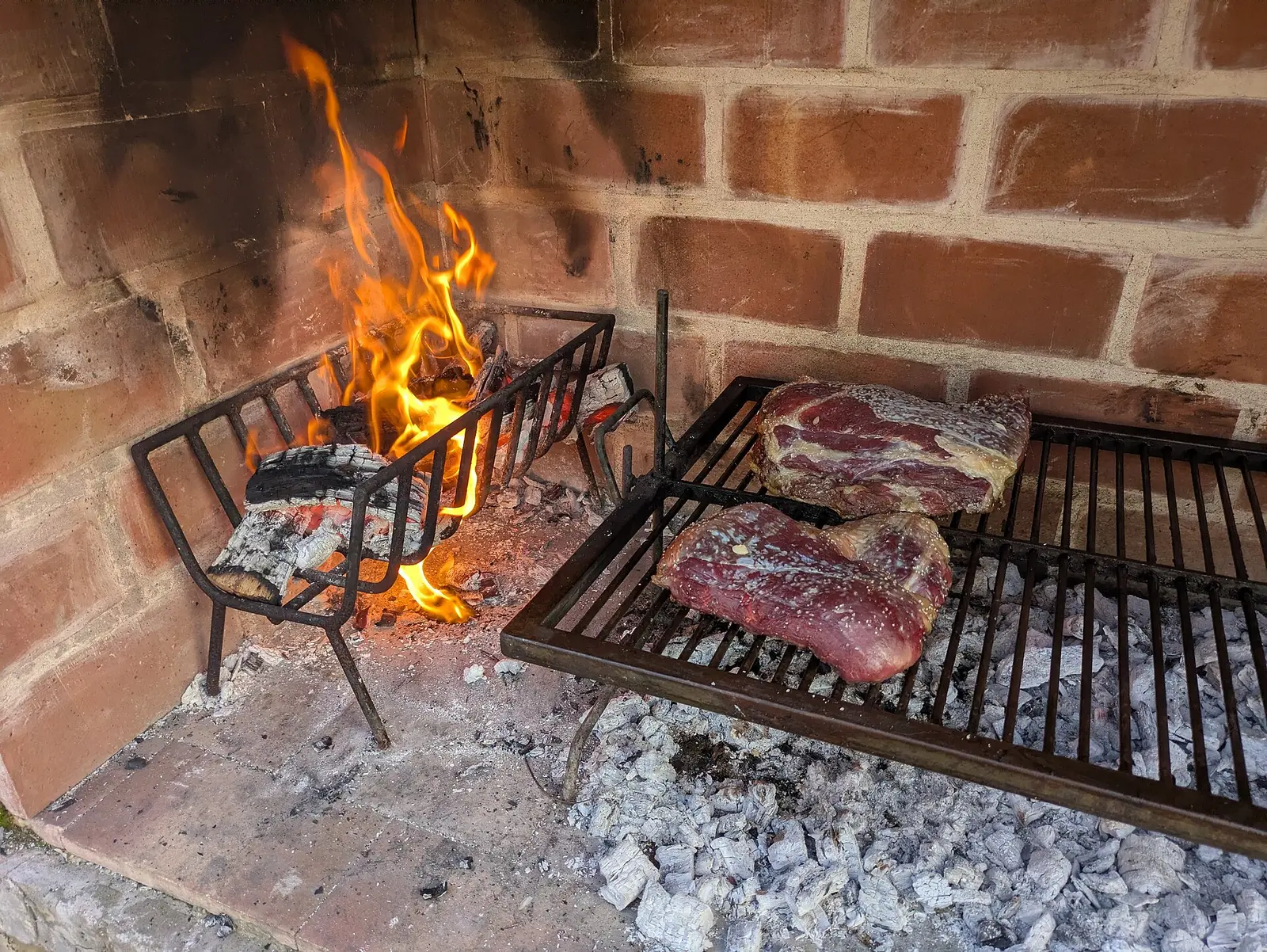
Argentina's slow afternoon cookout: an asador tends the embers while friends talk and open red wine.