Port in Porto
vinho do Porto
Port is a fortified Douro wine aged in the lodges of Vila Nova de Gaia, served by style with cheese or dessert and, by tradition, passed to the left.
History
Port is a fortified wine from the Douro Demarcated Region. Winemakers stop fermentation by adding grape brandy, called benefício, so the wine keeps natural sweetness and usually ends up at 19 to 22 percent alcohol.1,2
The Alto Douro has been a demarcated and regulated wine region since 1756, which the Great Wine Capitals network calls the first in the world.2
Foreign merchants began settling in Vila Nova de Gaia and investing in the wine trade in the 16th century, and many lodges still keep structures built or rebuilt in the 17th and 18th centuries. In the 19th century, the writer Camilo Castelo Branco called Gaia the greatest tavern in the world.3
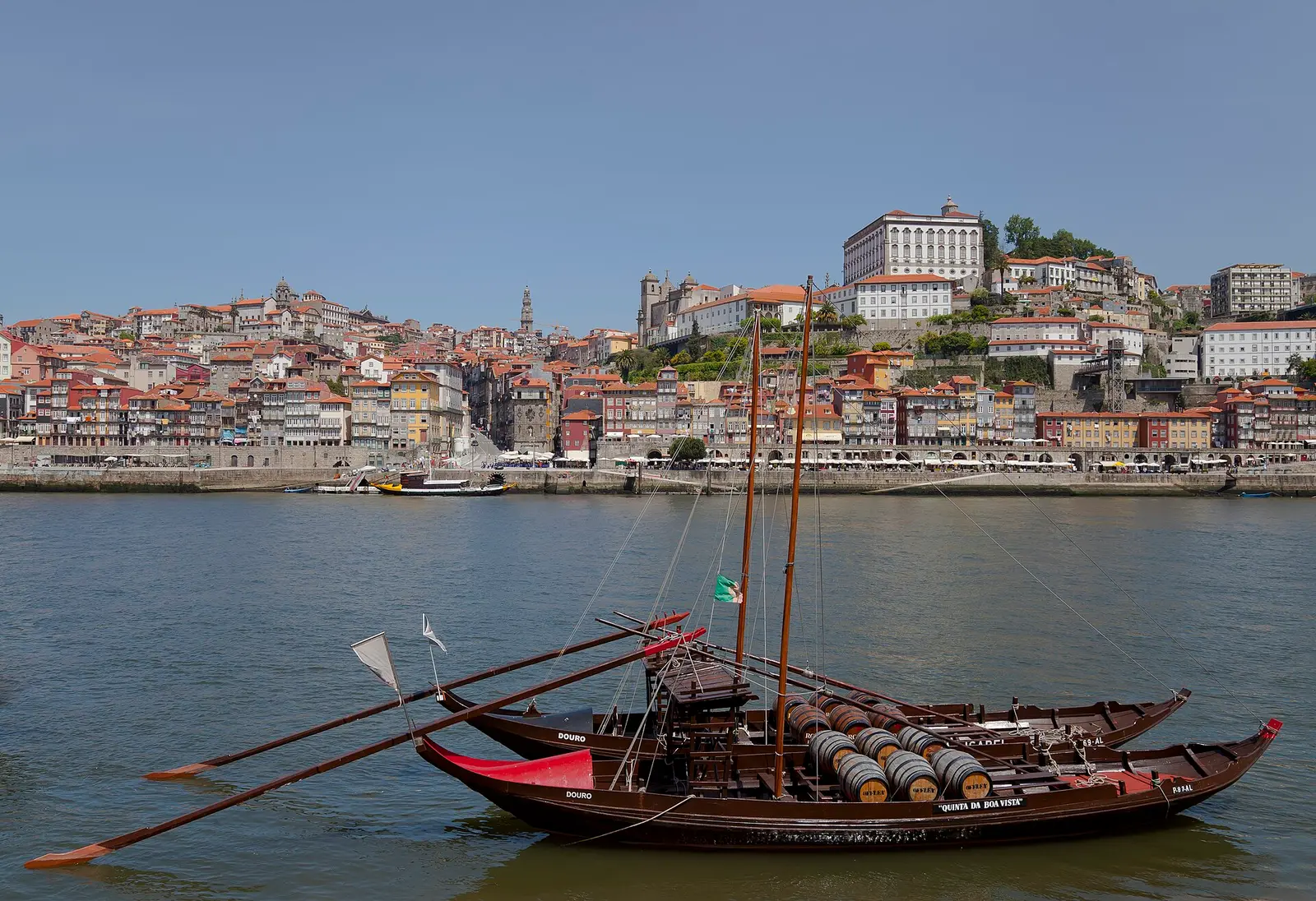
Wine came down from the Douro Valley in barcos rabelos, flat-bottomed wooden boats, to mature in Gaia's lodges. Gaia's council says the Atlantic climate there, with summer sea fog and cool northerly winds called the Nortada, suits slow, even ageing.3,4
The rabelo's name means "little tail," after its long stern steering oar. Its shallow hull suited the fast upper Douro before dams and locks were built from 1968, and port houses still keep rabelos moored along the river in Porto and Gaia.4
Since around 2000, Gaia's port houses have opened museums, interpretive centers and visitor programs. Most offer guided tours with tastings, though hours and booking rules vary by house.3
Who does what
- Host: In the British tradition, the host places the decanter on the table to their right to start it moving. It then travels to the left, clockwise, around the table and back to the host.5
- Guests: Each guest pours and passes the decanter on to the left so everyone gets a chance at the wine. The custom is most often kept with vintage port but is common with other styles too.5
- The Bishop of Norwich: According to tradition, the phrase "Do you know the Bishop of Norwich?" recalls Henry Bathurst, bishop from 1805 to 1837, who in old age dozed at table and let decanters pile up by his elbow. Some credit a later bishop, John Sheepshanks, instead.6
- Port houses (caves): Port houses age and ship their wines from lodges, called caves, along Gaia's riverfront. Founding dates on the Gaia council's list run from Ferreira in 1751 and Real Companhia Velha in 1756 to Sandeman in 1790 and Ramos Pinto in 1880.3
How to do it at home
- Choose a style. Ruby styles such as Ruby Reserve, LBV and vintage keep their red fruit, while tawny styles age in wood and turn golden brown with dried-fruit notes. LBV spends four to six years in wood, and vintage is bottled two to three years after the harvest and keeps ageing in bottle.1,7
- Serve at the right temperature. The port institute IVDP suggests 12 to 16°C (about 54 to 61°F) for ruby styles, 10 to 14°C (about 50 to 57°F) for tawny styles and 6 to 10°C (about 43 to 50°F) for white port.8
- Use a well-proportioned wine glass rather than a small one. IVDP recommends large glasses for 30- and 40-year-old tawnies so their bouquet can open up.8,9
- Decant vintage port to separate it from its natural sediment. Keep the bottle upright, ease the cork out, pour steadily with the white paint mark facing up, and use a funnel or clean muslin if the deposit is heavy. LBV and aged tawny generally do not need decanting.8,10,11
- For a very old vintage with a fragile cork, port tongs can remove the whole neck with the cork still in it. The tongs are heated and clamped around the neck, then the glass is cooled with a damp cloth or cold water so it breaks cleanly.9,12
- Match the port to the course. Serve chilled white port with toasted almonds before dinner, LBV with roast meats or steak in a rich sauce, and tawny or vintage with cheese and dessert.8,13
- If you follow the British custom, set the decanter to your right and send it around the table to the left.5
Drink responsibly. Never drink and drive. If you're pregnant, don't drink alcohol.
Food
Vintage port with a mature blue cheese, especially Stilton, is described by Taylor's as one of the great classic pairings. IVDP pairs young vintage with dark chocolate desserts and old vintage with dried fruit and blue cheese.13,14
Ten- and 20-year-old tawnies suit Portugal's traditional egg-yolk-and-sugar desserts, almond tart, caramel custard, nuts and aged cheeses. A chilled 10-year tawny also goes well with pâté.8,13
LBV pairs with steak with pepper sauce, roast beef or game, and with chocolate cake, chocolate mousse or cheesecake for dessert.8,13
Ruby and Ruby Reserve suit a cheeseboard of farmhouse Cheddar or mild, creamy cheeses, and rich chocolate desserts with red berries.8,14
Dry white port works as an aperitif with almonds or smoked ham, or mixed with tonic water, ice and lemon as a Portonic.8,13
Vessels and serving
The flat-based ship's decanter is the common choice for port. The hoggit is a rarer round-bottomed decanter that must sit in a wooden stand, so it is kept moving around the table.9
Port tongs are long metal graspers, usually cast iron with wooden handles, ending in a ring that grips the bottle neck. They are said to have been invented in the Douro region.9,12
Decanting also lets air reach the wine, helping aromas that lay dormant in the bottle to open up, and a clear decanter shows off its color.11
Opened bottles keep for different lengths of time by style: about 1 to 2 days for vintage, 4 to 5 days for LBV, 8 to 10 days for ruby, 3 to 4 weeks for tawny and 1 to 4 months for age-dated tawny and colheita, according to IVDP.8
Etiquette
Passing the port to the left is a British tradition, not a rule. Explanations about keeping the sword arm free or the naval phrase "port to port" are colorful but unconfirmed; the practical reason is that one direction gives every guest a turn.5
If the decanter stops moving, it is bad form to demand it. The traditional hint is to ask the person holding it, "Do you know the Bishop of Norwich?"6
Old vintage port is traditionally served after the meal, carefully decanted, while 20-year and older tawnies go well with coffee.8
In Gaia, many port houses require booking for lodge tours, some only by appointment, so check before you go.3
More on the place: Portugal.
Questions people ask
Why is port passed to the left?
It is a British tradition. The host starts the decanter to their right and it travels clockwise. Stories about sword arms or the navy's "port to port" are unconfirmed; one direction simply gives every guest a turn.5
What does "Do you know the Bishop of Norwich?" mean?
It is a polite hint to someone who has stopped passing the port. According to tradition, it recalls Bishop Henry Bathurst, who in old age dozed at table and let the decanters pile up beside him.6
Does port need to be decanted?
Vintage port does, to separate it from its natural sediment. LBV and aged tawny usually do not, because their sediment settles before bottling.8,10
What is the difference between ruby and tawny port?
Ruby styles keep their red color and fruit, and LBV and vintage are made from a single year. Tawny styles age longer in wood and turn golden brown with dried-fruit aromas; colheita is a single-year tawny aged at least seven years in cask.1,7
Why are the port lodges in Vila Nova de Gaia?
Wine came down the Douro by rabelo boat to mature in Gaia, where merchants settled from the 16th century. Its Atlantic climate, with summer fog and cool winds, suits slow ageing.3
Sources
- Port Wines: Introduction, Instituto dos Vinhos do Douro e do Porto (IVDP). Accessed 2026-11-18.
- Porto, Portugal, Great Wine Capitals Global Network. Accessed 2026-11-18.
- Caves de Vinho do Porto, Câmara Municipal de Vila Nova de Gaia. Accessed 2026-11-18.
- Rabelo boat, Wikipedia. Accessed 2026-11-18.
- Passing the Decanter, Taylor's Port. Accessed 2026-11-18.
- The Bishop of Norwich, Taylor's Port. Accessed 2026-11-18.
- Port Wines: Special Categories, Instituto dos Vinhos do Douro e do Porto (IVDP). Accessed 2026-11-18.
- Port Wines: Choose and Enjoy, Instituto dos Vinhos do Douro e do Porto (IVDP). Accessed 2026-11-18.
- Glasses & Accessories, Taylor's Port. Accessed 2026-11-18.
- How to serve Port, Taylor's Port. Accessed 2026-11-18.
- Decanting, Taylor's Port. Accessed 2026-11-18.
- Port tongs, Wikipedia. Accessed 2026-11-18.
- Pairings, Instituto dos Vinhos do Douro e do Porto (IVDP). Accessed 2026-11-18.
- Port & Food, Taylor's Port. Accessed 2026-11-18.
More traditions
 France
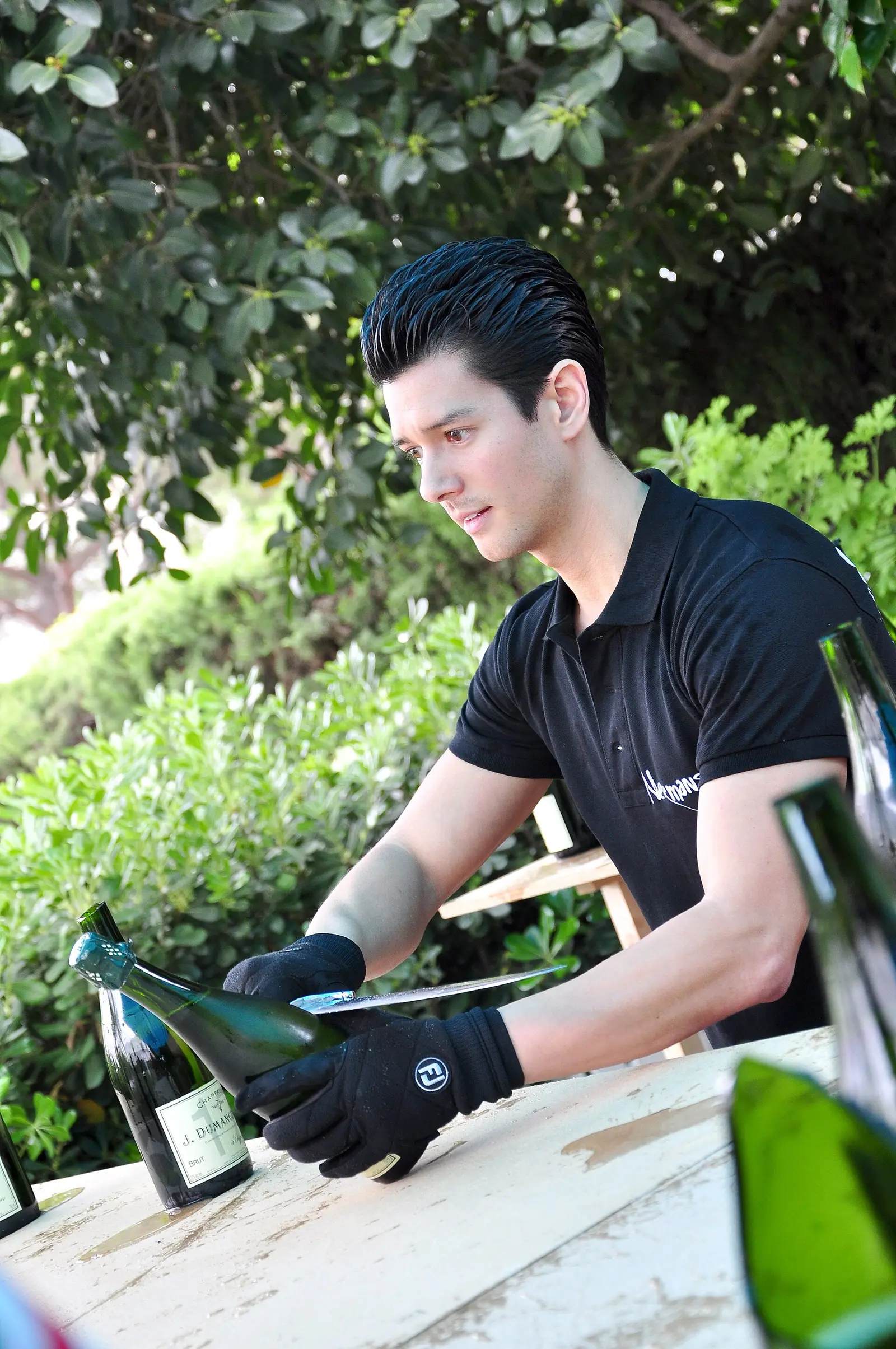
Champagne sabrage
Opening Champagne with a sabre: a ceremonial trick tied to Napoleon's cavalry, and why safety comes first.
 Germany
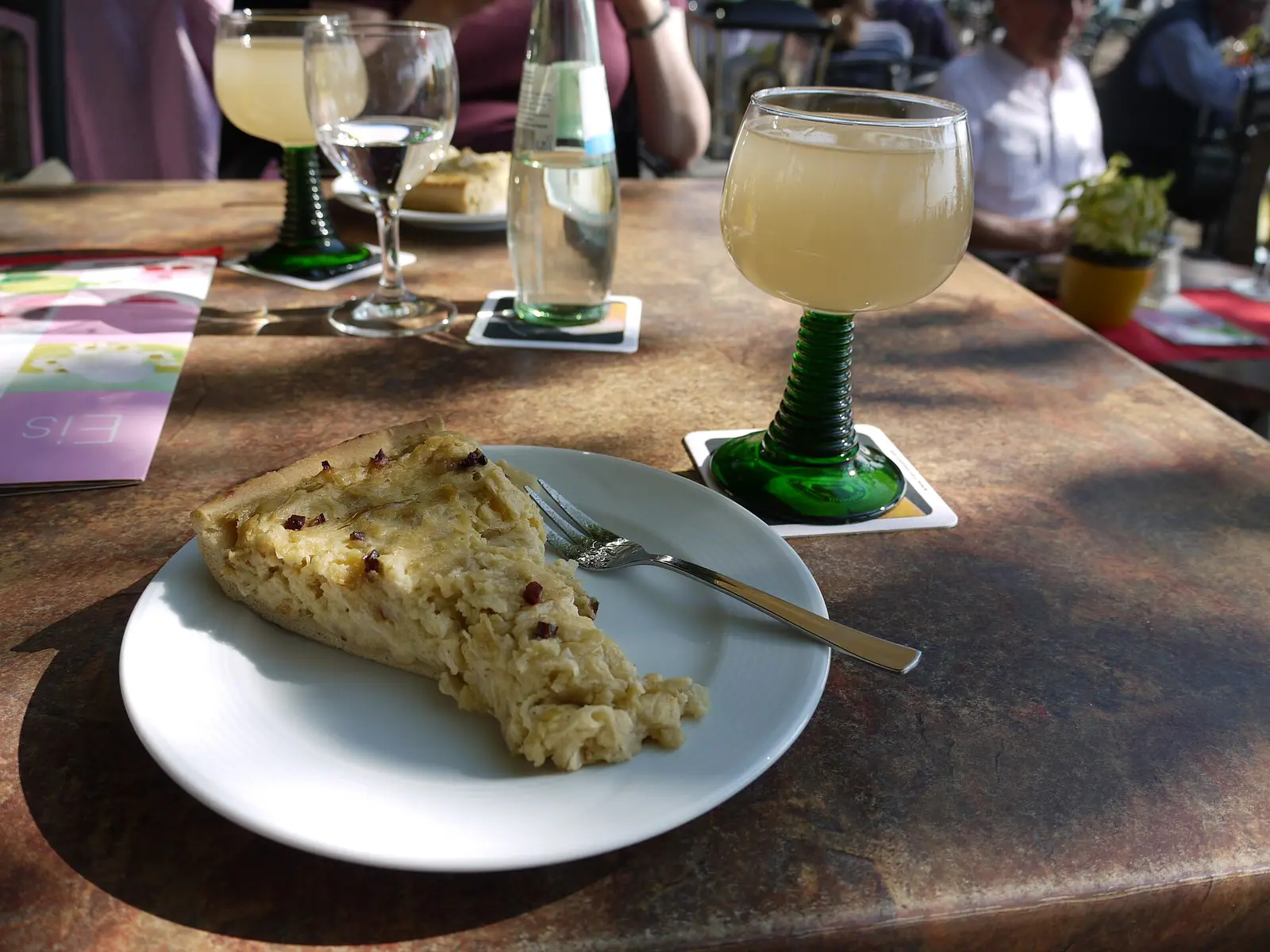
's wine festivals
Bad Dürkheim's 600-year-old Wurstmarkt, wine queens, seasonal taverns and autumn Federweißer with onion tart.
 Jerez de la Frontera and Sanlúcar de Barrameda, Andalusia, Spain
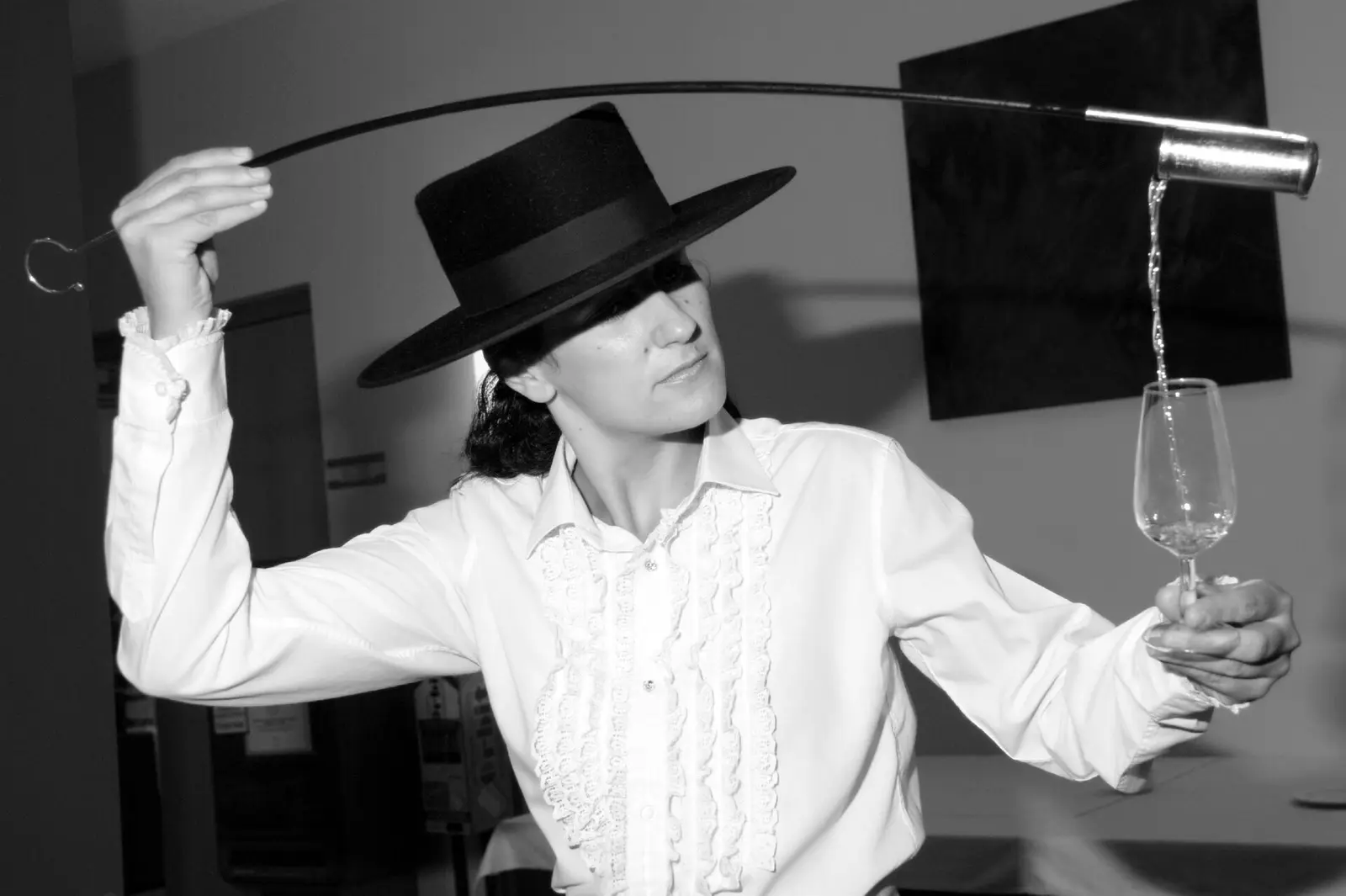
Sherry and tapas in Jerez
In Jerez, sherry comes with small plates: chilled fino with ham and olives, richer styles with heartier tapas.
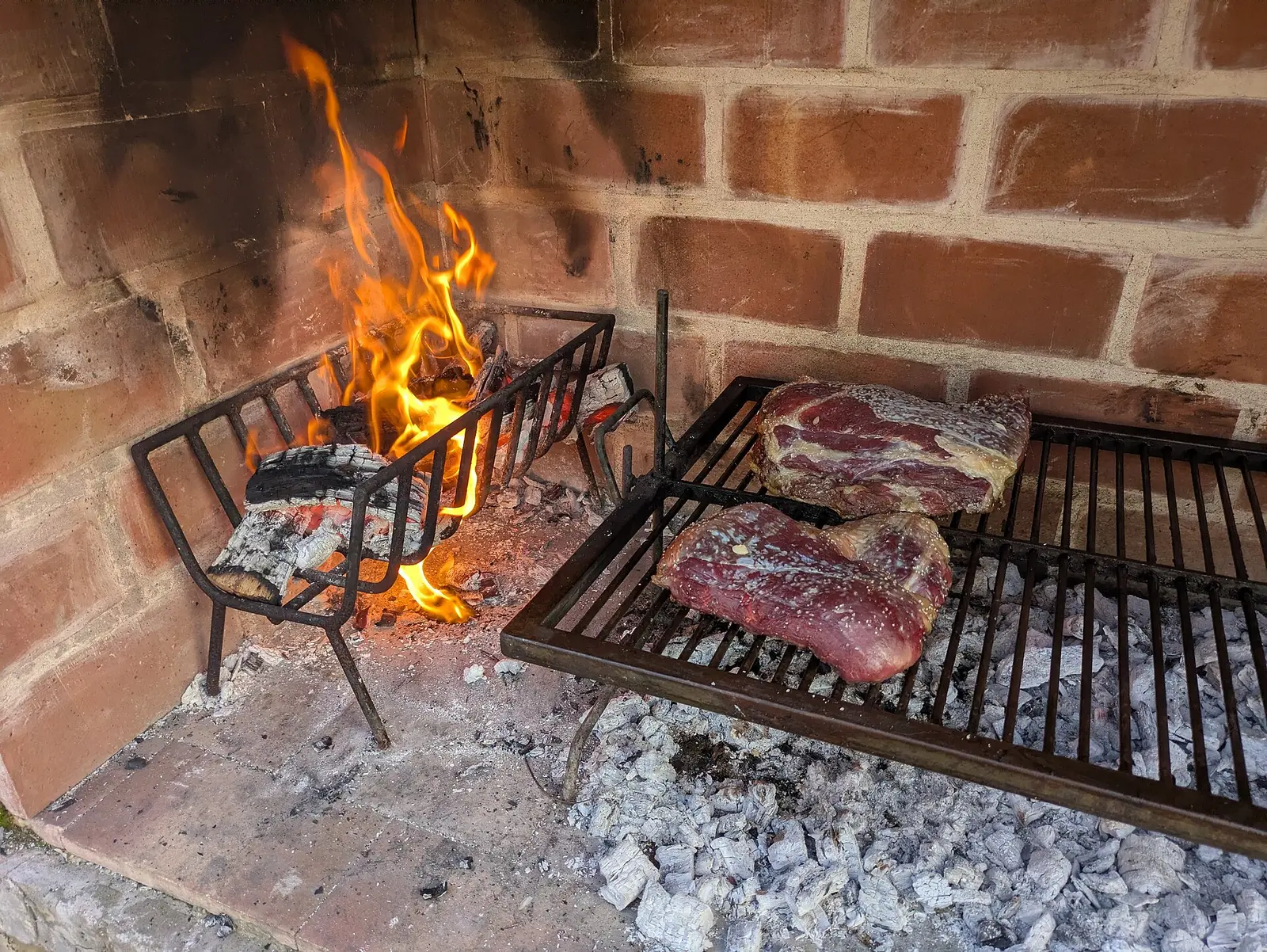 Argentina
The Argentine asado and Malbec
Argentina's slow afternoon cookout: an asador tends the embers while friends talk and open red wine.