The story
The Romans brought viticulture to Germanic lands more than 2,000 years ago. In the 8th century Charlemagne regulated winegrowing, winemaking and the wine trade, and in the Middle Ages monasteries were the centers of wine culture.1
The Mosel is considered Germany's oldest wine region; the Romans planted vines there on a large scale, and several Roman-era wine presses have been found. In the Pfalz, the Roman wine of Speyer is described by the German Wine Institute as the oldest liquid wine in the world.2,3
The first written record of the name Riesling dates to March 13, 1435. The Rheingau and Mosel have the longest Riesling traditions, and the grape spread into Rheinhessen and the Pfalz by the late 15th and early 16th centuries.4
In 1775 the monks of Johannisberg in the Rheingau found that a late harvest paid off, and Schloss Johannisberg is considered the birthplace of Spätlese, or 'late harvest' wine.5
After 1500 Germany's vineyard area shrank, as the climate changed, beer brewing improved and imports grew. At the end of the 1800s phylloxera wrecked Europe's vineyards and many native grapes disappeared; recovery came by grafting vines onto resistant American rootstocks.1
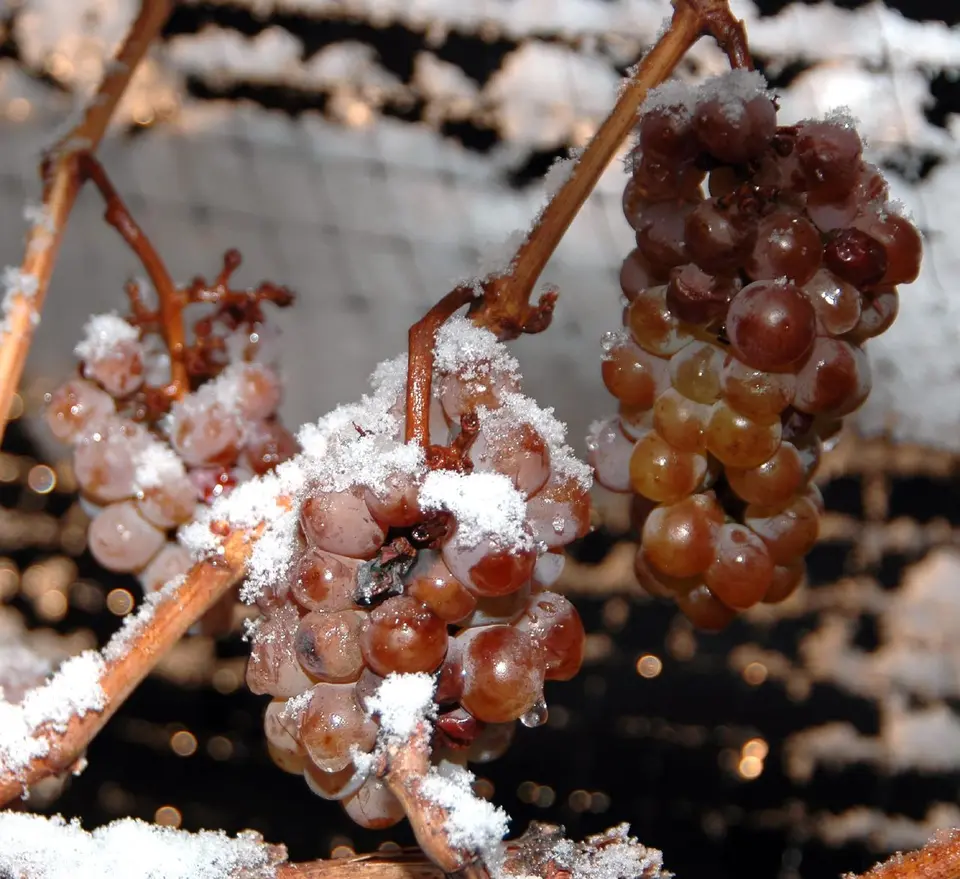
Eiswein grapes must be picked at minus 7°C or colder, and warm winters are making that rare. The German Wine Institute reported that no region reached that temperature for the 2019 vintage, and Eiswein has long been only about 0.1% of German output.6,7,8
The harvest itself is moving earlier. For decades October was the main picking month; now most grapes come in during August or September, and in 2026 some estates started in mid-August.9
Recognition
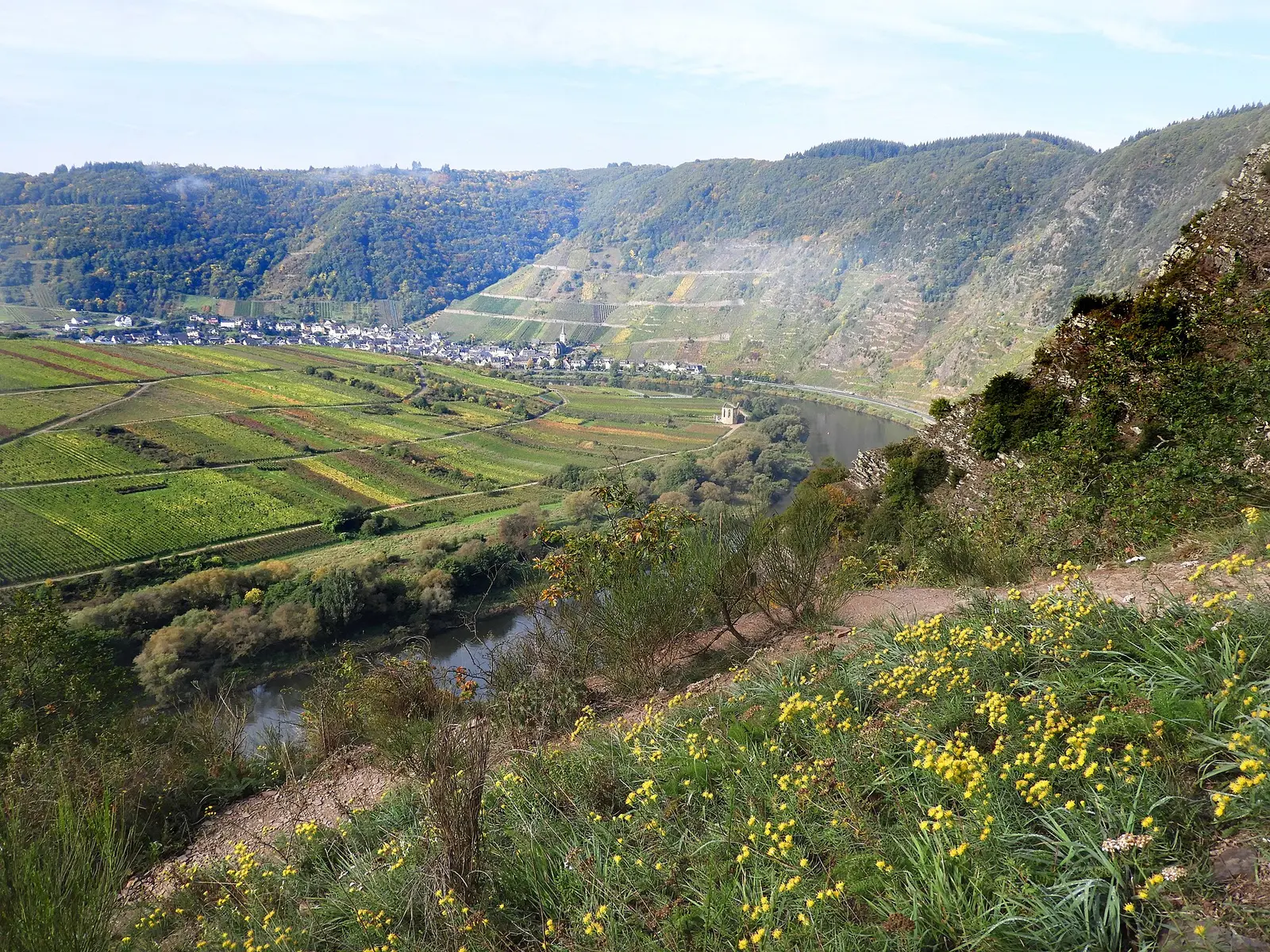
The Upper Middle Rhine Valley, about 65 km of the Rhine from Bingen and Rüdesheim to Koblenz, has been a UNESCO World Heritage Site since 2002, with its vineyard slopes, wine villages and castles. It forms the southern part of the Mittelrhein wine region, where Riesling covers almost two-thirds of the vineyards.15,16
Signature styles
- Riesling Kabinett (light-bodied white, crisp): The first rung of the Prädikat ladder: fine, light Riesling from ripe grapes, low in alcohol. Riesling's lively acidity is often balanced with a subtle sweetness in Kabinett, especially in the north.4,6
- Dry Riesling (VDP Grosses Gewächs) (white, crisp, dry): Grosses Gewächs (GG) is the VDP's name for a dry wine from a top-rated Grosse Lage vineyard, hand-picked at full ripeness with yields capped at 50 hl/ha. White GGs are released on September 1 after about a year.4,17
- Spätburgunder (modern style) (full-bodied red, soft): German Pinot Noir in its modern style has a deep red color, fuller body, more tannin and less acidity than the classic style, and is often aged briefly in small oak barrels. Aromas run from strawberry and cherry to blackberry.10
- Eiswein (sweet, crisp): Made from grapes as ripe as Beerenauslese, picked at minus 7°C or colder and pressed while frozen so only concentrated juice runs off. It has a remarkable concentration of fruity acidity and sweetness.6
Grapes to know
- Riesling (white): Germany's flagship grape, on 24,233 ha in 2024, about 45% of the world's Riesling. Its lively, fruity acidity suits cool northern sites, and it is made in every style from dry to noble sweet.4
- Spätburgunder (Pinot Noir) (red): Germany's leading red grape, on 11,519 ha in 2023, about 11% of all vineyards. Baden has the most, and tradition says Charles the Fat brought it to Lake Constance in 884.10
- Silvaner (white): Franken's signature grape, on about a quarter of its vineyards, growing well on shell-limestone and Keuper soils. Rheinhessen holds about 43% of Germany's Silvaner.11,12
- Müller-Thurgau (white): Still widely planted in Rheinhessen (3,761 ha) but declining there. It is a mainstay at Lake Constance, alongside Pinot Noir.12,13
- Grauburgunder (Pinot Gris) (white): Rheinhessen now has the most Grauburgunder in Germany, 2,424 ha in 2024, having overtaken Baden.12
- Dornfelder (red): A red grape first grown in 1955. It leads the fast-growing red wine area in Rheinhessen and is also grown in the Pfalz.1,3,12
- Frühburgunder (red): A local specialty of the Ahr, Germany's most red-focused region, where four in five bottles are red.14
- Gutedel (white): The white specialty of the Markgräflerland in Baden, near the Swiss border, on 971 ha.13
Where it grows
- Mosel: 8,287 ha along the winding Mosel and its tributaries the Saar and Ruwer, mostly on slate. Over half the vineyards are on slopes above 30 degrees, including the Bremmer Calmont, called Europe's steepest vineyard, and Riesling covers about 62%.2
- Rheingau: 3,117 ha along about 50 km of the Rhine's right bank, sheltered by the Taunus hills. It has the highest share of Riesling of any German region, and Assmannshausen is known for Spätburgunder.5
- Pfalz: Germany's second-largest region, 23,640 ha along about 85 km to the Alsace border. It has the most Riesling of any German region and is also the country's largest red wine region.3,4
- Rheinhessen: Germany's largest wine region, 27,657 ha between the Rhine and the Nahe, on loess, limestone and loam. Its towns include Mainz, Worms, Alzey and Bingen, and its steep Rhine sites at Nackenheim and Nierstein have red slate soils.12
- Baden: Germany's third-largest region, stretching about 400 km from the Tauber Valley to Lake Constance, and its only region in the warmer EU wine zone B. Pinot varieties cover 61% of its vineyards, and the volcanic Kaiserstuhl is called Germany's warmest area.13
- Franken: About 6,040 ha on slopes along the Main, east of Frankfurt, with a continental climate. Its wine comes in the flat, round Bocksbeutel bottle, and Würzburg is its center.11
- Ahr: One of Germany's smallest regions, 535 ha on steep, terraced cliffs. Red grapes cover 79% of the vineyards, the highest share in Germany, and Spätburgunder about two-thirds.14
Visiting
The German Wine Route in the Pfalz, called the first and most famous wine route in Germany, is signposted for driving and hiking. Bad Dürkheim hosts what the German Wine Institute calls the largest wine festival in the world.3
The Rheingau's former Cistercian abbey, Kloster Eberbach, is one of Germany's best-preserved medieval monastic complexes and hosts traditional wine auctions. The region's calendar includes a Gourmet & Wine Festival in March and the Glorious Rheingau Days in November.5
In the Ahr Valley, the signposted Red Wine Hiking Trail (Rotweinwanderweg) runs through the vineyards, with a Red Wine Route for drivers and the Ahr bike route for cyclists.14
In Würzburg, the Würzburg Residence and the medieval Marienberg Fortress sit near the Würzburger Stein vineyard, said to have been one of Goethe's favorite wines.11