The story
British settlers first farmed the Barossa, and Prussian Silesian Lutherans soon followed, giving the valley its German character. Wine Australia dates the region's story to 1842, and Bavarian farmer Johann Gramp planted an early vineyard near Jacob's Creek.1
Until the 1960s the Barossa mostly made fortified wines. Table wines took off in the 1970s, and the 1980s and 1990s brought a boom in Shiraz and red blends.1
Wine Australia says the Barossa has some of the oldest Shiraz vines in the world, dating back to 1843, and some Grenache also dates to the 1840s. The Barossa Old Vine Charter, introduced in 2009, aims to recognize and protect these vines.1,2
Phylloxera, a tiny insect that kills vines by feeding on their roots, is confined to regions of Victoria and New South Wales. South Australia, Western Australia, Tasmania and the Northern Territory are officially phylloxera-free, and South Australia's vine-health board calls the pest one of its greatest biosecurity threats.3
Wine Australia is a Commonwealth statutory authority set up under the Wine Australia Act 2013. It funds research, promotes Australian wine abroad and regulates labels, including the register of protected geographical indications (GIs).4,5
A GI names where a wine's grapes were grown, and boundaries are set in law. The system runs from zones, which cover all of Australia, to regions and subregions inside them. The first zones were declared in December 1996.5
In 2020 China put tariffs of over 200% on Australian wine during a diplomatic dispute. China had been Australia's top wine export market, worth $1.1 billion in 2019, and the tariffs were lifted on March 29, 2024.6
Australia is the world's fifth-largest wine producer, with about 150,000 hectares of vines. The 2026 crush, about 1.27 million tonnes, was the smallest since 2000, and Chardonnay overtook Shiraz as the most crushed grape.7,8
Signature styles
- Barossa Shiraz (full-bodied red): Wine Australia says Shiraz from warm climates is usually powerful and rich, while cooler climates make lighter styles. Shiraz is the Barossa's most famous grape, on half its vineyards.2,9
- Clare and Eden Valley Riesling (light-bodied white, crisp, dry): Light, fresh and citrusy, usually dry and acidic rather than sweet, with lime and green apple notes. The best can age for a decade or more.10,11,12
- Margaret River Chardonnay (white, crisp): Described as world class, with lively acidity and citrus and stone fruit flavors.13
Grapes to know
- Shiraz (red): Called Australia's most popular red, with about 39,900 hectares and first plantings in the early 1800s. It covers half of Barossa Valley plantings, and its share of the 2026 national crush fell to 19%.2,8,9
- Riesling (white): Among Australia's first grape varieties, planted from the 1840s. It is the signature wine of the Clare Valley, and Eden Valley has a long tradition of it.10,11,12
- Chardonnay (white): Australia's most crushed grape in 2026, at 23% of the national crush. Margaret River's is described as world class.8,13
- Cabernet Sauvignon (red): Margaret River's 'hero variety' and Coonawarra's flagship, where it took over from Shiraz as the main grape in the 1950s.13,14
- Grenache (red): Some Barossa Grenache vines date to the 1840s. In McLaren Vale it has become a standout, making lighter, food-friendly wines.1,15
- Semillon (white): The Hunter Valley's classic white, made unoaked. It is delicate, fresh and citrusy when young and can age for decades.16
- Pinot Noir (red): A key grape in the cool Yarra Valley, with Chardonnay, and a featured wine of cool-climate Tasmania.17,18
Where it grows
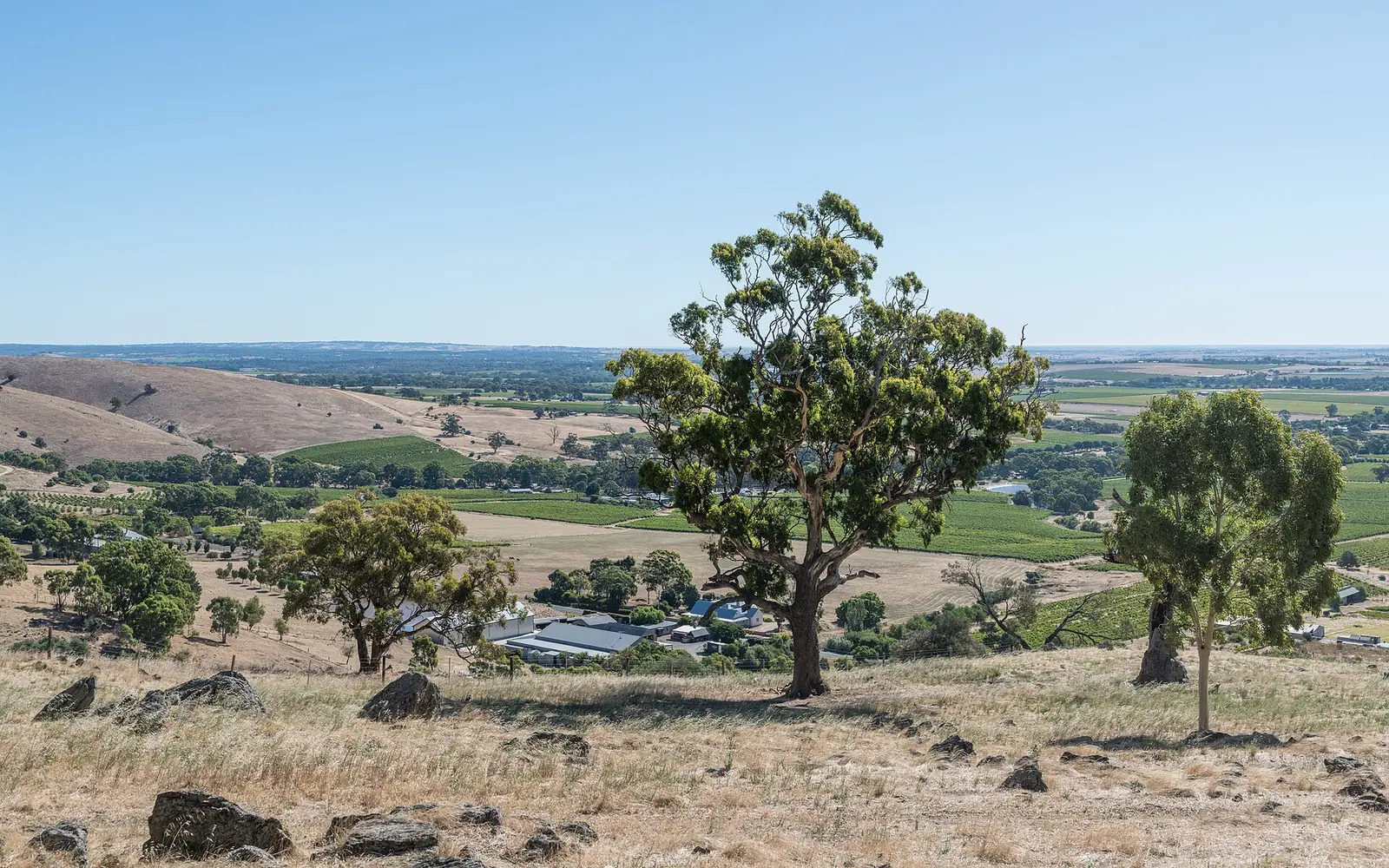
- Barossa Valley (South Australia): A 578 km² GI region north-east of Adelaide with about 11,609 hectares of vines, half of them Shiraz. Some of those Shiraz vines, dating to 1843, are among the oldest in the world.2
- Clare Valley and Eden Valley (South Australia): Australia's Riesling heartland. Clare's vineyards run from 190 to 609 m, cooled by cold nights and afternoon breezes, and Eden Valley's sit at 219 to 632 m in the hills beside the Barossa, cooler than the valley floor.11,12
- McLaren Vale (South Australia): Called the birthplace of wine in South Australia, with a warm Mediterranean climate cooled by breezes from Mount Lofty and Gulf St Vincent. Shiraz is the signature grape, on about 7,438 hectares of vines.15
- Coonawarra (South Australia): A small, flat region on the Limestone Coast near the Victorian border, known for a strip of red terra rossa soil over limestone and for age-worthy Cabernet Sauvignon. Cloud cover keeps it cooler than other South Australian regions.14
- Hunter Valley (New South Wales): Described as the home of Australia's first commercial vineyards, with about 2,605 hectares. Most rain falls in summer. It is known for Semillon and for Shiraz, its flagship red.16
- Yarra Valley (Victoria): The birthplace of Victoria's wine industry and one of Australia's coolest wine regions, with about 2,837 hectares. Pinot Noir and Chardonnay lead, alongside Shiraz and Cabernet Sauvignon.17
- Margaret River (Western Australia): Dairy and surf country until scientists in the 1950s and 1960s judged it well suited to high-quality grapes. The ocean on three sides keeps its Mediterranean climate cool; it has about 5,725 hectares of vines.13
Visiting
The Barossa is about 50 to 60 minutes' drive north-east of Adelaide. South Australia's tourism commission suggests autumn for its food and wine events.19
McLaren Vale is about 45 minutes south of Adelaide, the Yarra Valley about an hour from Melbourne, and Margaret River three hours from Perth.13,15,17
The Hunter Valley is just over two hours' drive from Sydney.16
Tasmania has four wine trails, and many of its vineyards follow valleys and waterways that help moderate temperatures and protect against frost.18