Some links earn us a commission at no extra cost to you. A commission never decides a pick. How we pick.
What orange wine is
Orange wine is white wine made the way red wine is made. Instead of pressing the juice off the skins before fermentation, as with most whites, the winemaker lets white grapes ferment with their skins, for days, weeks or sometimes months. The Oxford Companion to Wine puts the usual range at about a week to a year.
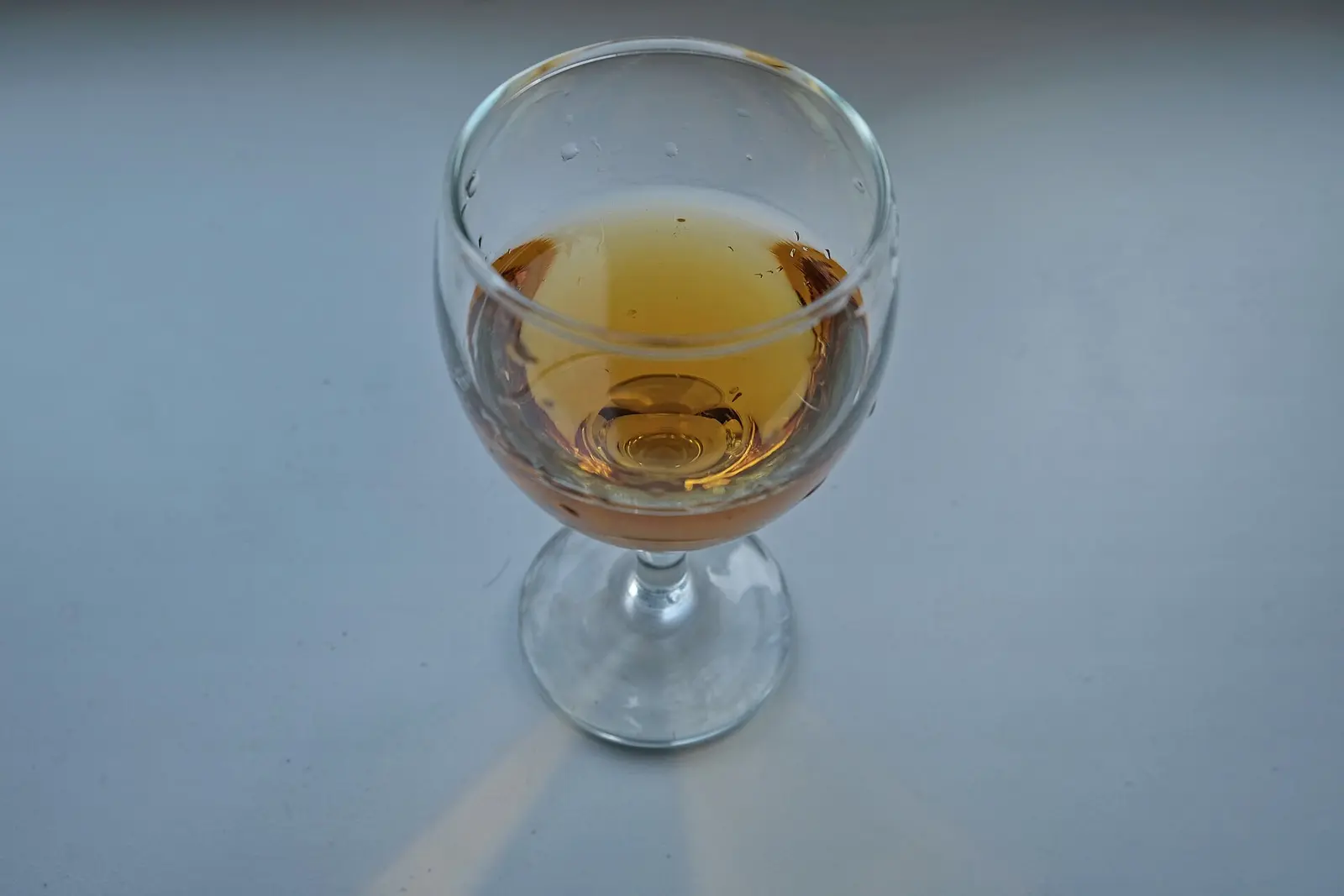
You'll also see it called skin-contact or amber wine. The color comes from the skins, not from the wine going stale: Decanter's Simon Woolf calls that a common misconception. And there's no legal category for it, so officially these wines are labeled as white wine.
Where it comes from
The oldest living version is in Georgia, where wine is made in the qvevri, an egg-shaped clay vessel. Grape juice goes in with the skins, stalks and seeds, and the sealed vessel is buried while the wine ferments and rests for months. UNESCO added the qvevri method to its list of intangible cultural heritage in 2013. Read more about Georgia.
On the border of Italy and Slovenia, in Friuli and Slovenian Brda, leaving white grapes on their skins was also an old local habit: an 1844 Slovenian winemaking manual already recommended it. Woolf writes that the practice faded as wineries modernized in the 1970s, then came back in the mid-1990s through two growers from the Friulian village of Oslavia, Stanko Radikon and Josko Gravner. Gravner looked to Georgia and moved to qvevri around the turn of the century; sources differ on the exact year.
The name "orange wine" is usually credited to UK wine merchant David Harvey, in 2004. Gravner himself prefers "amber." Today the style is made in most wine-producing countries, though Decanter still names Georgia, Slovenia and Italy as its heartlands.
What to expect in the glass
Skins bring tannin, the slightly drying grip you know from red wine, so orange wines have more structure than ordinary whites. Wine Enthusiast's sources say skins also add color and body and can push the flavors from fresh fruit toward nuts and dried fruit. How far a wine goes depends mostly on how long it stayed on its skins: a short soak adds a little richness, while months of contact can make a white wine behave more like a light red.
Some orange wines are bottled unfiltered and look hazy or throw sediment, which is intended. A sommelier quoted by Wine Enthusiast suggests standing the bottle upright for a day and decanting it if that bothers you.
How to serve it
Serve it cool, not cold. Woolf suggests about 50–54°F for lighter styles and 54–57°F for the more tannic ones, warming a bottle that seems closed. He compares the structure of many orange wines to light northern Italian reds, which is a good guide: lightly chilled on a warm day, a little warmer for older bottles. A glass with a wider bowl than a standard white-wine glass gives the wine room.
What to eat with it
The mix of freshness and tannin makes orange wine flexible at the table. Sources suggest cheeses, charcuterie, crisp-skinned roast chicken, and dishes built on spice, fermentation, herbs or umami, from curries to kimchi. The exception is very delicate seafood, which a more tannic orange wine can overwhelm; pick a lighter style for lighter food.
Words to look for on a label
- Orange, skin-contact or skin-fermented: the clearest signs.
- Amber: the word preferred in Georgia and by some producers.
- Ramato (Italian for copper): usually a skin-contact Pinot Grigio from northeastern Italy.
- Qvevri: fermented in Georgia's traditional buried clay vessels.
How we chose the bottle below
We don't taste wine. A bottle makes this list only when an independent critic, Wine Enthusiast or Decanter, has reviewed that exact wine and vintage. Where a retailer in the US, UK, Canada or Australia has that vintage in stock, we add a buy link labelled with its country. We're working through the world's best-reviewed orange wines now, and this list will grow.
Bottles worth finding
Santa Julia 2025 El Zorrito Natural Skin Ferment Chardonnay
- Evidence
- Wine Enthusiast, 90 points (Jesica Vargas, issue of July 1, 2026, 2025 vintage). Read the full review
- How it's made
- Santa Julia says it uses natural yeasts, adds no sulfites and doesn't filter this wine. Source
We haven't tasted this wine. The pick rests on the independent review cited here.
Where to buy
- United States Wine.com, $22.99 No commission · in stock November 17, 2026
Questions people ask
Is orange wine made from oranges?
No. It's made from white grapes left to ferment with their skins. The name describes the color, which runs from pale amber to deep copper.
Is orange wine the same as natural wine?
Not necessarily. Many orange-wine makers work with minimal intervention, but Decanter's Simon Woolf points out that it isn't required. "Orange" describes a method, skin contact; "natural" describes a wider approach to winemaking.
How cold should orange wine be?
Cool, not cold. Simon Woolf suggests about 50–54°F (10–12°C) for lighter styles and 54–57°F (12–14°C) for more tannic ones, letting a closed-seeming wine warm up in the glass.
What's the difference between orange wine and rosé?
Rosé usually comes from red grapes with brief skin contact. Orange wine comes from white grapes fermented on their skins, often for much longer, which adds tannin as well as color.
Who came up with the name "orange wine"?
UK wine merchant David Harvey is usually credited with it, in 2004. Harvey himself allows that someone may have used it earlier, though no earlier use has turned up.
Sources
- Simon Woolf, "Orange wines: it's time to get in touch", Decanter (2016)
- Simon Woolf, "How to serve orange wine", Decanter (2019)
- Chris Wilson, "What is orange wine?", Decanter (2022)
- "Orange wine", The Oxford Companion to Wine (via ckbk)
- UNESCO, "Ancient Georgian traditional Qvevri wine-making method" (2013)
- Lisa Bramen, "Orange Wine: What's Old Is New", Smithsonian Magazine (2010)
- Jillian Dara, "Orange Wine is Trending for All the Right Reasons", Wine Enthusiast (2020)
- Tom R. Capo, "The Different Styles of Orange Wine", Wine Enthusiast (2024)
- "Wine 101: Orange Wine", VinePair (2021)
- Jamie Goode, "Orange wines are now a thing, but who invented the term?", Wine Anorak (2019)
- Madeline Puckette, "Everything You Want to Know About Orange Wine", Wine Folly (2018)
- Santa Julia, "El Zorrito" (producer page)