The story
Wine in Austria's Danube regions goes back about 2,000 years; systematic winegrowing began under the Romans. In the Middle Ages large parts of today's Vienna were planted with vines, and Burgenland's tourism board calls that province the cradle of Austrian wine.1,2
The Wachau is first mentioned in a Carolingian document from 830, and its wine was known beyond Austria in the Middle Ages. The valley is framed by the Benedictine abbeys of Melk and Göttweig.3
In 1985 West German labs found that some Austrian wineries had illegally added diethylene glycol to make wines taste sweeter and fuller, like late-harvest wines. West Germany issued a health warning on July 9, 1985, and about 27 million liters were later destroyed.4
Austrian wine exports fell from about 45 million liters a year before the scandal to about 4.4 million in 1986, and did not return to the old level until 2001. Parliament passed a stricter wine law on August 29, 1985, including a numbered seal on quality wine bottles.4
In the rebuild, producers moved toward dry white wines and higher-priced segments, and recovery took more than a decade. Austria later added DAC appellations for wines typical of their region, starting with Weinviertel from the 2002 vintage.4,5
Wachau growers founded the Vinea Wachau association in 1983. Its members hand-pick and commit to no enrichment or aromatization, and it created the Steinfeder, Federspiel and Smaragd categories.1
Zweigelt was bred in 1922 by Friedrich Zweigelt at Klosterneuburg, crossing St. Laurent and Blaufränkisch. Because Zweigelt was a committed Nazi, a public debate over renaming the grape began in 2018; Rotburger remains a legal synonym.6
Recognition
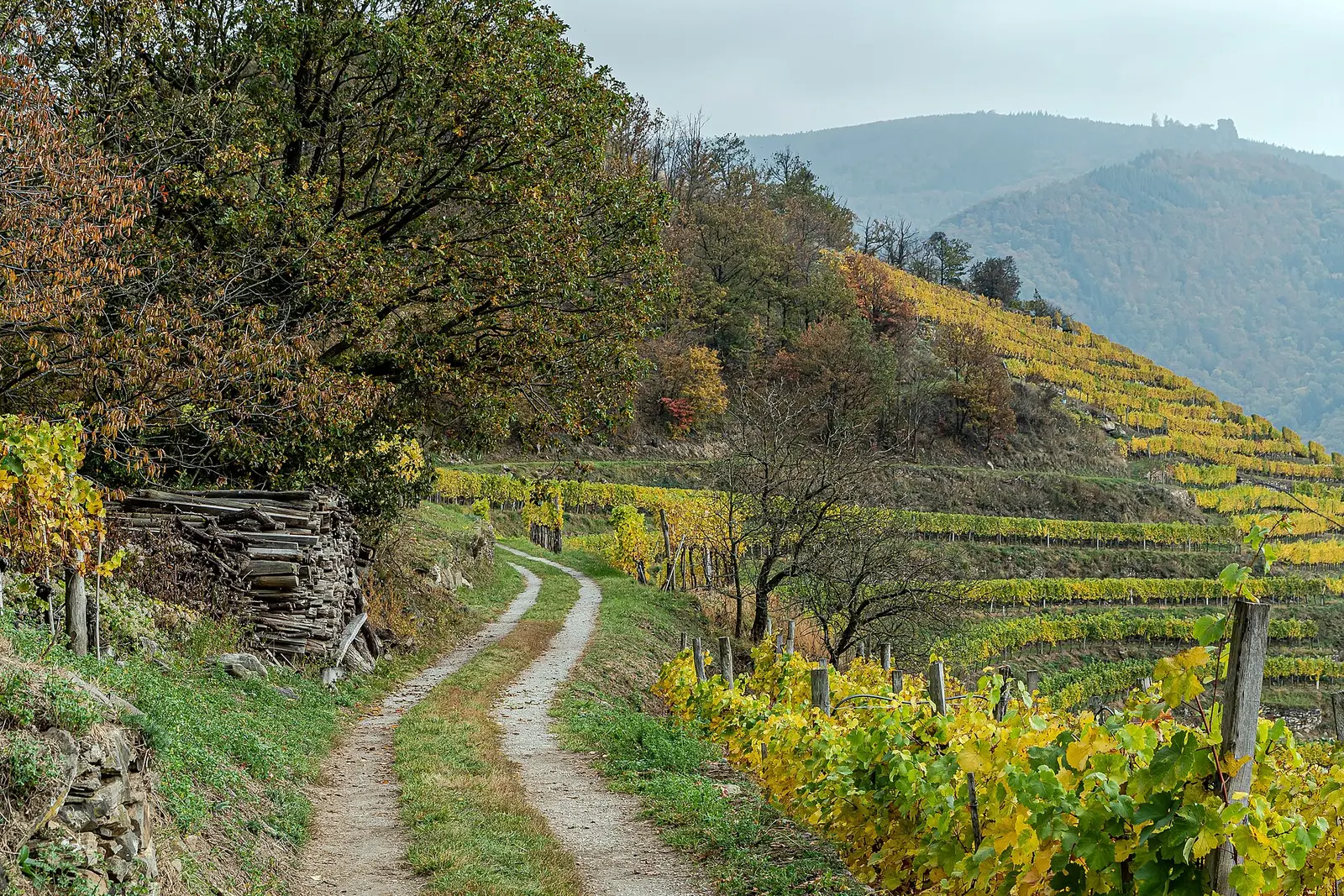
The Wachau Cultural Landscape was added to UNESCO's World Heritage List in December 2000. Its dry stone walls, about 2.5 to 3 million square meters of them holding up over 40% of the Wachau's vineyards, are typical of the site; Vienna's Heuriger culture is separately recognized as intangible cultural heritage.15,16,17
Signature styles
- Wachau Steinfeder (light-bodied white, dry): The lightest Vinea Wachau category: dry, unoaked white at up to 11.5% alcohol, light and fragrant with a fresh taste. It is named for a feather grass that grows on the stony terraces.20
- Wachau Federspiel (white, dry): A dry, unoaked, medium-bodied white at no more than 12.5% alcohol, named for the lure used in falconry.20
- Wachau Smaragd (full-bodied white, dry): The top Vinea Wachau category: dry, unoaked white of at least 12.5% alcohol from grapes left longest on the vine, described as powerful, complex, structured and long-lived. It is named for the emerald lizard of the dry stone walls.20
Grapes to know
- Grüner Veltliner (white): Austria's leading white grape, on around a third of the country's vineyards. It is one of only two grapes allowed for the Wachau's single-vineyard wines and the leading grape in the Kamptal.7,8,9
- Riesling (white): With Grüner Veltliner, one of the two grapes allowed for Wachau single-vineyard wines. In the Kamptal it is central on the Heiligenstein, considered a premier site.8,9
- Blaufränkisch (red): A traditional red on about 6% of Austria's vineyards. Mittelburgenland is called Blaufränkisch country, and Eisenberg in the south makes fruity, mineral-spicy versions.2,5
- Zweigelt (red): A 1922 cross of St. Laurent and Blaufränkisch, now on about 13% of Austria's vineyards. The Neusiedlersee DAC in Burgenland centers on it.2,5,6
- Sauvignon Blanc (white): One of Styria's top three grapes, on about 800 ha, and on the list for the Styrian DACs.10,11
- Welschriesling (white): Styria's second most planted grape, on about 698 ha. The tourism board describes it as tangy and lightly spicy, a match for wine-tavern snack platters.10
- Blauer Wildbacher (Schilcher) (red): Styria's main red grape, used for Schilcher, with red-berry aromas. Schilcher is a permitted variety in the Styrian DAC system.10,11
- Zierfandler and Rotgipfler (white): Native white grapes for which Lower Austria's Thermenregion is known.12
Where it grows
- Wachau: About 33 km of the Danube valley between Melk and Krems, with vines on terraces up to about 450 m. Soils are weathered gneiss on the terraces and loess lower down, and Grüner Veltliner and Riesling lead.3,8
- Kamptal: A Lower Austria region on loess, primary rock and gravel, with Langenlois as its wine town. The Kamptal DAC covers Grüner Veltliner and Riesling.9
- Burgenland: Considered Austria's top red wine region, with a mild Pannonian climate. Its DACs include Neusiedlersee (Zweigelt), Leithaberg, Rosalia, Mittelburgenland and Eisenberg (both Blaufränkisch).2,13
- Steiermark (Styria): About 5,100 ha in three DACs, Südsteiermark, Vulkanland Steiermark and Weststeiermark, introduced with the 2018 vintage. Vineyards steeper than 26% count as mountain vineyards and are worked largely by hand.10,11
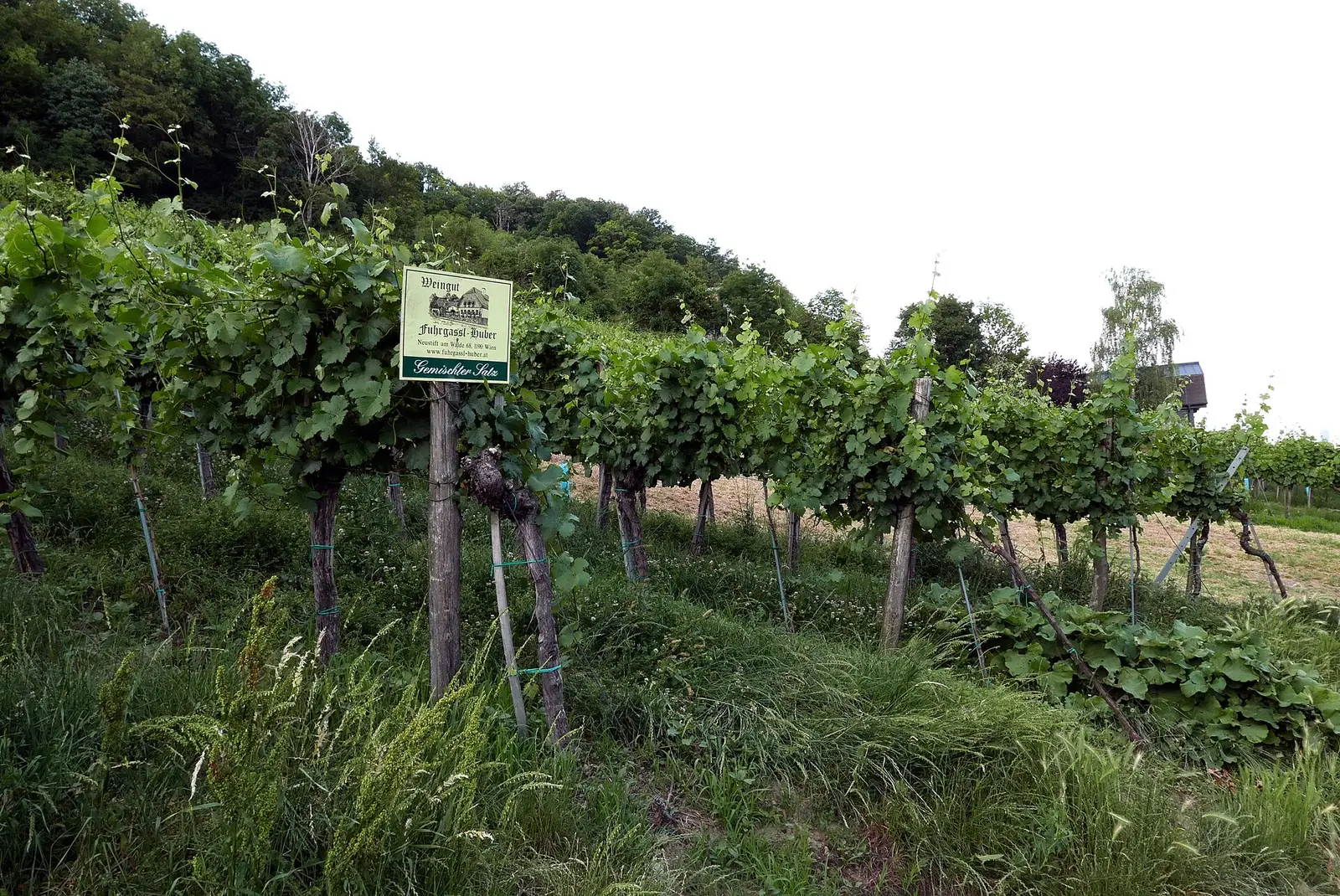
- Wien (Vienna): A capital city with about 588 ha of vineyards inside its limits. Its specialty is Wiener Gemischter Satz, a field blend that has had DAC status since the 2013 vintage.5,14
Visiting
In the Wachau the harvest usually starts in September and can run into early November, finishing last around Spitz; in the early 2026 vintage it was done by mid-October.18
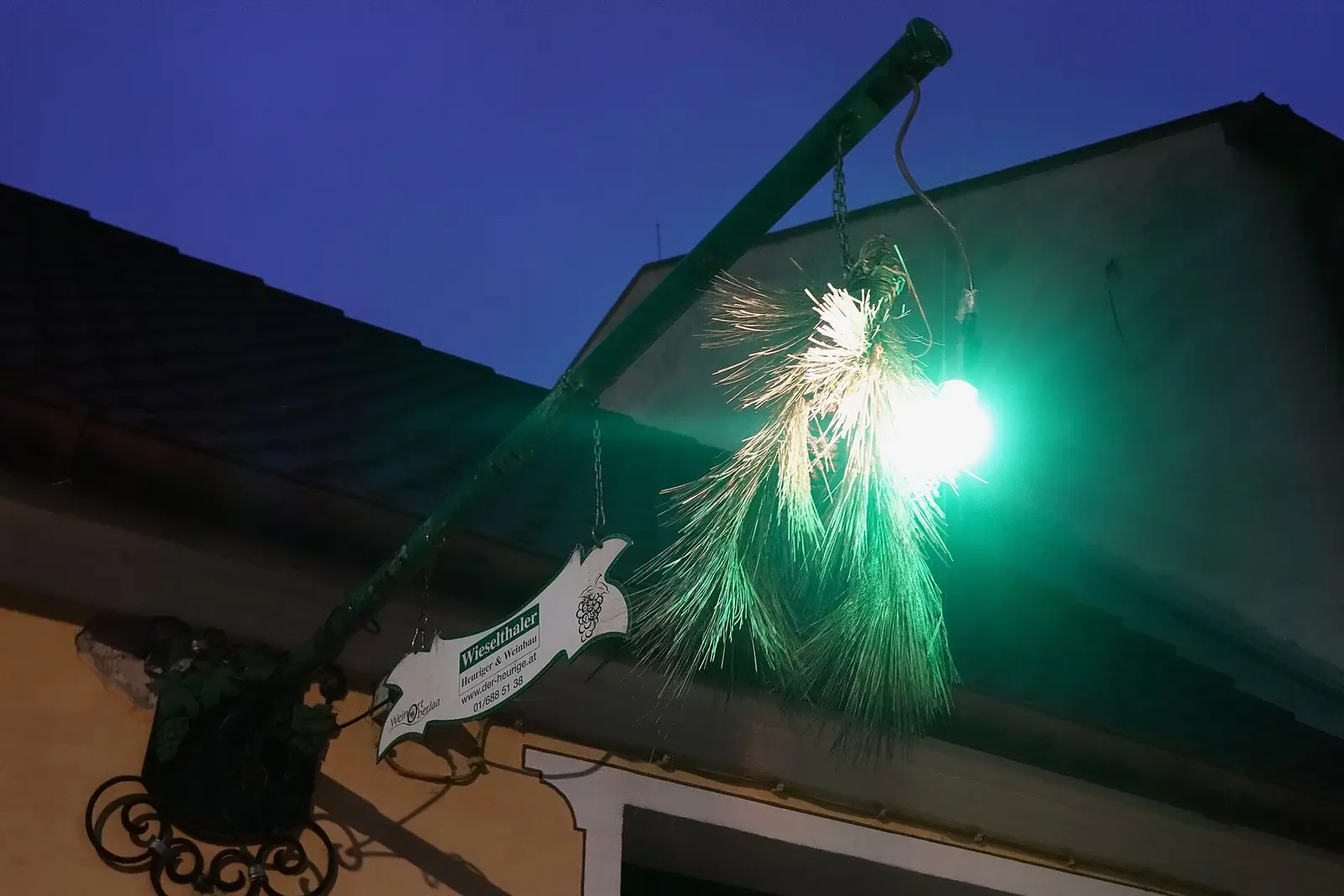
Vienna's Heurigen are wine taverns that serve only wine from their own vineyards, with food alongside. A genuine one hangs out pine bushes and an 'Ausg'steckt' sign when open, and the classic ones are in old wine villages such as Grinzing, Nussdorf, Sievering and Neustift.17
The Wachau World Heritage Trail is a 180 km hiking route through 14 municipalities on both banks of the Danube, past vineyards, castles and palaces.19
In Langenlois in the Kamptal, the Ursin Haus wine shop stocks over 300 wines from about 60 wineries, and Riesling and Veltliner cycling routes run through the vineyards.9
Styria has a network of signposted wine roads, including the South Styrian Wine Road and the Schilcher Wine Road, and an eight-day cycling tour across the whole wine country.10