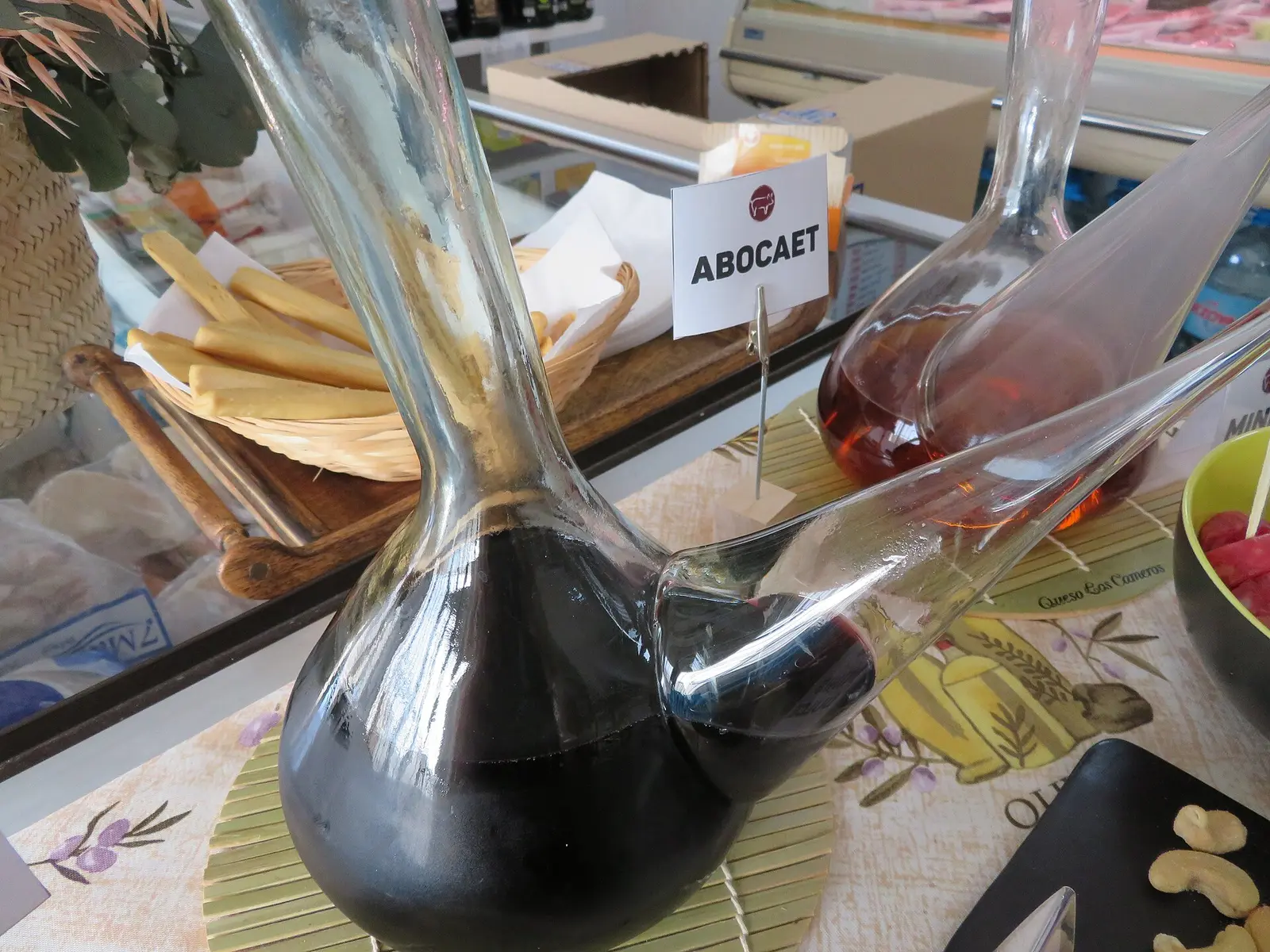
The porrón
porró (Catalan), porrón (Spanish)
The porrón is a Catalan glass wine pitcher with a long spout, passed around shared meals so each person pours a thin stream without touching the spout.
History
The porrón's origins are unclear. Journalist Salvador Garcia-Arbós, author of a 2025 history of it, cites a 14th-century example from the pharmacy of the Poblet monastery, notes that English and French travel writers mention it in the 17th and 18th centuries, and says documents clearly calling for glass date from the 19th century.1
The porrón also served as a measure. A Catalan government museum record says it was used to measure wine and milk because those containers were all made the same size, and travel texts of the 17th and 18th centuries mention it as a unit of measurement.1,2
At home, a porrón was often filled with about a third wine and a third water, topped with a splash of soda water, according to a 2018 VilaWeb report. Offering a guest the porrón was a gesture of courtesy, and glasses came out only for the town's festa major.3
George Orwell met the porrón while serving in the Spanish Civil War. In Homage to Catalonia (1938) he describes it as a glass bottle with a pointed spout passed from hand to hand, and he asked for a cup instead.4
The porrón faded from the table as families moved from bulk wine to bottled wine and drinking glasses. Garcia-Arbós is campaigning to bring it back as a symbol of conviviality, saying it has lately been praised more than used.1,3
Who does what
- Host: The host fills the porrón through its wide neck, never the spout, and offers it to guests. In Catalan homes, offering the porrón to a visitor was a sign of courtesy and generosity.3,5
- Each guest: Each person lifts the porrón, pours a thin stream without letting the spout touch the lips, and then passes it to the next person at the table.4,6
- Glassblower: Porrons were hand-blown, and buyers once chose where the spout was cut, making it wider or narrower. VilaWeb notes that Mallorca had the best glassblowers and that skilled makers later became harder to find.1,3
How to do it at home
- Choose a blown-glass porrón with a cork stopper. Most hold about a standard 750 ml bottle, and Garcia-Arbós says a narrower spout lets you taste the wine better.1,6,7
- Fill it through the wide neck. Any wine works: a sommelier recommends cava, Turisme de Barcelona suggests good local wine, and in the Basque Country the classic choice is txakoli, a light, slightly sparkling white.5,6,8
- Let first-timers practice with water or white wine, which won't stain, and set out napkins.5,6,7
- To pour, hold the porrón by its neck a few inches from your mouth, tilt your head back and tip it so a thin stream flows. Ease your arm away as you pour, and stop the stream with a turn of the wrist; the spout should never touch your lips.5,6,7
- Pass the porrón to the next person when you finish. Because no one's lips touch it, one vessel can go around the whole table.6,7
- Keep glasses on the table too. A sommelier quoted by Diari de Tarragona says beginners can simply pour from the porrón into a glass, and that all pouring styles are accepted.5
- Build the meal around shared food. Turisme de Barcelona pairs the porrón with a calçotada, where charred spring onions are wrapped in newspaper, served on a roof tile and dipped in salvitxada sauce.8
Drink responsibly. Never drink and drive. If you're pregnant, don't drink alcohol.
Food
The calçotada is a Catalan winter gathering of family and friends. Calçots, long spring onions, are charred over an open flame, and diners peel them, dip them in sauce and eat them by hand, often wearing a bib.8
The salvitxada sauce for calçots blends dried ñora peppers, roasted tomatoes and garlic, almonds, hazelnuts, bread, olive oil and vinegar. Turisme de Barcelona recommends good local wine, ideally in a porrón.8
Garcia-Arbós links the porrón to shared outdoor meals and says few things beat an outdoor dinner with a porrón passed around the table.1
A sommelier quoted by Diari de Tarragona recommends the porrón for calçotades and celebrations, and with cava, sweet wines and aged wines.5
Vessels and serving
The porrón is a glass jar with a wide neck and a tapered spout that narrows to a small opening. Unlike a setrill, it has no separate handle; the neck serves as the grip.2,5,7
Spout width once carried a political joke. A wide spout was called a "liberal" porrón and a narrow one a "Carlist" porrón, reflecting the buyer's politics.1
Drinking from a spout is called beure a galet in Catalan. The galet can also be a cork fitted with a cane and grooved to let air in, which turns an ordinary bottle into a pourer.3
Glass is neutral and does not change the wine, but a sommelier notes that you can't take in the aromas as fully as from a glass.5
Etiquette
Never put your lips on the spout or drink straight from it. This is the one rule sources treat as fixed, because it keeps the shared vessel hygienic.3,5,6
Otherwise there is no formal protocol. Holding the porrón by the neck with a raised arm is traditional, but any style is accepted.5
Pour without dribbling, and pass the porrón on when you are done so it keeps moving around the table.3,6
It is fine to decline or ask for a glass. Orwell did exactly that, and today a guest can pour from the porrón into a glass.4,5
The porrón is about sharing. A sommelier calls it a symbol of friendship and the essence of the Mediterranean table, and Garcia-Arbós says it can stay on the table even when no one drinks from it.1,5
More on the place: Spain.
Questions people ask
What is a porrón?
A porrón is a traditional Catalan glass wine pitcher with a wide neck and a long, tapered spout. People pour a thin stream into their mouths without touching the spout, so one vessel can be shared around a table.2,6,7
How do you drink from a porrón?
Hold it by the neck a few inches from your mouth, tilt your head back and tip it so a thin stream flows. Move it away gradually, stop with a turn of the wrist, and never let the spout touch your lips.5,6
What wine goes in a porrón?
Any wine works. A Catalan sommelier recommends cava, Turisme de Barcelona suggests local wine with a calçotada, and in the Basque Country the classic choice is txakoli.5,6,8
Where does the porrón come from?
It is a Catalan tradition with unclear origins. One historian cites a 14th-century example from Poblet monastery, travel writers mention it in the 17th and 18th centuries, and glass versions are clearly documented from the 19th century.1,7
Is it rude to ask for a glass instead?
No. There is no formal protocol beyond keeping your lips off the spout, and guests can pour from the porrón into a glass.5
Sources
- The vindication of the porrón, the Catalan invention that fascinated "everyone", Ara (English edition) (2025). Accessed 2026-11-18.
- Porrón (glass wine jar with tapered drinking spout), Visitmuseum, Generalitat de Catalunya (Baells Dam Information Centre, Cercs Mines Museum). Accessed 2026-11-18.
- El porró i el beure a galet, VilaWeb (2018). Accessed 2026-11-18.
- Homage to Catalonia (Chapter I), Marxists Internet Archive (transcription of the 1938 book) (1938). Accessed 2026-11-18.
- Beure en porró: la tradició de compartir el vi a taula, Diari de Tarragona (2017). Accessed 2026-11-18.
- There Is A Polite Way To Pour Wine In Your Friend's Mouth At A Dinner Party, Food Republic (2023). Accessed 2026-11-18.
- Your New Favorite Backyard Wine Accessory: The Porrón, VinePair (2016). Accessed 2026-11-18.
- Calçotada, Turisme de Barcelona (This is Barcelona). Accessed 2026-11-18.
More traditions
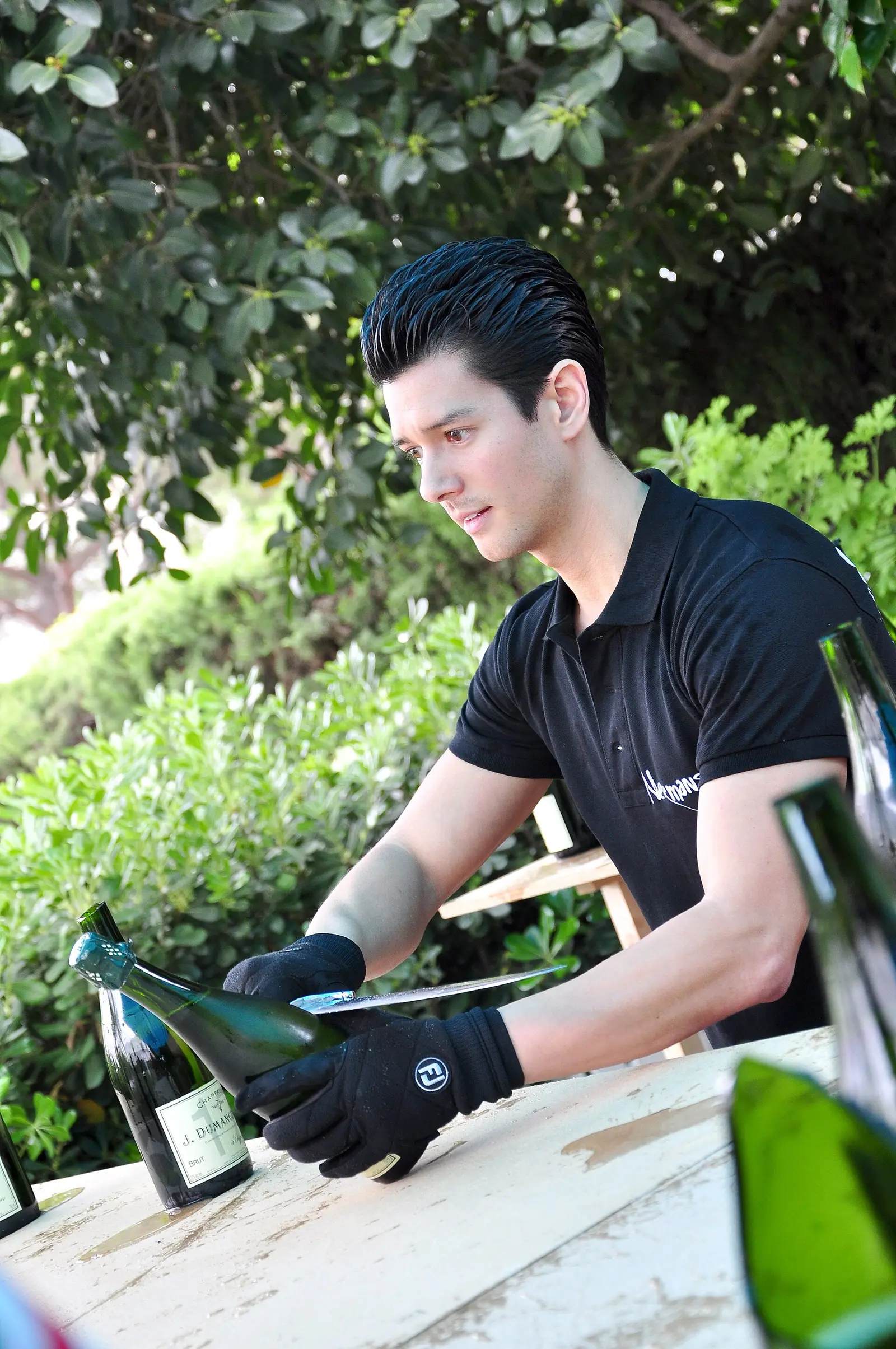 France
Champagne sabrage
Opening Champagne with a sabre: a ceremonial trick tied to Napoleon's cavalry, and why safety comes first.
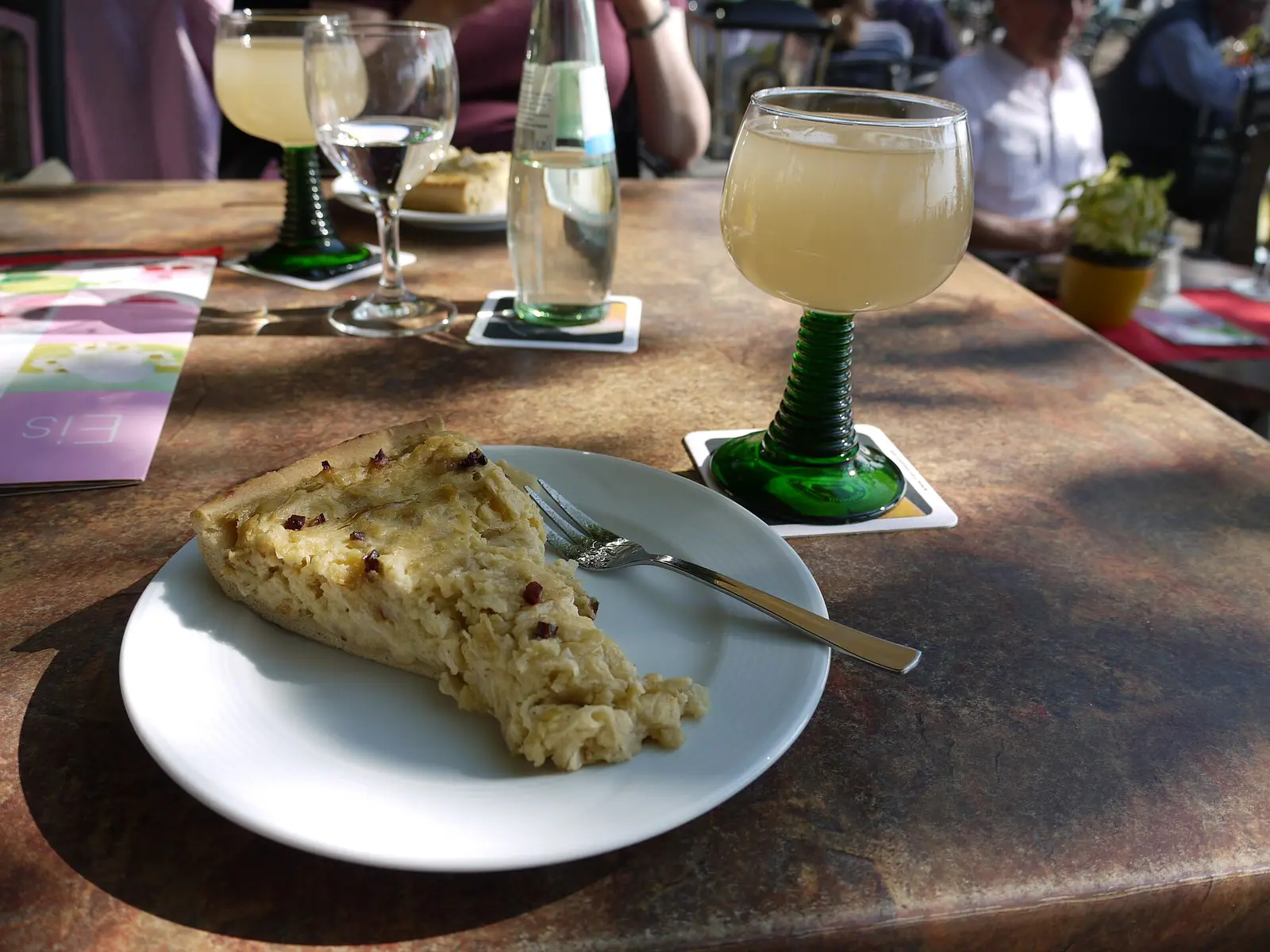 Germany
's wine festivals
Bad Dürkheim's 600-year-old Wurstmarkt, wine queens, seasonal taverns and autumn Federweißer with onion tart.
 Porto and Vila Nova de Gaia, with the Douro Valley, Portugal
Port in Porto
Port ages in the riverside lodges of Vila Nova de Gaia, and by British custom the decanter goes to the left.
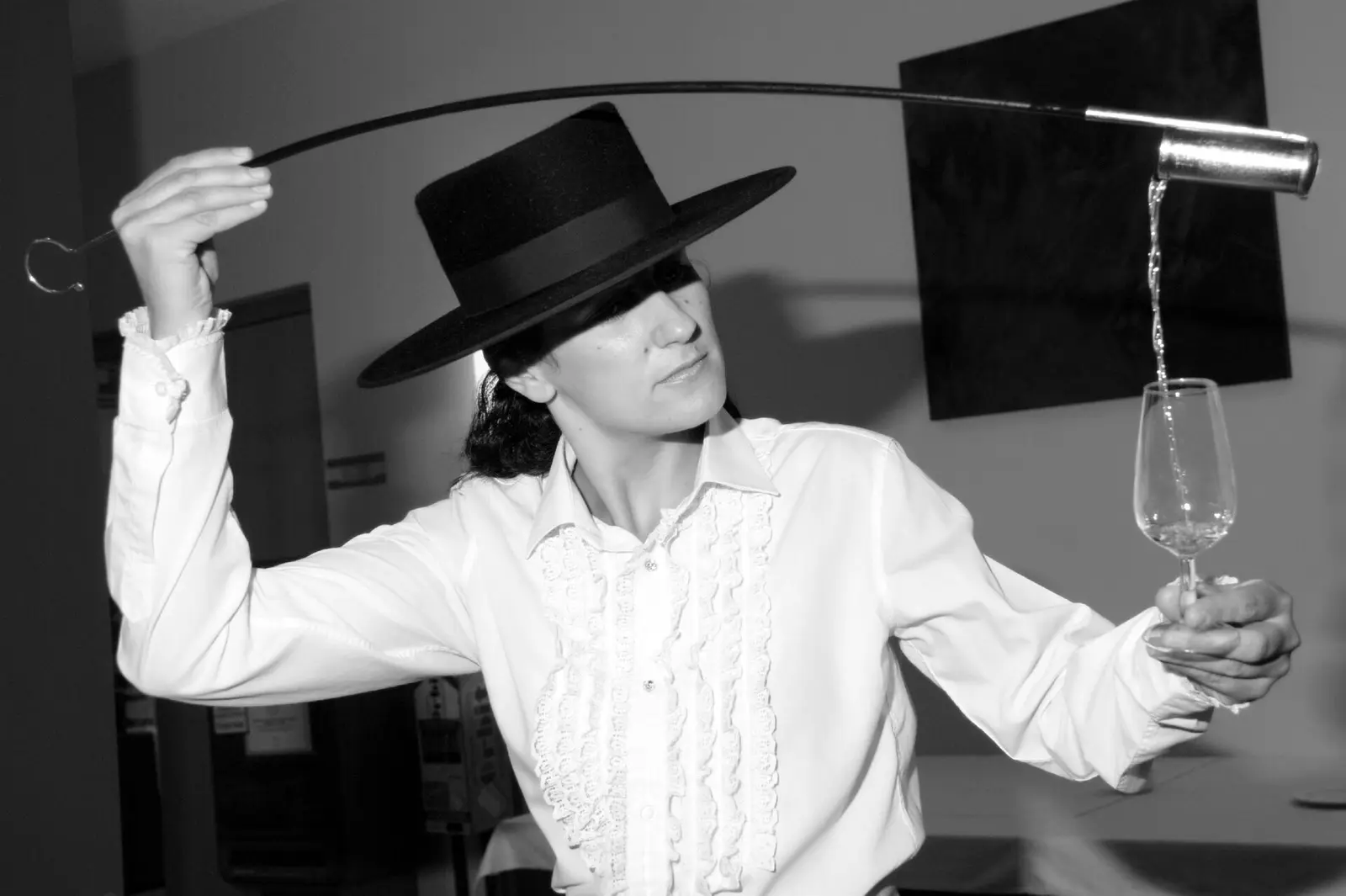 Jerez de la Frontera and Sanlúcar de Barrameda, Andalusia, Spain
Sherry and tapas in Jerez
In Jerez, sherry comes with small plates: chilled fino with ham and olives, richer styles with heartier tapas.