The story
Wine has been made in Argentina for almost 500 years. Infobae reports that for about the first 350 years, from 1556, it was a craft product made for local and regional drinking.1
In the mid-19th century Domingo Faustino Sarmiento pushed to turn winemaking into an industry, bringing in French experts and imported vines, Malbec among them. The usual account dates this to April 17, 1853, when the French agronomist Michel Aimé Pouget was asked to bring new vines to Argentina.1,2
Malbec comes from France, where it is also called Côt. Grape DNA records list its parents as Magdeleine Noire des Charentes and Prunelard. In France it is tied to Cahors, and it fell out of favor in Bordeaux after a severe frost in 1956.3,4
After a prosperous 1930s, repeated crises, overproduction and falling quality led many Argentines to switch from wine to beer, and several large wineries closed. Malbec vineyards shrank from about 60,000 to 15,000 hectares before recovering to about 50,000.1
From the 1990s the industry modernized and exports grew, reaching about US$800 million in sales abroad, though home drinking has fallen to about 22 liters per person a year.1
A 2010 decree named wine Argentina's national drink, and Law 26.870, passed on July 3, 2013, confirmed it. The Day of Argentine Wine is held on November 24.1,5
The Instituto Nacional de Vitivinicultura (INV), a national agency, guides and oversees the wine industry so that its products are genuine and fit to drink. It publishes vineyard and harvest statistics and weekly harvest reports.6,7
Signature styles
- Mendoza Malbec (full-bodied red): Wines of Argentina describes the traditional Malbec style as full-bodied and oak-aged, now joined by fresher, more versatile wines.8
- High-altitude Torrontés (white, crisp): Torrontés Riojano is often planted in high, sandy vineyards above 1,600 meters, which gives wines with high acidity and assertive flavors.18
Grapes to know
- Malbec (red): Argentina's flagship grape, originally from France. Infobae puts Argentine Malbec plantings at about 50,000 hectares, up from a low of 15,000.1,3,8
- Torrontés Riojano (white): Salta's flagship white grape. A 2003 DNA study found it is most likely a cross of Muscat of Alexandria and Criolla Chica, a parent the researchers did not expect.9,10
- Torrontés Sanjuanino (white): A separate Torrontés from Torrontés Riojano. The same 2003 study found it is also most likely a Muscat of Alexandria and Criolla Chica cross.10
- Criolla Chica (red): The VIVC grape database lists this parent of Torrontés Riojano under the name Listán Prieto. Its role as a parent surprised the DNA researchers.10,11
- Tannat (red): One of the reds grown along Salta's high-altitude wine route, with Malbec, Cabernet Sauvignon, Bonarda, Syrah, Barbera and Tempranillo.12
- Syrah (red): Used for premium reds in San Juan, a region hotter and drier than Mendoza.13
- Pinot Noir (red): Grown in cooler Patagonia, including Río Negro, and on Chubut's far-south wine route alongside Chardonnay, Sauvignon Blanc and Riesling.13,14
Where it grows
- Luján de Cuyo (Mendoza): One of Mendoza's warmer zones in the north of the province, with Agrelo. It was the first controlled appellation set up in Mendoza, in 1993.13,15
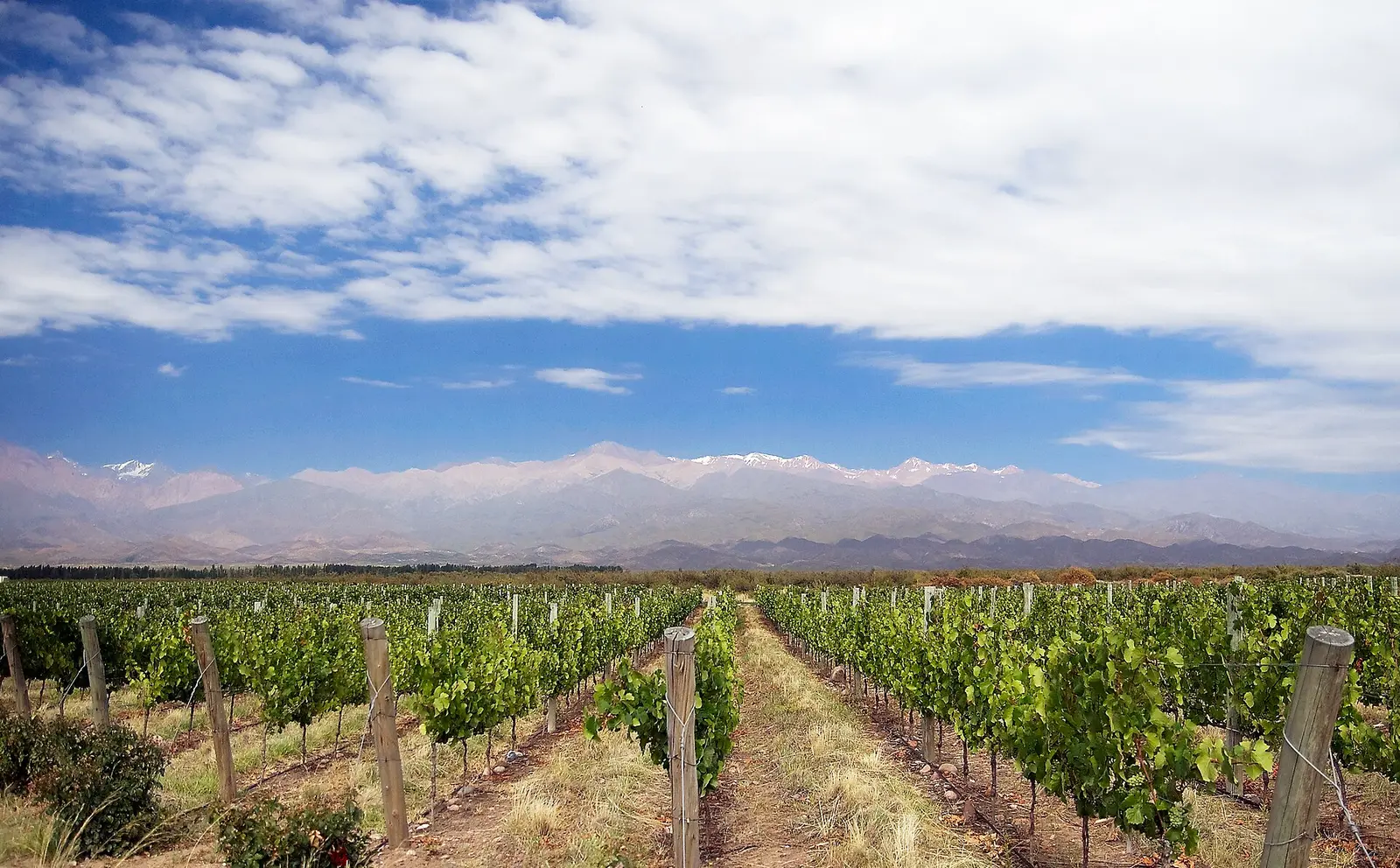
- Uco Valley (Mendoza): Mendoza's cooler southern zone, including Tupungato and La Consulta. Wine Spectator described Altamira, a high, cool area, as making sleek, stylish wines.15
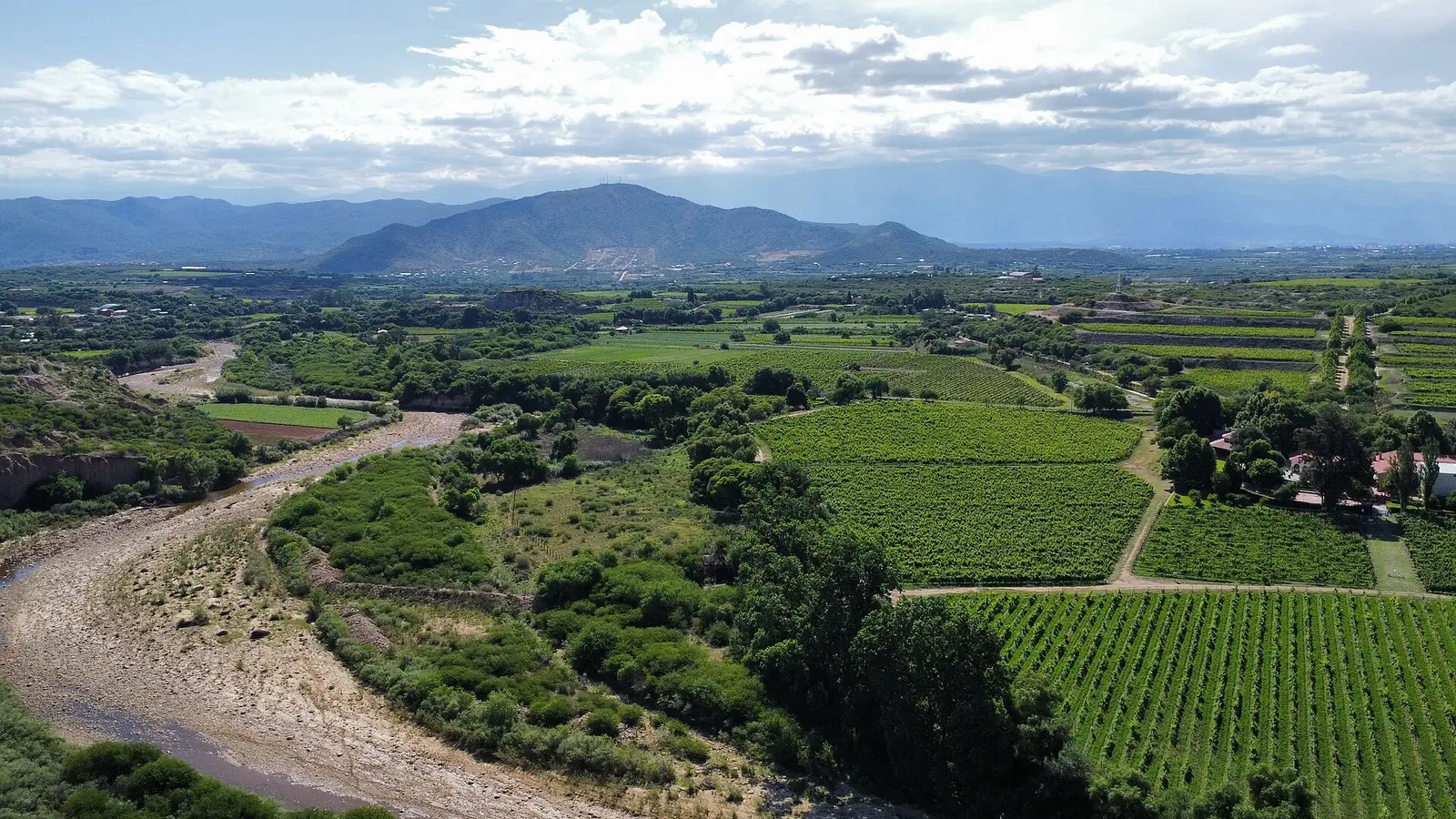
- Cafayate and the Calchaquí Valleys (Salta): Vineyards sit between 1,600 and 3,100 meters, on what Salta's tourism board calls the highest wine route in the world. Large swings between day and night temperatures shape the wines, and Torrontés is the local signature.9,12
- Patagonia: Río Negro and Neuquén are cooler than the main regions to the north, with Pinot Noir, Chardonnay and Malbec. Farther south, Chubut's wine route is among the most southerly in the world.13,14
- San Juan: Described as Argentina's second-largest wine region after Mendoza, much hotter and drier, with about 150 mm of rain a year. Premium wine centers on Calingasta, Ullum, Zonda and the Tulum Valley.13
Visiting
Mendoza's Fiesta Nacional de la Vendimia, the national harvest festival, has been held since 1936. The main show, on the first Saturday of March at the Frank Romero Day Greek Theatre, follows parades of floats through the city and a Catholic blessing of the fruits.16
Cafayate is about 186 km, or 3.5 hours, from the city of Salta. Its Museo de la Vid y del Vino explains local winemaking, and the Serenata a Cafayate folk music festival is held in February.9
Salta's high-altitude wine route follows National Routes 68 and 40 through towns such as San Carlos, Molinos, Seclantás and Cachi.12
Chubut's wine route in Patagonia runs 705 km in three sections: the Trevelin valley, the 42nd Parallel area and the steppe.14
Malbec World Day is celebrated on April 17. Wines of Argentina first held it in 2011, with events abroad that included a tasting day at Harrods in London.8,17