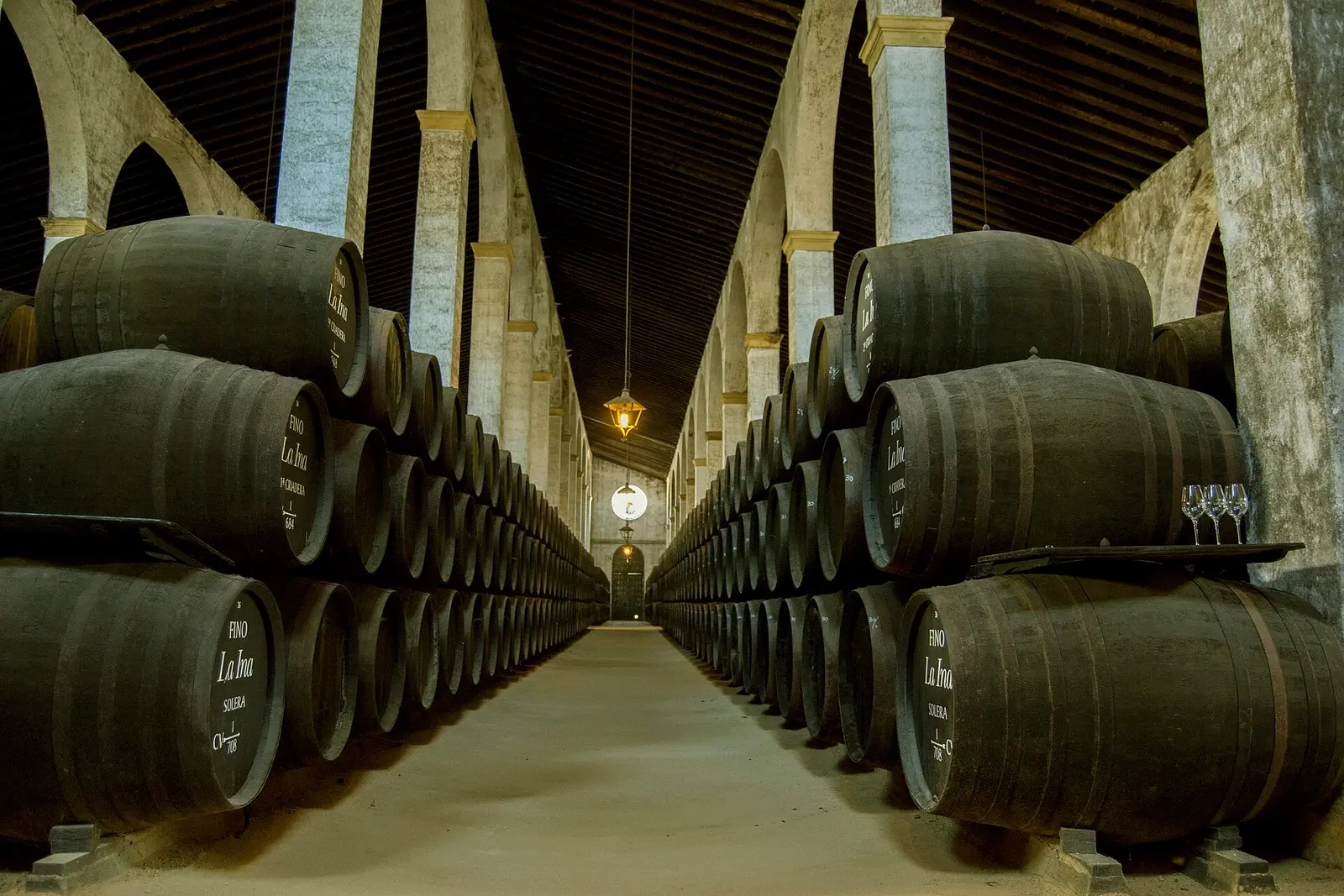
The solera system
criaderas y solera
A solera ages sherry in tiers of casks. Wine is drawn from the oldest tier and refilled from younger ones, so each bottle blends many years.
History
The Consejo Regulador traces vines around Jerez to the Phoenicians, about 1100 BC, citing the Greek geographer Strabo and wine-press remains at Castillo de Doña Blanca. On 12 August 1483 the town council set rules for the guild of raisin and grape harvesters, which the Consejo treats as the earliest rules of the denomination.1
For centuries the region's wine was kept in earthenware amphorae and jars; wooden casks came into use from the Middle Ages.2
A strict vintners' guild once shaped how Jerez wine was made. A legal fight by shippers that began in 1775 ended decades later with the guild's abolition, which Whisky Magazine dates to the 1820s and links to the rise of the criaderas and solera system.1,3
The Consejo Regulador says the solera system and the typical bodega design took on their distinct character in the late 18th century, without giving an exact year. Sherry exports were rising sharply around the turn of the 19th century, and many large 'cathedral' bodegas were built in its first half.1,4
Spain's first wine law in 1933 recognized the Jerez Denomination of Origin. Its Consejo Regulador was set up in 1935 under that law, the first such council created in Spain.1,5
Who does what
- Solera and criaderas (solera, criaderas): The solera is the bottom row of casks, named for the Spanish word for floor, and holds the oldest wine, ready for bottling. The rows above, called criaderas, hold younger wine; the first criadera is the closest in age to the solera.2,3
- Cellar workers who move the wine (trasegadores): Wine drawn from the solera (the saca) is replaced with wine from the next younger row (the rocío), and so on up the system. Specialist workers called trasegadores move the wine without disturbing the yeast film or the fine lees.2
- The flor yeast (velo de flor): For fino and manzanilla, a film of yeast called flor grows on the wine and protects it from air. The Consejo calls the solera 'the only viable method' for this biological ageing, because younger wine feeds the flor with nutrients and a little oxygen.2
- The Consejo Regulador: The Consejo Regulador certifies sherry. For 20- and 30-year-old sherries (VOS and VORS) it certifies each lot, using lab tests that include carbon-14 and a tasting committee; for 12- and 15-year-old sherries it certifies the whole solera system.5,6
How to experience it
- Look for the style on the label. Fino and manzanilla are aged under flor; oloroso is fortified to 17% so no flor grows and it ages with air, concentrating as water evaporates through the cask.2,7,8
- Look for 'V.O.S.' or 'V.O.R.S.' for sherries certified at an average age over 20 or over 30 years, or a '12' or '15' years age statement.6
- Know what a solera bottle is not: a single vintage. The Consejo contrasts it with static 'añada' sherries, where one harvest is aged on its own and never blended with other years.2,6
- Serve fino and manzanilla well chilled, about 5–8 °C, other oxidatively aged sherries at 12–14 °C, and VOS or VORS at about 15 °C. The Consejo prefers a white wine glass with a generous bowl and long stem over the small 'sherry glass'.7,9
- Keep an open bottle corked in the fridge: about a week for fino or manzanilla, up to two months for other styles and three months for VOS or VORS. Store unopened bottles upright.9
- To see a solera in person, visit the bodegas of the Jerez region. The Consejo says they draw over half a million visitors a year, and its Sherry Wine and Brandy Route, created in 2006, lists more than 100 member bodegas, bars, hotels and restaurants.10
Drink responsibly. Never drink and drive. If you're pregnant, don't drink alcohol.
Food
The Consejo pairs fino with olives, nuts and Iberian ham as an aperitif, with salty or raw fish, and with vinaigrettes and cold soups such as gazpacho and ajo blanco.7
Manzanilla suits fish, seafood, salted fish and cured meats.11
Oloroso is matched with red meat, game and stews, especially gelatinous cuts such as oxtail or cheeks, plus wild mushrooms and well-cured cheeses.8
Vessels and serving
Today's standard cask is a 600-liter American oak butt. Butts used for flor wines are filled to about 500 liters, leaving 'two fists' of air so the yeast has room to grow.2
Wood lets water evaporate, so the wine loses about 3 to 5 percent of its volume a year and becomes more concentrated.2
Bodegas are tall, with thick walls and floors of albero earth that can be watered to keep them cool and humid. Flor wines usually sit in the cooler bottom rows.2,4
For fino and manzanilla, the Consejo suggests the traditional wide-rimmed catavino or a white wine glass.7,11
Etiquette
Manzanilla must be aged entirely in bodegas in Sanlúcar de Barrameda, at the mouth of the Guadalquivir, whose sea air favors the flor.11
For a tasting, one guide on the Consejo's site suggests going from manzanilla to fino, then amontillado, palo cortado and finally oloroso.12
More on the place: Spain.
Questions people ask
How does a solera work?
Casks are set in tiers by age. Some wine is drawn from the oldest tier (the solera) and replaced with wine from the next younger tier, which is refilled from the one above it. The oldest wine is constantly refreshed by younger wine.2
How old is the wine in a solera sherry?
It is an average. The Consejo divides the total volume in the system by the volume drawn each year, and the result must be over two. All sherry must age at least two years.2
Sources
- History of Sherry, Consejo Regulador D.O. Jerez-Xérès-Sherry (sherry.wine). Accessed 2026-11-18.
- Types of Ageing, Consejo Regulador D.O. Jerez-Xérès-Sherry (sherry.wine). Accessed 2026-11-18.
- The enduring legacy of Sherry, Whisky Magazine (2018). Accessed 2026-11-18.
- The Sherry Bodega – a Wine Ageing Machine, Consejo Regulador D.O. Jerez-Xérès-Sherry (sherry.wine) (2015). Accessed 2026-11-18.
- Consejo Regulador, Consejo Regulador D.O. Jerez-Xérès-Sherry (sherry.wine). Accessed 2026-11-18.
- Special Categories of Sherry Wines, Consejo Regulador D.O. Jerez-Xérès-Sherry (sherry.wine). Accessed 2026-11-18.
- Fino, Consejo Regulador D.O. Jerez-Xérès-Sherry (sherry.wine). Accessed 2026-11-18.
- Oloroso, Consejo Regulador D.O. Jerez-Xérès-Sherry (sherry.wine). Accessed 2026-11-18.
- Conservation & Serving, Consejo Regulador D.O. Jerez-Xérès-Sherry (sherry.wine). Accessed 2026-11-18.
- Wine Tourism, Consejo Regulador D.O. Jerez-Xérès-Sherry (sherry.wine). Accessed 2026-11-18.
- Manzanilla, Consejo Regulador D.O. Jerez-Xérès-Sherry (sherry.wine). Accessed 2026-11-18.
- How to host a Sherry Wine Tasting Part 2, Consejo Regulador D.O. Jerez-Xérès-Sherry (sherry.wine) (2018). Accessed 2026-11-18.
More lost arts
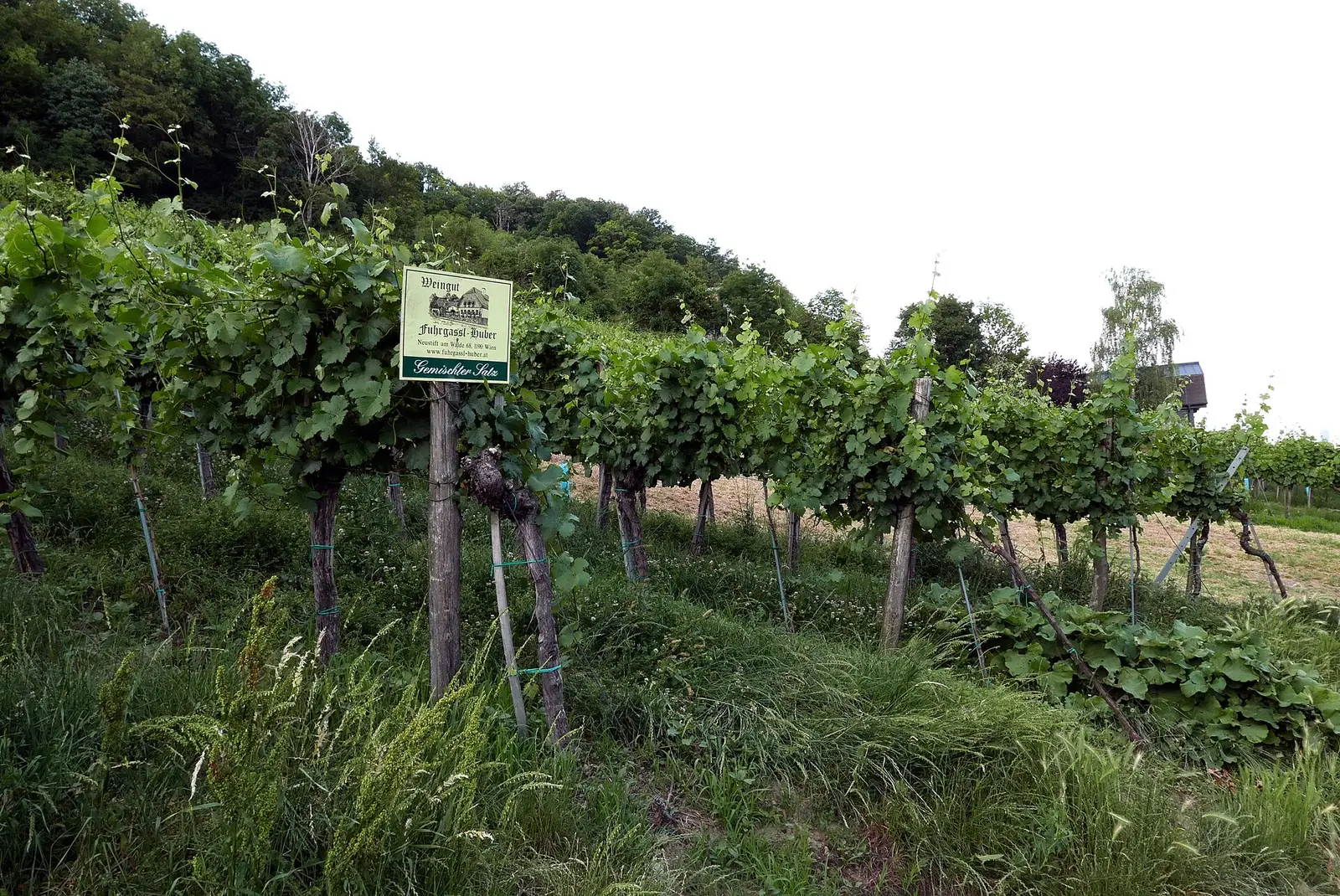 Vienna, Austria, and old vineyards worldwide
Field blends
Vineyards of many grape varieties side by side, picked and pressed together, as in Vienna's Gemischter Satz.
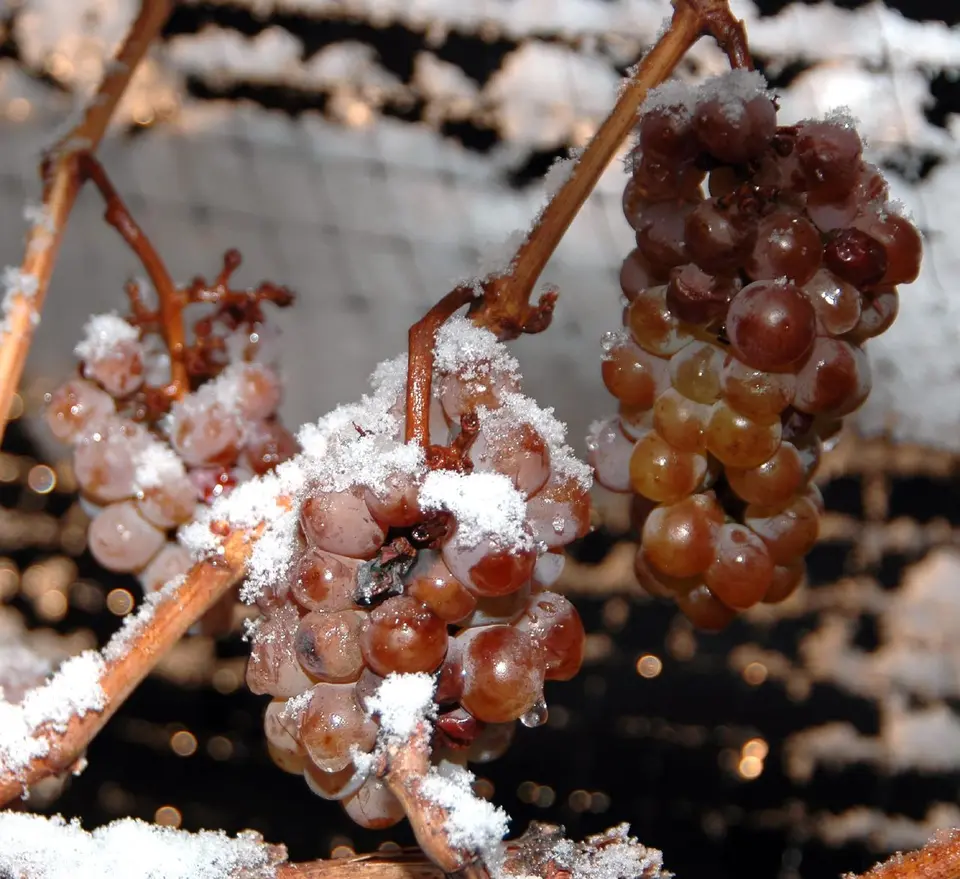 Germany and Canada
Ice wine
Sweet wine from grapes left to freeze on the vine and pressed while frozen, now at the mercy of mild winters.
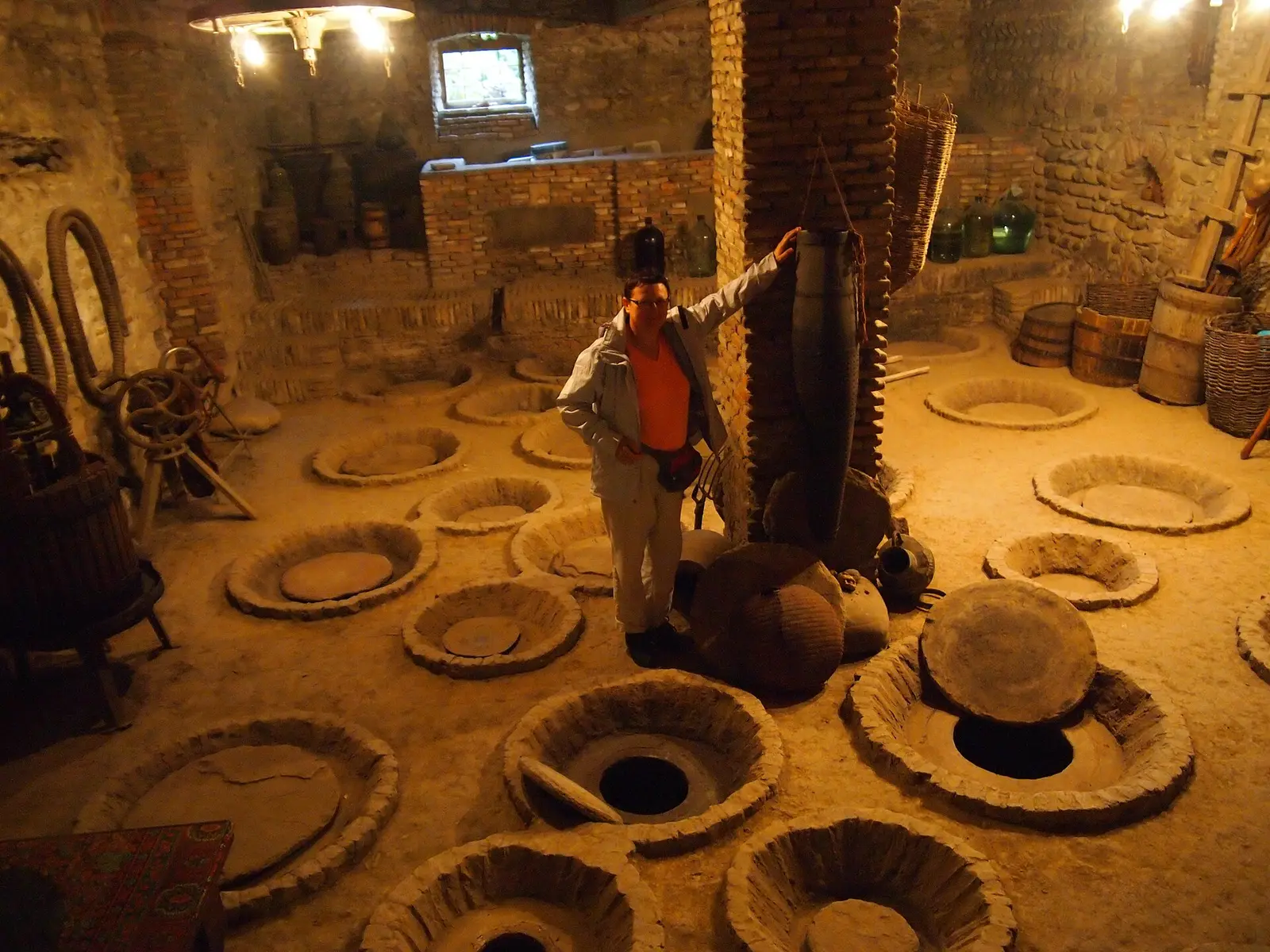 Georgia
Qvevri winemaking
Georgia's way of making wine in egg-shaped clay jars buried in the ground, on UNESCO's list since 2013.
 Greece
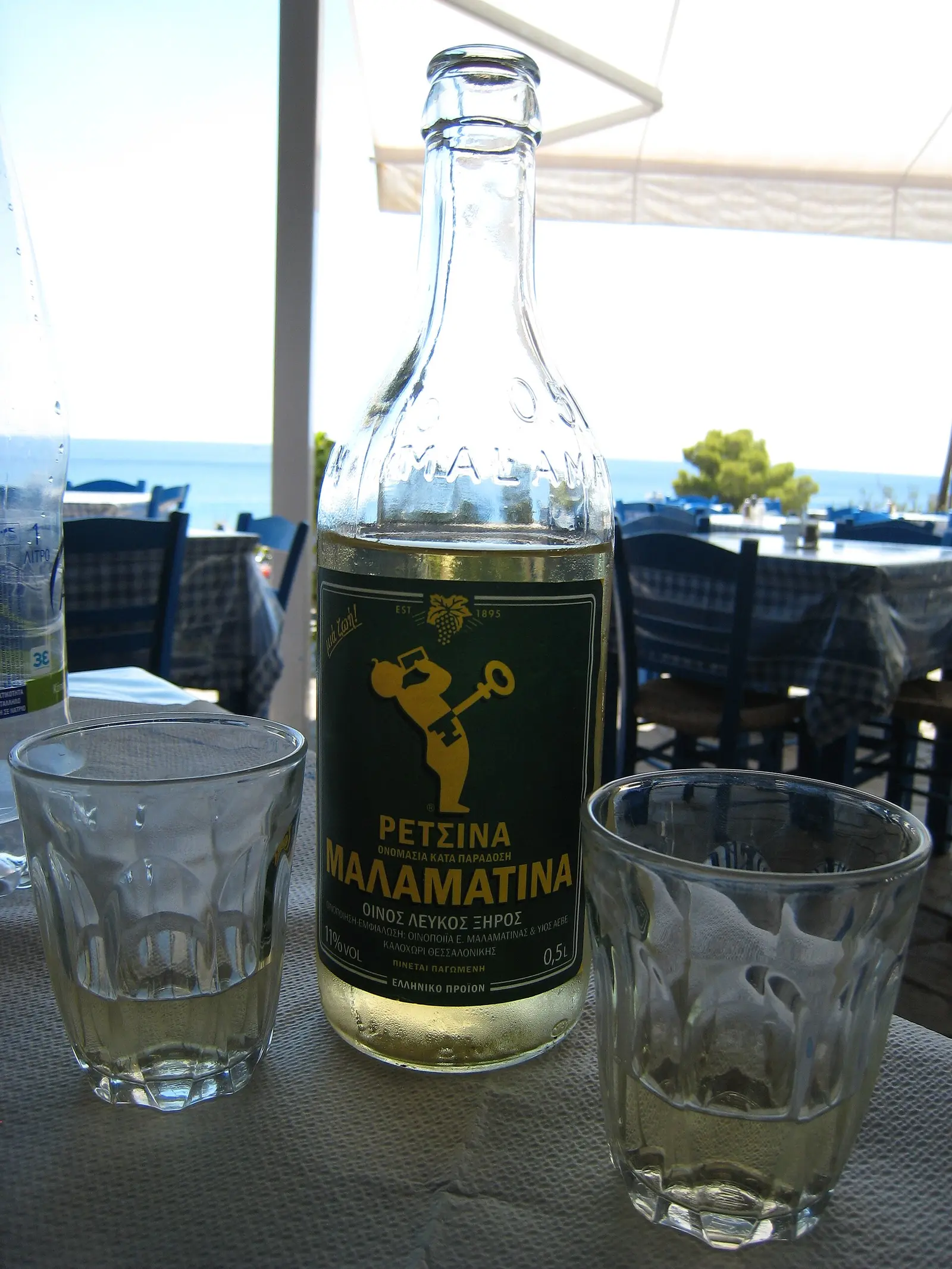
Retsina
Greek white wine fermented with a touch of Aleppo pine resin, an ancient habit now made with new care.