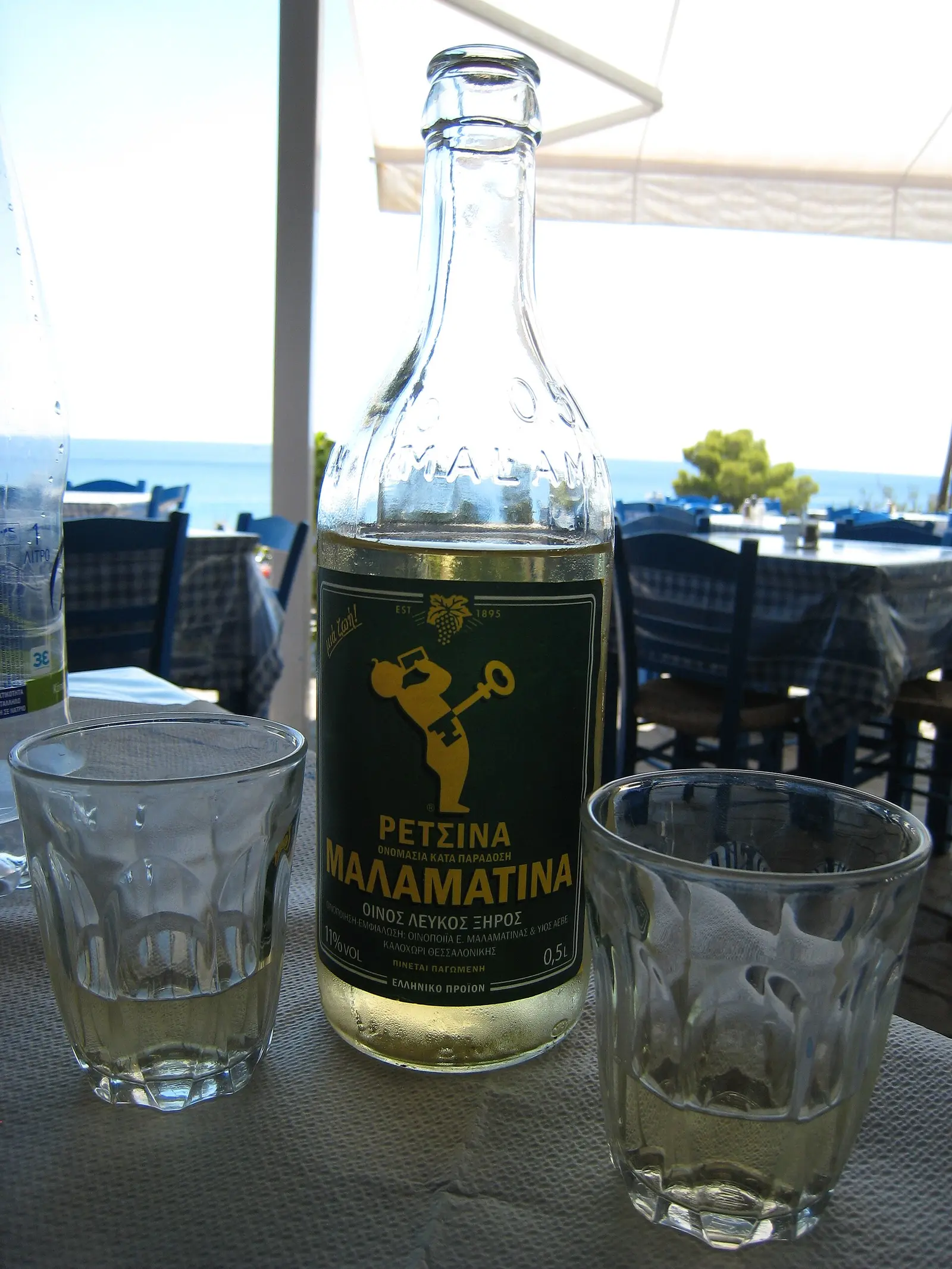
Retsina
retsina (ρετσίνα)
Retsina is Greek wine made with Aleppo pine resin added during fermentation. Only Greece may use the name, and young winemakers are reviving it.
History
Resin in wine is very old. University of Pennsylvania researchers report chemical evidence of a locally made, resinated wine on Crete by 2200 BCE.1
In Etruscan wine amphorae from about 525–475 BC found at Lattara in southern France, a 2013 PNAS study detected pine resin compounds in every jar tested. The authors read the resin as an additive that helped wine keep during sea transport.2
Wines of Greece says resinated wine, called 'retinitis oenos' in antiquity, has been made for thousands of years. Resin sealed amphorae, preserved wine and, in later years, came from pinewood barrels.3
Retsina production grew with Greece's tourism boom in the 1960s. Quality slipped as resin was used to hide cheap, often oxidized wine, and by the 1990s supermarket retsina sold for very little and was often mixed with cola.4,5
Retsina of Spata in Attica gained a geographical indication in 1979. Under EU and UK rules, 'Retsina' is a traditional designation for wine made only in Greece from must treated with Aleppo pine resin.6,7
Over the 2010s a new generation of producers reworked the style, using less resin and shorter contact. Critics at The New York Times and the Financial Times both wrote about the change in early 2019.4,5
Who does what
- Aleppo pine (Pinus halepensis): The resin comes from the Aleppo pine. It is added to white, or rarely rosé, must during fermentation and then removed, leaving its aroma behind.3,6
- Savatiano and Roditis: Savatiano is the main retsina grape, especially in Attica, with Roditis second and more common elsewhere in Greece. Some newer retsinas use Assyrtiko, Malagouzia or even red Xinomavro for a rosé.3,5
- The new generation of producers: Papagiannakos, Mylonas, Tetramythos, Gaia, Domaine Kechris and Gikas are among the producers named as leading retsina's renewal.5
How to experience it
- Look for 'Retsina' with the words 'Traditional Designation' (or 'Traditional Appellation'). Only retsina made in Greece may carry it.3,7
- Look for place names too. Wines of Greece lists Attica (mainly Mesogia), Viotia and Evia in Central Greece as retsina areas, and Retsina of Spata and Retsina of Attiki are geographical indications.3,4,6
- Don't expect a vintage. Traditional-appellation retsina may blend years and the vintage is not allowed on the label, so some producers print a code instead.5
- For the modern style, look for a grape name such as Assyrtiko on the label, a sign of the newer, more careful retsinas.5
- Serve it the Greek way, with a spread of shared small dishes. Writers describe it as a wine that refreshes the palate between bites.3,5
Drink responsibly. Never drink and drive. If you're pregnant, don't drink alcohol.
Food
Wines of Greece calls retsina the ideal partner for the strong flavors of traditional Greek cooking, with a faint bitterness that leaves a fresh finish.3
Peter Pharos, writing on Tim Atkin's site, calls retsina 'extremely food friendly', suited to Greek meals of many shared dishes.5
Vessels and serving
The resin limit is 1 kg per hectoliter of must. It is often put in a porous bag so it can be lifted out once it has given its flavor.4,6
Today's retsina may ferment in stainless steel, oak, cement or modern amphorae.4
Etiquette
Retsina still carries baggage. National Geographic Traveller noted in 2021 that, to many people, Greek wine means the piney retsina poured in tavernas.8
Cheap mass-market retsina is still sold next to the new premium bottles, so the label and producer matter.5
More on the place: Greece.
Questions people ask
Why is there pine resin in retsina?
Resin was used in antiquity to seal and preserve wine in clay jars. Today a small amount of Aleppo pine resin is added during fermentation for aroma, then removed.2,3,6
Can retsina be made outside Greece?
Not under that name. 'Retsina' is a protected traditional designation for wine made only in Greece from must treated with Aleppo pine resin.3,7
What grapes make retsina?
Mostly Savatiano, then Roditis. Some newer producers use Assyrtiko, Malagouzia or Xinomavro.3,5
Why did retsina get a bad name?
As production grew with tourism in the 1960s, resin was often used to hide cheap, oxidized wine. A new generation of winemakers has been working to change that.4
Sources
- New biomolecular archaeological evidence points to the beginnings of viniculture in France, University of Pennsylvania via ScienceDaily (2013). Accessed 2026-11-18.
- Beginning of viniculture in France, Proceedings of the National Academy of Sciences (2013). Accessed 2026-11-18.
- Retsina, Wines of Greece. Accessed 2026-11-18.
- Wines of Attica special and the amazing Retsina renaissance, The Buyer (2022). Accessed 2026-11-18.
- In praise of retsina, Tim Atkin MW (2019). Accessed 2026-11-18.
- PGI Retsina of Spata, Wines of Greece. Accessed 2026-11-18.
- ονομασία κατά παράδοση (appellation traditionnelle), UK Government, protected food and drink names register (2021). Accessed 2026-11-18.
- Greek wines: try Muscat and Moschofilero, National Geographic Traveller (2021). Accessed 2026-11-18.
More lost arts
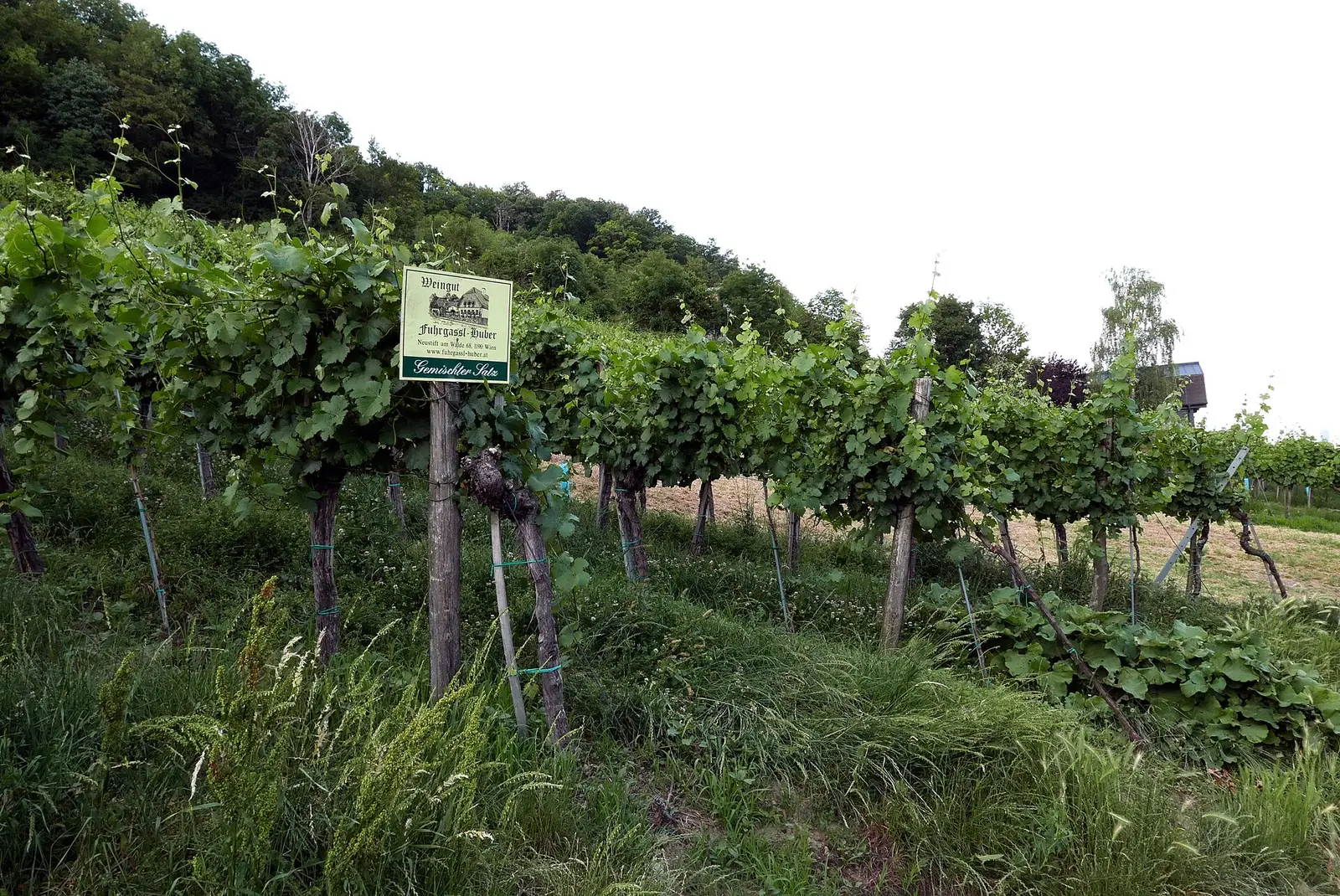 Vienna, Austria, and old vineyards worldwide
Field blends
Vineyards of many grape varieties side by side, picked and pressed together, as in Vienna's Gemischter Satz.
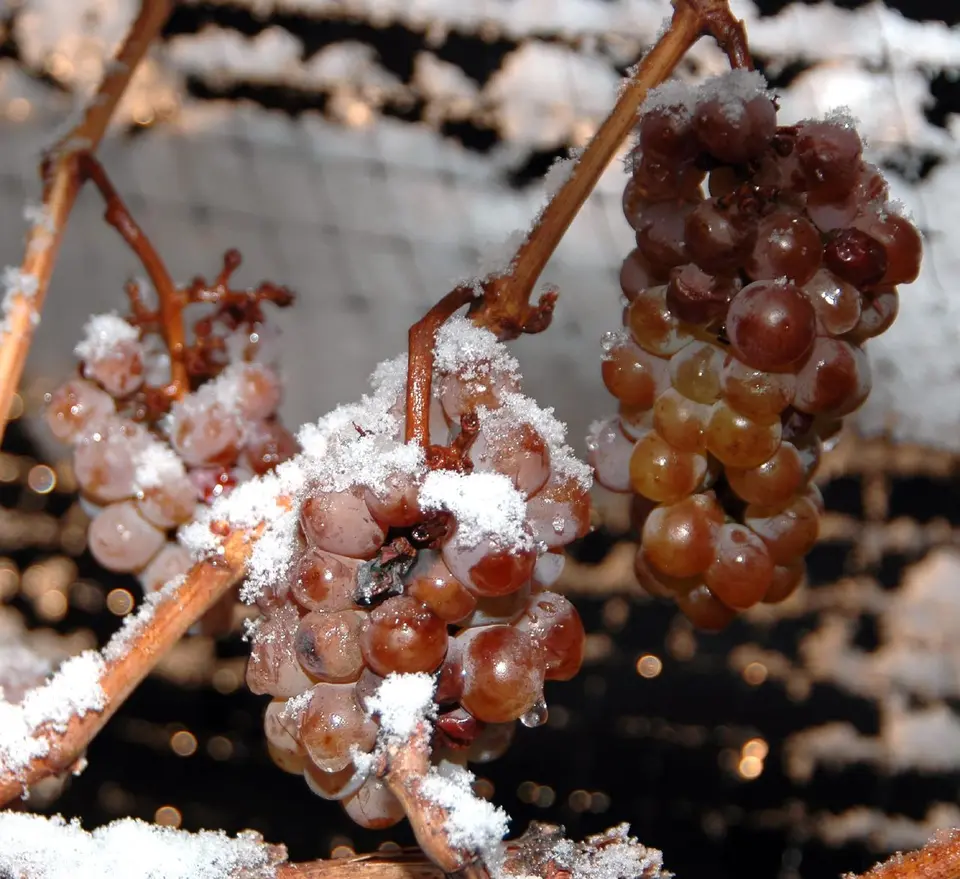 Germany and Canada
Ice wine
Sweet wine from grapes left to freeze on the vine and pressed while frozen, now at the mercy of mild winters.
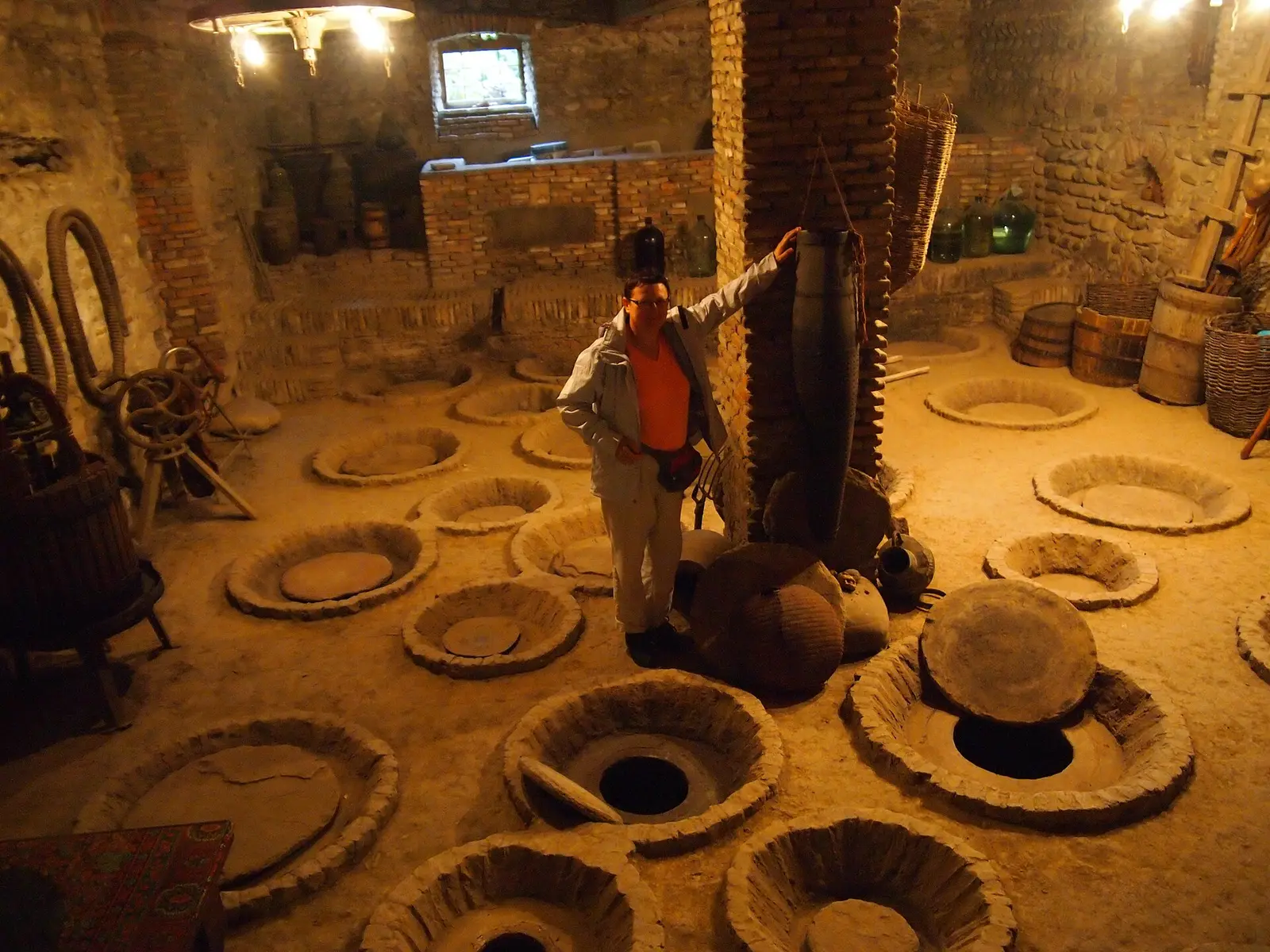 Georgia
Qvevri winemaking
Georgia's way of making wine in egg-shaped clay jars buried in the ground, on UNESCO's list since 2013.
 Jura, France, and the Mediterranean
Straw wine and other dried-grape wines
Sweet wines from grapes dried on straw, racks or in the sun before pressing, a practice Pliny described.