The story
Franciscan missionaries in California needed a steady supply of wine for Mass, and mission vineyards likely made California's first vintages by the mid-1780s. By the early 1800s over 60% of the missions had vineyards, planted and worked largely by California Native people the Franciscans conscripted.1
The grape the missionaries planted became known as the Mission grape, and it stayed California's leading variety until 1880. The Gold Rush of 1848-1855 drove up demand for wine, and Napa, Sonoma, El Dorado and Sutter counties were first planted in those years.2
National Prohibition followed the 18th Amendment, ratified in 1919, and lasted until repeal in 1933. A UC Davis Library history says wine production fell 94% between 1919 and 1925, and fewer than 100 of more than 2,500 commercial wineries survived.2
Recovery was slow. UC Davis started its viticulture and enology program to help the industry rebuild after repeal, yet by 1960 the number of wineries had only reached 271.2
On May 24, 1976, Paris wine merchant Steven Spurrier held a blind tasting in which nine leading French wine figures scored California wines above top French ones. The 1973 Chateau Montelena Chardonnay and the 1973 Stag's Leap Wine Cellars Cabernet Sauvignon placed first, and bottles of both are now held by the Smithsonian's National Museum of American History.3
George Taber of TIME, the only reporter present, later said the tasting broke the myth that great wine could only come from France. NPR reports that new vineyards followed in Oregon, Washington and Virginia, and abroad in places such as Argentina and Australia.3
Wine regions in the US are American Viticultural Areas (AVAs), set by the federal Alcohol and Tobacco Tax and Trade Bureau (TTB). The first was Augusta, Missouri, in June 1980, followed by Napa Valley in January 1981. TTB counted 280 AVAs in August 2026, 154 of them in California.4,5
In Oregon's Willamette Valley, David Lett, Charles Coury and Dick Erath planted the valley's first Pinot noir between 1965 and 1968. In 1979 Lett's Pinot noir placed in the top 10 of a blind tasting against fine Burgundies at the Gault-Millau French Wine Olympiad.6
Signature styles
- Napa Valley Cabernet Sauvignon (full-bodied red): Napa Valley Vintners describe young Napa Cabernet as full and forceful, valued for power, structure and age-worthiness, and say older wines age gracefully.7
- Willamette Valley Pinot Noir (red, crisp): The Willamette Valley Wineries Association describes balanced sugars and acids, refined tannins and aromatic complexity, with cool nights helping the grapes keep their tartness.15
- Finger Lakes Riesling (white, crisp): Made from bone dry to sweet, with citrus, orchard fruit, floral notes and minerality. High acidity gives the wines their raciness, and a long ripening season by the lakes adds concentration and ageability.11
Grapes to know
- Cabernet Sauvignon (red): Napa Valley's most widely planted grape, with 55% of plantings, 50% of wine production and 68% of crop value. Gustave Niebaum had planted it at Inglenook by 1883.7
- Zinfandel (red): Long seen as California's own grape, it was shown by DNA in 2001 to be the same as Crljenak, a Croatian grape, and in the 1990s to be the same variety as Italy's Primitivo. Sonoma County grows about 4,760 acres.8,9
- Pinot Noir (red): About 70% of Willamette Valley plantings. Sonoma County has about 13,000 acres, and the Finger Lakes has some of America's oldest Pinot Noir vines, planted from 1958.9,10,11
- Chardonnay (white): Sonoma County's most planted grape, at about 15,500 acres. A 1973 Napa Chardonnay from Chateau Montelena won the white wine section of the 1976 Paris tasting.3,9
- Riesling (white): The Finger Lakes' best-known grape, made from bone dry to sweet and known for high acidity. Gold Seal hired Dr. Konstantin Frank in 1953 to grow European vinifera grapes, and his Vinifera Wine Cellars (1962) became known for Riesling.11,12
- Merlot (red): One of five grapes, with Cabernet Sauvignon, Chardonnay, Riesling and Syrah, that make up over 80% of Washington's annual production.13
- Mission (red): The grape Franciscan missionaries brought to California. It was the state's leading variety until 1880.1,2
Where it grows
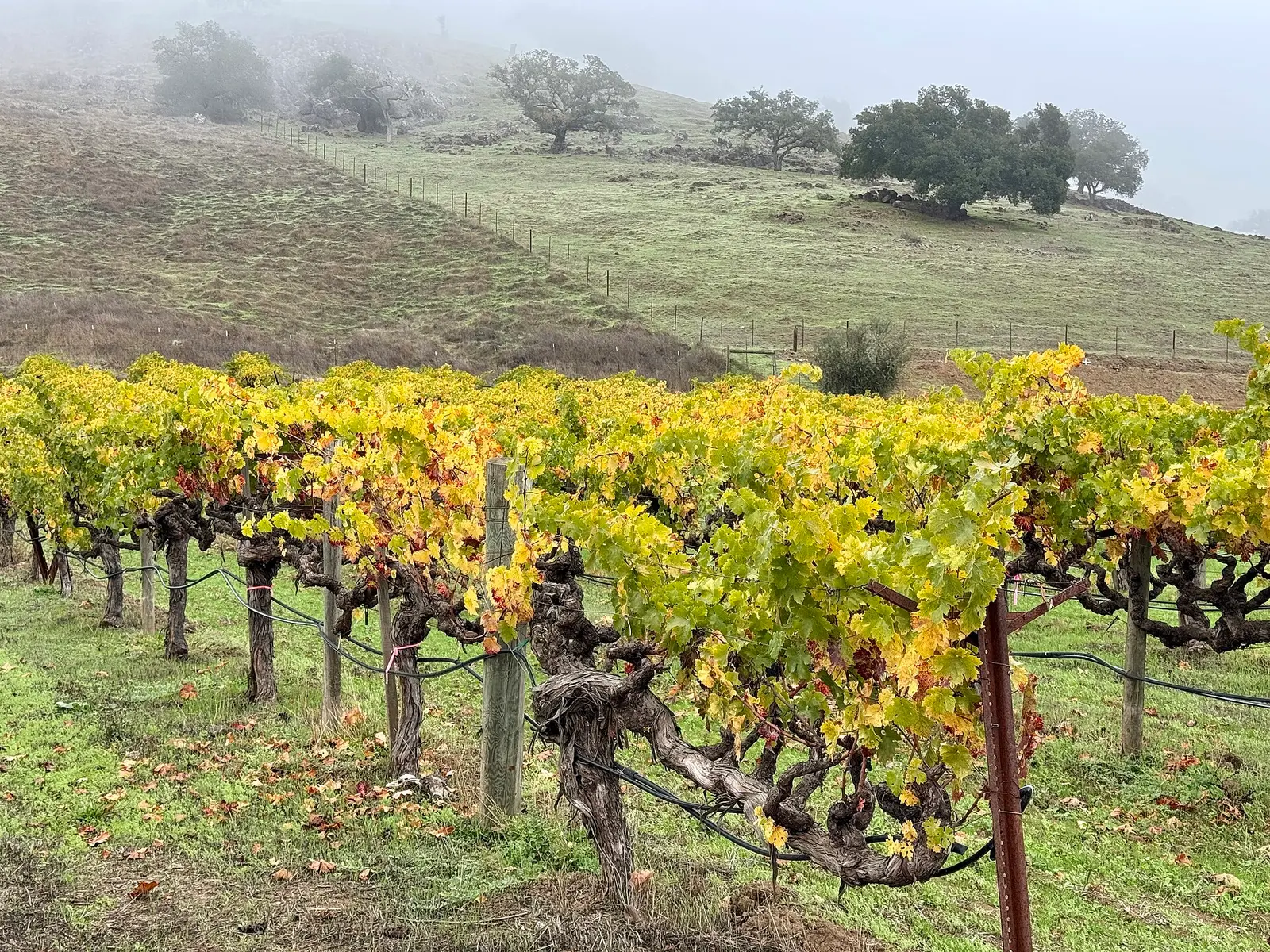
- Napa Valley: About 30 miles long and 5 miles wide, with a dry Mediterranean climate cooled by coastal fog. It became California's first AVA in 1981 and holds 17 nested AVAs.4,14
- Sonoma County: Separated from Napa by the Mayacamas Mountains, with 19 AVAs, more than 62,000 acres of grapes and about 6% of California's wine. Buena Vista is the state's oldest premium winery.9
- Willamette Valley (Oregon): An AVA since 1983, running from Portland to Eugene, with more than two-thirds of Oregon's vineyards and wineries. The Coast Range and Cascades shelter it, giving warm days, cool nights and a long season.4,10,15
- Columbia Valley (Washington): An AVA since 1984, covering about 11 million acres of Washington and north-central Oregon and 99% of Washington's grapes. It sits in the rain shadow of the Cascades and Olympics, so most vineyards need irrigation; Yakima Valley (1983) was Washington's first AVA.13,16
- Finger Lakes (New York): An AVA since 1982, with 11 lakes and about 10,790 acres of vines. Seneca Lake, the deepest at over 600 feet, rarely freezes, and its stored heat protects vines from spring and autumn frosts.17
- Central Coast (California): An AVA since 1985. Inside it, Paso Robles, roughly midway between Los Angeles and San Francisco, is known for Rhône grapes and blends, with warm days, cool nights and vineyards dating to the 1790s.4,18
Visiting
In Napa Valley the grape harvest usually starts in August, and September and October bring crush parties and harvest dinners. The tourism board advises booking ahead for those months, the busiest of the year.19
Sparkling and white grapes such as Chardonnay and Sauvignon Blanc are picked first in Napa, often overnight before sunrise. Reds such as Merlot and Cabernet Sauvignon come later, often into early November.19
Sonoma County has more than 425 wineries, and its Taste of Sonoma festival is held on Labor Day weekend.9
The Willamette Valley Wineries Association lists 736 wineries and 931 vineyards in the valley, between Portland and Eugene.10
New York's Farm Winery Act of 1976 let wineries sell directly to the public. The state had 19 wineries that year and more than 110 by 1996.12