Santorini grows Assyrtiko in volcanic ash with almost no rain, training vines into low kouloura baskets; it also makes sweet Vinsanto.
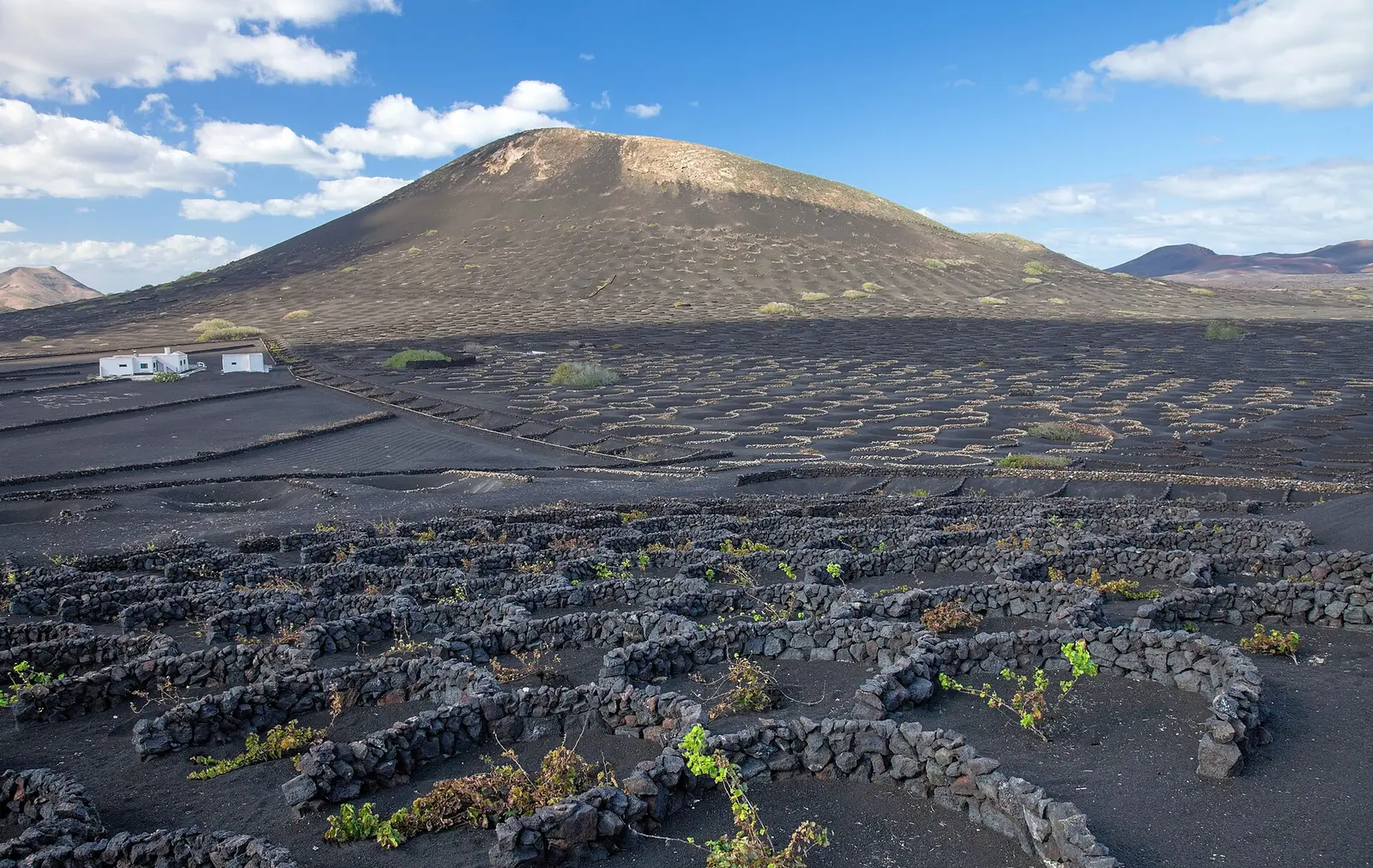
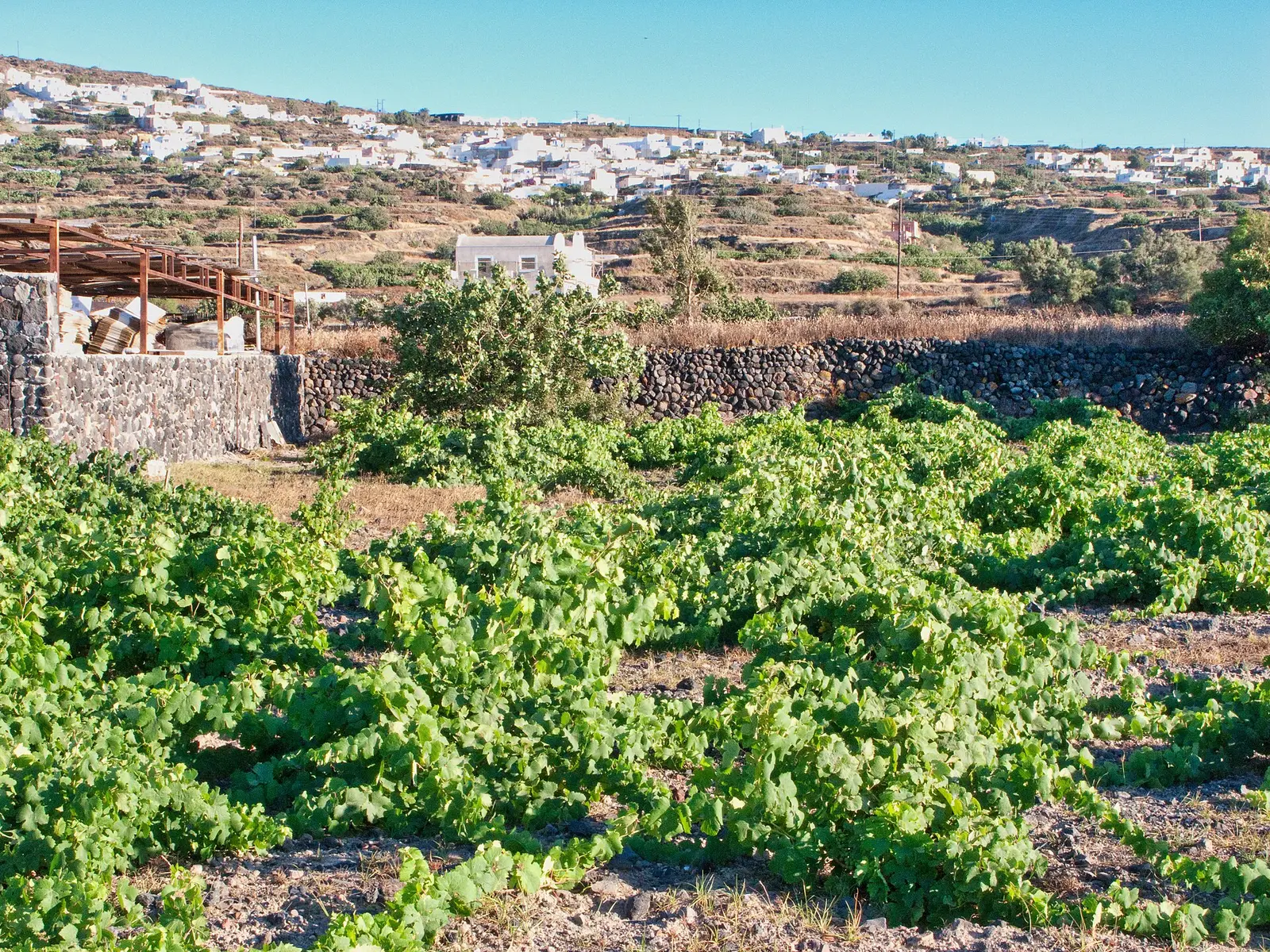
Santorini's vineyard soils are volcanic ash and rock, with strong sea winds and little rain in the growing season. Vines are not irrigated; the local cooperative says moisture comes from humidity and sea mist absorbed by the soil.1,2
Growers train vines low to the ground in a spiral, basket-like shape called kouloura. It anchors the grapes and shields them from the wind and sun.2,3
A 2023 study in OENO One compared kouloura with modern trellising near Oia. In the 2021 heatwave, midday air in the kouloura canopy was about 37°C versus 38.5°C under the trellis, and fruit damage was 19% versus 32%.4
The cooperative says Santorini's vines grow on their own roots and were never hit by phylloxera, the root louse that forced grafting across most of Europe. One explanation offered is that the volcanic soils lack the clay the pest needs.1,2,4
Under Venetian influence through the Duchy of Naxos from 1336, Santorini wine was exported across the Mediterranean. After the Ottoman conquest in 1579 trade continued, and the Russian Orthodox Church adopted Santorini wine for the Eucharist.5
Santorini Assyrtiko and Nykteri received the Santorini PDO in 1971, and Vinsanto joined in 2002. That year the EU recognized Santorini as Vinsanto's place of origin.5,6
Tourism now squeezes the vineyards. Fortune reported in 2024 that grape production had fallen by almost half in 20 years, and winemakers warned it could reach zero by 2041 as farmland goes to holiday lets.7
Recognition
Santorini's wines carry a Protected Designation of Origin, and since 2002 the EU has recognized the island as the place of origin of Vinsanto.5,6
- Dry Santorini Assyrtiko (white, crisp, dry): Assyrtiko is made dry and sweet. Decanter, as cited by Wikipedia, describes Santorini examples as low-yielding and concentrated, with briny salinity, stony minerality and sharp acidity.3
- Vinsanto (sweet, crisp): Late-picked grapes are sun-dried for 12–14 days, then fermented and aged at least 24 months in oak. The dessert wine runs golden-orange to dark amber, with high acidity balancing the sweetness.5
- Santorini PDO: The island-wide appellation, first granted in 1971 for Assyrtiko and Nykteri and extended to Vinsanto in 2002.6
Harvest comes early, in mid-August. Nykteri wines were traditionally made from grapes picked before sunrise.1
The Koutsoyannopoulos Wine Museum in Vothonas sits in a cave 8 m below ground and 300 m long, with tastings bookable on site.8
Santorini expected about 3.4 million visitors in summer 2024. A cap of 8,000 cruise visitors a day was reinstated, and the mayor said the island could support 'not one single bed more.'7
Built under constraints: the web search budget ran out after the first two files, Wines of Greece rate-limited the fetch tool, Decanter pages returned no article text, and the EU eAmbrosia register did not render. PDO dates (1971 for Assyrtiko and Nykteri, 2002 for Vinsanto) come from the Union of Santorini Cooperatives' own timeline (a producer, typed 'blog') and were not confirmed in an official register. Ungrafted, phylloxera-free status rests on the cooperative and on a study summary; Wikipedia's claim about clay is unsourced on that page and is presented as 'one explanation'. The 2023 OENO One kouloura study (Xyrafis, Gambetta, Biniari) was read only through the IWC summary. History and Vinsanto rules come from Wikipedia (encyclopedia, last resort), which cites Hugh Johnson and the Oxford Companion. The cooperative's claim of a 3,500-year-old vineyard history and Wikipedia's 1,200 ha figure were not used. The Venetian-era 'Vinsanto' name theory was left out as unverifiable. Harvest month (August) comes from Wikipedia without an inline citation. Body is not described by sources and is set to 3 for both styles.
Questions people ask
How can vines grow on Santorini?
Vines grow in volcanic ash with almost no rain and no irrigation, drawing on humidity and sea mist. Growers coil them into low kouloura baskets that shield grapes from strong winds and heat.1,2,4
What wine is Santorini known for?
Dry Assyrtiko with sharp acidity and a salty, mineral edge, and Vinsanto, a sweet wine from sun-dried grapes aged at least two years in oak.3,5
Sources
- Santorini (wine), Wikipedia. Accessed 2026-11-18.
- Volcanic Heritage, Santo Wines (Union of Santorini Cooperatives). Accessed 2026-11-18.
- Assyrtiko, Wikipedia. Accessed 2026-11-18.
- The training system for heatwaves, International Wine Challenge (IWC Insight) (2023). Accessed 2026-11-18.
- Vinsanto, Wikipedia. Accessed 2026-11-18.
- Milestones, Santo Wines (Union of Santorini Cooperatives). Accessed 2026-11-18.
- Tourism has hijacked Santorini's wine production as agricultural land becomes exorbitant while visitor numbers continue to climb, Fortune Europe (with Bloomberg) (2024). Accessed 2026-11-18.
- Koutsoyannopoulos Wine Museum & Winery, Koutsoyannopoulos Wine Museum. Accessed 2026-11-18.