The people
- Tasmanian Aboriginal people (Palawa): University of Adelaide researchers credit the Tasmanian Palawa people with making way-a-linah from the sap of the cider gum (Eucalyptus gunnii).1,2
- Tasmanian Aboriginal Centre: The Tasmanian Aboriginal Centre owns trawtha makuminya, a Central Highlands property with cider gums. It invited the University of Adelaide team to study and sample the trees there.3,4
The story
Way-a-linah is a mildly alcoholic drink that Tasmanian Aboriginal people made from the sap of the cider gum, a eucalypt found only in Tasmania. The sap was left to ferment on its own.1,2
According to early European accounts compiled by anthropologist Maggie Brady, Aboriginal people tapped the trees so the sweet sap, which looks like maple syrup, pooled in hollows in the bark or at the base of the tree. Yeasts already present then fermented it into a cider-like drink.4
A 2020 study, citing Brady, describes the method in more detail: a hole bored in the trunk with stone tools, a larger hollow made at the base to collect the sap, and a flat stone placed over it while it fermented.2
Cider gum sap also flows on its own from natural holes in the trunk and collects at the base of the tree. University of Adelaide researchers note that both Aboriginal people and local animals sought out the sugary sap.2,5
European settlers took up the practice. By the time botanist Joseph Dalton Hooker described the species in 1844, settlers already called it the cider tree or cider gum.4
Brady's work, published in 2008 and 2014, gathers early European records of Aboriginal people collecting sugar-rich liquids and leaving them to ferment. Europeans introduced brewing and drinking customs to Australia, but Aboriginal people already knew how to ferment.4
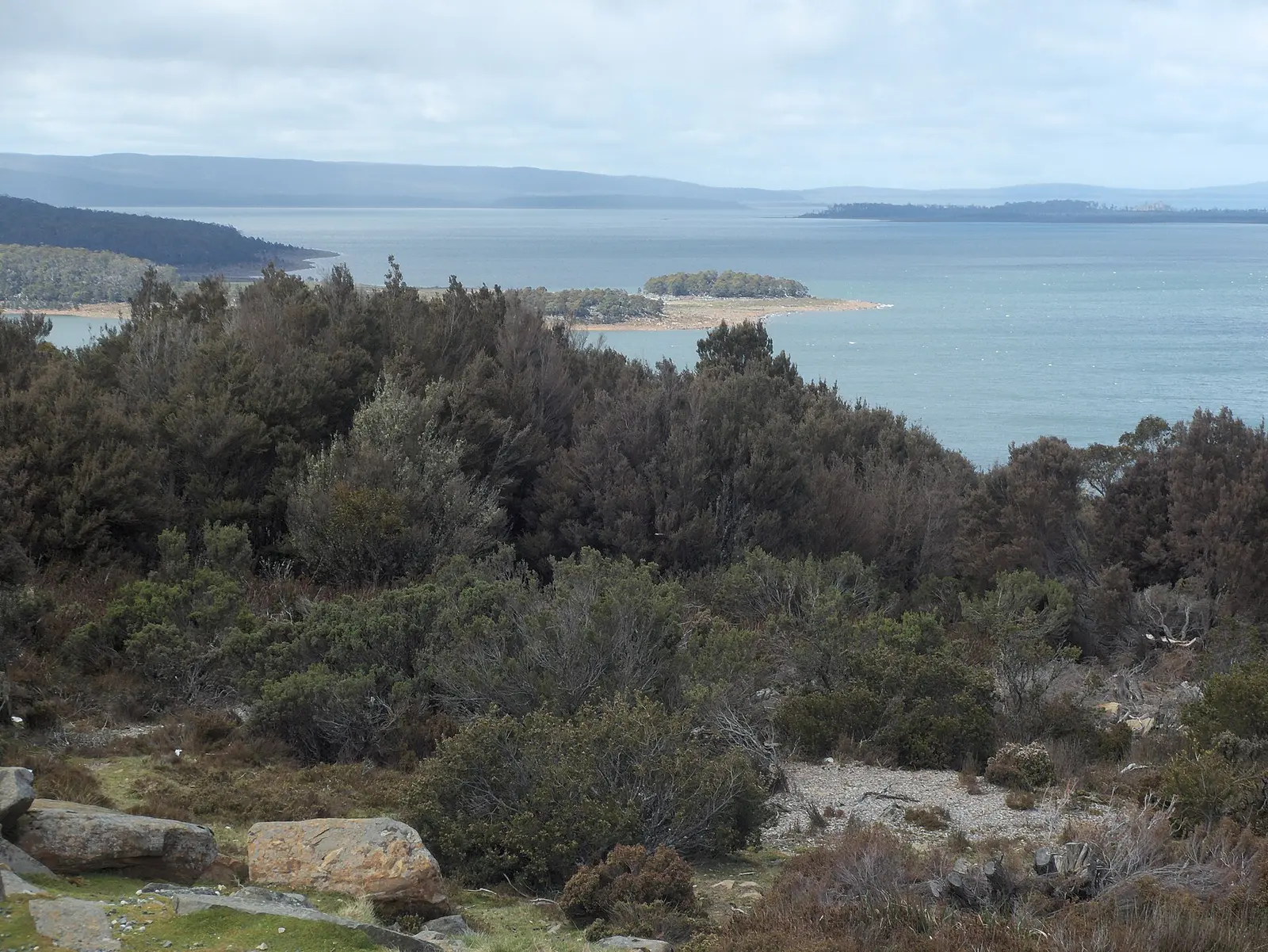
The cider gum grows mainly in cold, waterlogged places on Tasmania's Central Plateau, such as lake edges and poorly drained valley flats, at about 1,000 meters.2,4
How we know
In November 2016 and January 2017, researchers took 84 samples of sap, bark and soil from 33 cider gums at three Central Plateau sites, including trawtha makuminya. The sap held from 0 to 6.1 percent alcohol by volume, averaging 1.2 percent.2
DNA sequencing found that Saccharomyces, the usual wine and beer yeast, was barely present. Other yeasts, such as Hanseniaspora species, dominated, and many microbes matched no known database entry, which the authors say may mean new species.2,4
Because the trees are threatened, the researchers did not tap them. They sampled sap already flowing from bark cracks and insect holes.4
The historical record of way-a-linah rests on early European written accounts, which Brady compiled. The 2020 study cites her 2008 work as its source for Aboriginal production.2,4
What it left behind
trawtha makuminya ('Big River Country' and 'Tracks') covers 6,878 hectares of the Central Highlands. The Tasmanian Aboriginal Centre owns it, and it borders the Tasmanian Wilderness World Heritage Area.3
The Miena cider gum (Eucalyptus gunnii subsp. divaricata) is listed as endangered under Tasmanian law and Australia's EPBC Act. Heavy tree deaths, rare seedlings and poor seed crops threaten it in the wild.6,7
Lead researcher Vladimir Jiranek says the team hopes to keep working with Aboriginal communities to help revive lost practices or develop new ones, and to report its results back to them.1,4
Beyond Tasmania, the cider gum is widely planted as an ornamental tree in the British Isles and parts of Western Europe.2
The place today: Australia.
Questions people ask
What is way-a-linah?
A mildly alcoholic, cider-like drink that Tasmanian Aboriginal people made from the sap of the cider gum (Eucalyptus gunnii), left to ferment naturally in hollows at the tree.1,4
How much alcohol does fermented cider gum sap contain?
Sap sampled from trees in 2016–2017 held between 0 and 6.1 percent alcohol by volume, with an average of 1.2 percent.2
Where does the cider gum grow?
It grows only in Tasmania, mainly in cold, poorly drained places on the Central Plateau. One form, the Miena cider gum, is endangered.2,6
Is way-a-linah still made?
The sources here do not describe it being made today. Researchers say they hope to work with Aboriginal communities to help revive lost practices.1
Sources
- Uncovering the science of Indigenous fermentation, University of Adelaide (news release via EurekAlert!) (2020). Accessed 2026-11-18.
- Discovering the indigenous microbial communities associated with the natural fermentation of sap from the cider gum Eucalyptus gunnii, Scientific Reports 10:14716 (via PubMed Central) (2020). Accessed 2026-11-18.
- trawtha makuminya, Tasmanian Land Conservancy. Accessed 2026-11-18.
- Cider trees: Researchers tap into Indigenous fermentation processes, SBS NITV (republished from The Conversation) (2018). Accessed 2026-11-18.
- Revealing the science of Aboriginal fermentation, University of Adelaide (via Phys.org) (2016). Accessed 2026-11-18.
- Eucalyptus gunnii subsp. divaricata, Threatened Species Link, Tasmanian Government. Accessed 2026-11-18.
- The Miena cider gum, Eucalyptus gunnii subsp. divaricata (Myrtaceae): a taxon in rapid decline, Papers and Proceedings of the Royal Society of Tasmania 135:57–61 (2001). Accessed 2026-11-18.