The people
- Gadigal (Cadigal) people: The Royal Botanic Garden Sydney names the Cadigal as the traditional custodians of the land where Governor Phillip set up the colony's first European farm in 1788.1
- Peramangk, Ngadjuri and Kaurna peoples: These peoples are the Barossa's first custodians. South Australia's founding law of 1834 acknowledged Aboriginal land rights, but in practice they were largely ignored, leading to dispossession and deaths from introduced diseases.2
- Convicts of the First Fleet: Governor Phillip's gardener, Henry Dodd, used convict labor to try to start a grain farm at today's Royal Botanic Garden in 1788.3
- Old Lutherans from Prussia: Lutherans who refused a Prussian royal order of 1817 to join a new Union Church faced fines or prison. From 1838 they emigrated to South Australia, and many settled in the Barossa.2,4
The story
The First Fleet reached Sydney in 1788 carrying grapevine cuttings, some collected on the way at Tenerife, Rio de Janeiro and the Cape of Good Hope. Few survived the voyage.5
On 30 January 1788, Governor Arthur Phillip's plants, including grapevines, quinces, oranges and olives, were put in the ground next to his canvas house, the site of today's Museum of Sydney.3
Early colonial vineyards grew slowly. Gregory Blaxland planted vines in 1816 and sent a fortified red wine to England in 1822, winning Royal Society of Arts medals; vines brought in by the Macarthur family were planted at Camden Park in 1820.6
James Busby, born in Edinburgh in 1801, arrived in New South Wales in 1824 and wrote books on vine growing and winemaking in 1825 and 1830.6,7
In 1831 Busby toured vineyards in Spain and France, including the Montpellier botanical garden, the northern Rhône, Burgundy and Champagne. He collected 543 vine varieties, and the survivors were planted in Sydney's Botanic Garden; cuttings later went to growers in New South Wales and other colonies.1,7
Colonel William Light named the Barossa in 1837. George Fife Angas backed the migration of German Lutherans, lending them money for travel and land and selling them land at ten times what he had paid.2,4
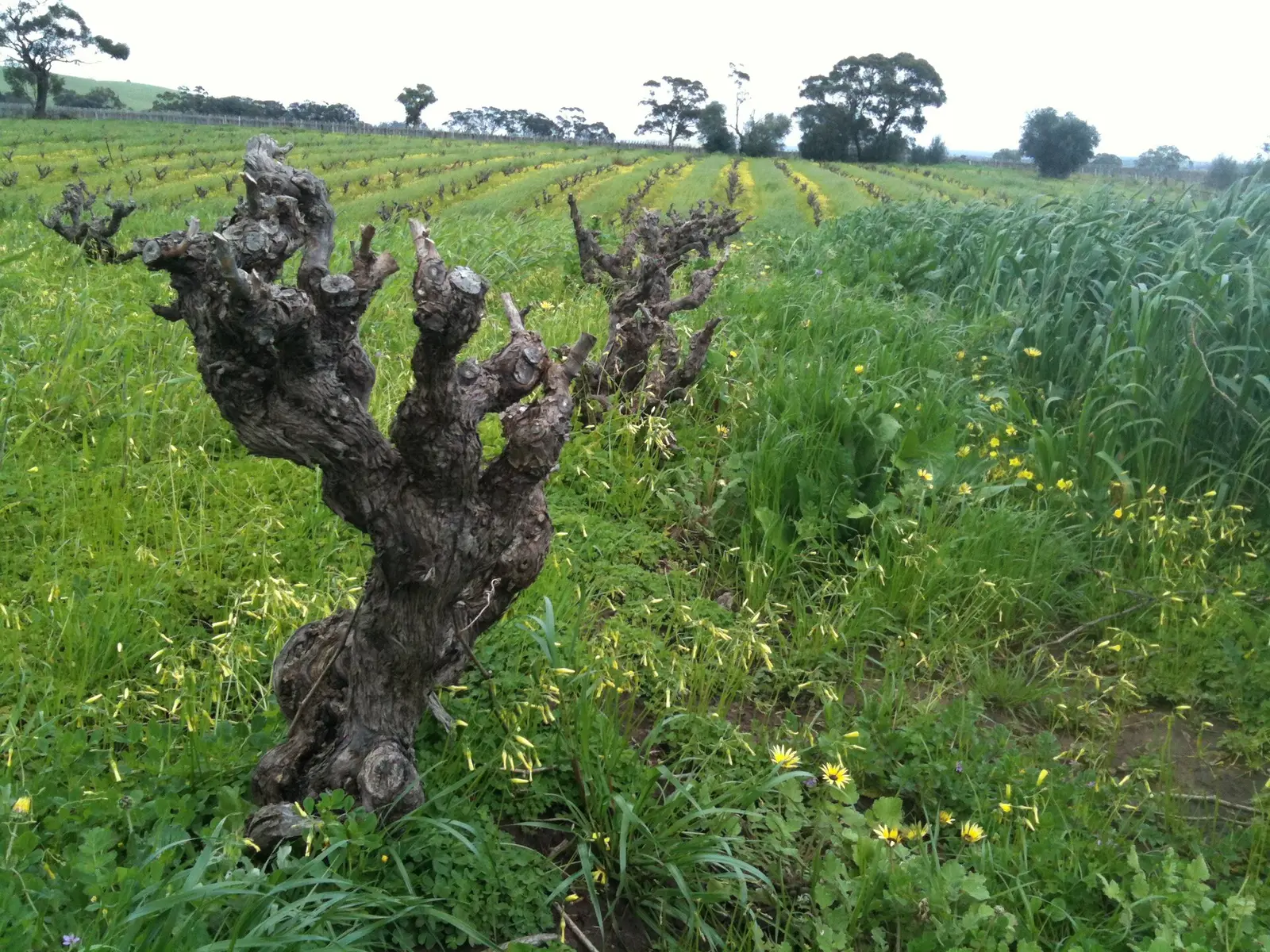
By 1842 most of Pastor August Kavel's followers had moved to the Barossa, founding Bethany near Tanunda. Bavarian settler Johann Gramp planted vines on Jacob's Creek, and some Barossa Shiraz and Grenache vines still date to the 1840s.8,9
By the late 19th century, families including Seppelt, Gramp, Smith, Salter and Henschke ran wine businesses in the Barossa, and by 1929 the region made 25% of Australia's wine.2
How we know
Officer Philip Gidley King's journal for 30 January 1788 records the Governor's plants being landed and put in the ground.3
Busby documented his work in print: his 1833 Journal of a Tour Through Some of the Vineyards of Spain and France included Australia's first ampelography, and an 1842 catalogue lists the vines in the Sydney Botanic Garden.6,7
Counts of Busby's surviving vines differ even within one account: 363 survived the sea voyage, and 334 were alive in 1834.7
The 1789 book The Voyage of Governor Phillip to Botany Bay predicted that New South Wales wine might one day be in demand.5
What it left behind
The Royal Botanic Garden Sydney, on the site of the colony's first farm, describes itself as the birthplace of Australia's wine industry because Busby's cuttings were planted there and spread to vineyards north of Sydney.1
The Museum of Sydney stands on the site of the first Government House, where Phillip's first vines were planted in 1788.3
Bethany, near Tanunda, kept the layout of a German farmlet village (Hufendorf). The Barossa Old Vine Charter, launched in 2009, records and protects vines dating back to the 1840s.8,9
The place today: Australia.
Questions people ask
When were grapevines first planted in Australia?
In 1788. The First Fleet brought cuttings, some collected at Rio de Janeiro and the Cape, and Governor Phillip's vines were planted beside his house in Sydney on 30 January 1788.3,5
Who was James Busby?
A Scottish-born settler who reached New South Wales in 1824, wrote early guides to vine growing, and in 1831 collected 543 vine varieties in Spain and France for Sydney's Botanic Garden.7
Why is the Barossa Valley linked to Germany?
Lutherans leaving Prussia after a religious decree settled there from the early 1840s, founding Bethany and other villages. Families such as Gramp and Seppelt built its early wine industry.2,4,8
Whose land was the Barossa before vineyards?
The Peramangk, Ngadjuri and Kaurna peoples'. Their land rights were acknowledged on paper in 1834 but largely ignored, leading to dispossession.2
Sources
- Digging into our history - 1800s, Botanic Gardens of Sydney. Accessed 2026-11-18.
- About Barossa: History, Barossa (regional tourism and wine body). Accessed 2026-11-18.
- Arthur Phillip's gardener, Museums of History NSW (2020). Accessed 2026-11-18.
- Germans in South Australia, SA History Hub, History Trust of South Australia (Migration Museum). Accessed 2026-11-18.
- A sobering thought, Sydney Living Museums (Museums of History NSW), The Cook and the Curator (2014). Accessed 2026-11-18.
- Oz Water into Wine, State Library of South Australia, Wine Literature of the World. Accessed 2026-11-18.
- Busby, James (1801–1871), ISFAR (French-Australian research resource) (2023). Accessed 2026-11-18.
- Germans, SA History Hub, History Trust of South Australia (2015). Accessed 2026-11-18.
- Barossa Valley - An Icon in Evolution, Wine Australia (2018). Accessed 2026-11-18.