The people
- Jewish communities: Wine is central to Jewish religious life: Chabad.org calls it a symbol of joy, sanctity and ritual for Shabbat and holidays, and the OU notes its use for Shabbat sanctification and the four cups of Passover.1,2
- The rabbis of the Talmud: The Talmud attributes the havdalah blessings to 'the men of the Great Synagogue' and records debates over kiddush between the schools of Hillel and Shammai.3,4
- Kosher supervisors (mashgichim): At kosher wineries, a mashgiach seals barrels and tanks and must be present at bottling. The OU says a plant may have from two or three to twenty-six supervisors.2
The story
In the Temple, offerings were accompanied by wine poured on the altar, while the Levites sang, according to the OU and Chabad.org.1,2
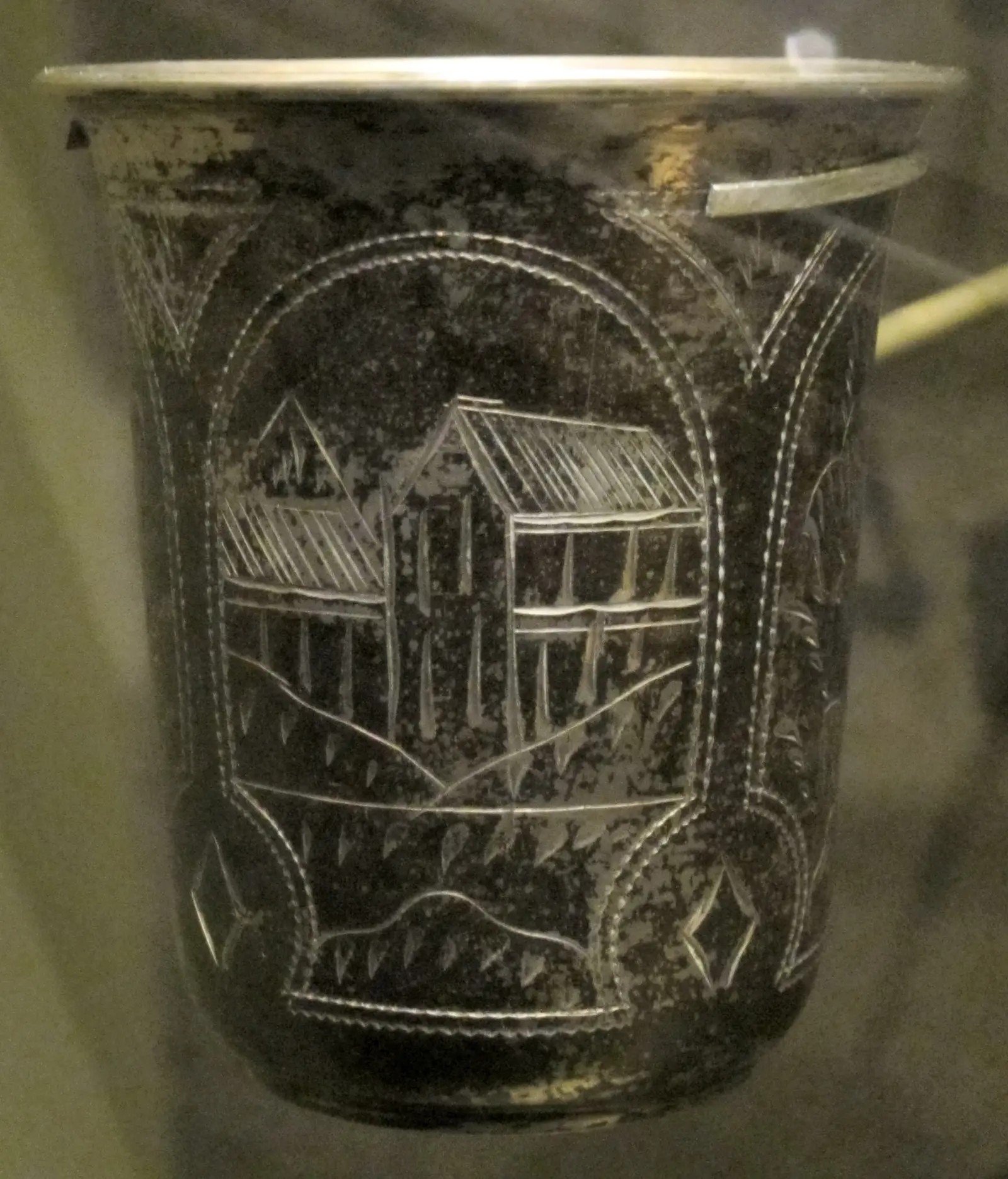
Kiddush, meaning 'sanctification,' is said over a cup of wine to consecrate Shabbat or a holiday, fulfilling the command to remember the Sabbath. It is said on Friday night before the blessing over challah and again after Shabbat morning services.4,5
Before drinking wine, Jews recite the blessing borei pri hagafen, thanking God who creates the fruit of the vine. Grape juice may be used in place of wine for kiddush.1,5
Wine is preferred for kiddush, but the Encyclopaedia Judaica notes that two loaves of bread may be used where wine cannot be found.4
The Mishnah (Pesachim 10:1) makes four cups of wine at the Passover seder a duty for everyone, even the poorest. The rabbis tied them to four terms of deliverance in Exodus 6:6–7.6
Havdalah ends Shabbat and holidays with wine, spices and a braided candle. Its blessings stress the distinction between sacred and ordinary time, and the wine stands for joy.3,7
Red wine is preferred for the seder, but the Encyclopaedia Judaica notes that white wine was often used in Europe because of blood libel accusations against Jews.6
Kosher wine has its own rules. The Bible forbids wine used in pagan libations (yayin nesech), and the rabbis extended this to wine handled by non-Jews (stam yeinam); the OU says the aim was to prevent intermarriage.2,8
How we know
Rabbinic texts are the main record of the rituals: the Mishnah's four-cup rule (Pesachim 10:1), the Talmud's debate on wine for kiddush (Pesachim 107a) and its attribution of havdalah (Berakhot 33a).3,4,6
At Tel Kabri in the western Galilee, chemists found tartaric acid, a marker of wine, in all 32 jars tested from about 40 in a Canaanite palace cellar of the Middle Bronze Age (c. 1900–1600 BCE), with traces of resins, herbs and possibly honey. The authors call it the oldest and largest chemically confirmed palace wine cellar in the ancient Near East.9
In 2021 the Israel Antiquities Authority reported a Byzantine-era wine complex at Yavne from about the 4th–5th century CE, with five presses and kilns for 'Gaza jars.' Excavators also found older presses from the Persian period, about 2,300 years old.10
What it left behind
Mevushal ('cooked') wine is kosher wine that has been heated, so it can be served by non-Jews without losing kosher status. The OU says finer kosher wines are often not mevushal because heating affects taste.2,8
Kosher wine production must be handled by Jews from crushing to bottling. If a winery is not fully kosher, its equipment must first be made kosher, and the barrels are double-sealed.1,2
The Yavne winery was to be preserved and opened as an archaeological park, according to the Times of Israel.10
Some communities adapted where grapes were scarce: the OU notes that Eastern European Jews imported raisins to make wine.2
Questions people ask
Why are there four cups of wine at the Passover seder?
The Mishnah requires four cups for everyone. The rabbis linked them to four terms of deliverance in Exodus 6:6–7. Some rabbis required a fifth cup, which became Elijah's cup.6
Can grape juice be used for kiddush?
Yes. My Jewish Learning says kiddush can be said over wine or grape juice. Where wine is not available, two loaves of bread may be used.4,5
What makes wine kosher?
Kosher wine is made under supervision, with production handled by Jews from crushing onward and the wine kept sealed. Mevushal wine has been heated and may then be served by non-Jews.2,8
What does mevushal mean?
Mevushal is Hebrew for 'cooked.' It refers to kosher wine that has been heated, which places it outside the rules on non-Jews handling sacramental wine.8
Sources
- What You Need to Know About Enjoying Wine, the Jewish Way, Chabad.org. Accessed 2026-11-18.
- Uncorking the Secrets of Kosher Wine, OU Kosher (2017). Accessed 2026-11-18.
- Havdalah, Jewish Virtual Library. Accessed 2026-11-18.
- Kiddush (from Encyclopaedia Judaica), Jewish Virtual Library (2008). Accessed 2026-11-18.
- Kiddush, My Jewish Learning. Accessed 2026-11-18.
- Four Cups of Wine on Passover (from Encyclopaedia Judaica), Jewish Virtual Library (2008). Accessed 2026-11-18.
- Havdalah, My Jewish Learning. Accessed 2026-11-18.
- Mevushal: Kosher Wine and Grape Products, Chabad.org. Accessed 2026-11-18.
- Characterizing a Middle Bronze Palatial Wine Cellar from Tel Kabri, Israel, PLOS ONE 9(8): e106406 (2014). Accessed 2026-11-18.
- Ancient alcohol: World's largest Byzantine winepresses uncovered in Israel, The Times of Israel (2021). Accessed 2026-11-18.