The people
- Cistercians of Cîteaux: Robert of Molesme founded the Abbey of Cîteaux in the Saône plain of Burgundy in 1098, and it became the birthplace of the Cistercian Order. By the end of the 12th century the order had more than 500 monasteries.1
- Benedictines and Cluny: The Burgundian abbey of Cluny was founded in 910, and the Climats association counts it among the monastic orders that shaped Burgundy's vineyards. Oz Clarke notes that Benedictines had been active in Germany since the 6th century.2,3
- Monks and lay brothers of Eberbach: Kloster Eberbach was founded in 1136 as a daughter house of Clairvaux, with an abbot and twelve monks. The abbey's own history records tensions between the monks and the lay brothers from about 1200.4
- Valois dukes of Burgundy: The four Valois dukes of Burgundy ruled in the 14th and 15th centuries. In 1395 Philip the Bold banned Gamay on his lands and required Pinot noir instead.2
The story
Wine came to Burgundy under Roman rule in the late 1st century CE. The Climats association says monks then set the rules of winegrowing and production between the 9th and 12th centuries.2
Oz Clarke writes that bishops and monasteries played an important role in keeping wine going into the Middle Ages. He adds that the idea that the Church made wine only for the Eucharist is only partly true, since tithes and gifts of wine were common.3
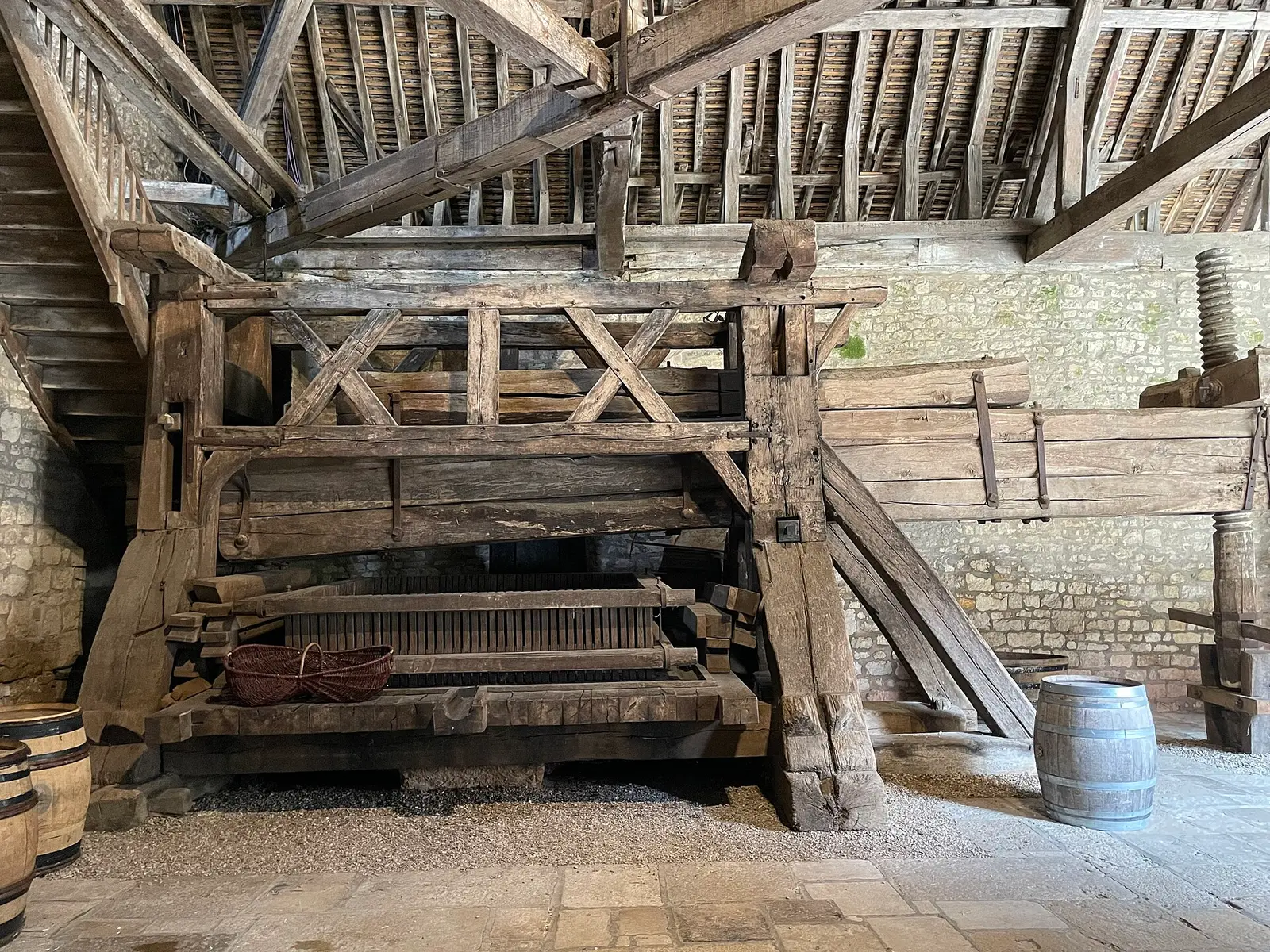
Monks from Cîteaux built the Clos de Vougeot in the 12th century, including its cuverie with four giant wine presses and an above-ground cellar, the Grand Cellier. The château describes the monks as farming with an intuitive sense of the local terroirs.5,6
The Climats association says Clos de Vougeot set the model of an enclosed plot tied to a monastic cellar. That model spread to abbey vineyards in Germany, Switzerland, Spain and Portugal.2
According to Oz Clarke, the Cistercians plotted the strengths and weaknesses of each parcel's geology and microclimate. He credits them with starting the cru idea at Vougeot, which was fully walled by 1336.3
Kloster Eberbach in the Rheingau was founded in 1136 by Cistercians from Clairvaux. Its winery says wine became the abbey's main commodity and economic base in the 12th and 13th centuries.4,7
The German Wine Institute says Eberbach's monks were exempt from Rhine tolls, which let them dominate the wine trade downriver to Cologne. The abbey held a storehouse in Cologne by 1162.8
The French Revolution confiscated and sold vineyards owned by the nobility and clergy in Burgundy. Eberbach was dissolved in 1803 and passed to the House of Nassau-Usingen, and its vineyards kept being farmed.2,4,7
How we know
The Rule of Saint Benedict, followed by Benedictines and Cistercians, sets a daily measure of wine called a hemina. It urges monks to drink sparingly and tells communities where wine is scarce to accept it without complaint.1,9
Eberbach's 1730 cabinet cellar for its best wines is dated by a carpenter's bill from Eltville. The estate calls that cellar the origin of the word 'Cabinet' on later German labels, which is its own claim.7,8
Eberbach's cellar book recorded the benefits of late-harvested, noble-rotten grapes in 1753, according to the estate's history.7
The abbey's records list a 'Great Barrel' of 71,000 liters, first filled in 1500 and emptied by rebels in 1525. They also record the loss of 384,000 liters of stored wine and the medieval library when troops took the abbey in 1631.4
Written place names follow the monks' era: the word 'climat' first appears in writing in 1584, in a document about Clos de Bèze, and maps of Dijon from 1550 and 1567–1571 name vineyard plots.2
What it left behind
The Château du Clos de Vougeot keeps its medieval vat house, presses and Cistercian cellar. It has been a Historic Monument since 1949 and is the headquarters of the Climats of Burgundy, a UNESCO World Heritage site since 4 July 2015.5,6
Cîteaux is still a working abbey: monastic life resumed there in 1898, and 19 brothers live under the Rule of Saint Benedict.1
Kloster Eberbach is run by a non-profit foundation and has a museum on the upper floor of its north and west wings. The State of Hesse's wine estates still make wine there, and the Steinberg vineyard has belonged to the abbey since 1239.4,10
The Eberbach treasury holds bottled wines dating back to 1706, which the estate calls the most valuable collection of German wines in the world.7
The place today: France.
Questions people ask
Did monks invent Burgundy's vineyard system?
Not alone. Wine reached Burgundy under the Romans. Monks, dukes, kings and growers all shaped the Climats; Cistercians at Vougeot are credited with studying parcels closely and walling them.2,3,11
When was the Clos de Vougeot wall finished?
Oz Clarke writes that the Clos de Vougeot was fully enclosed by 1336. The château itself dates its first buildings to Cîteaux monks in the 12th century.3,6
Sources
- Histoire cistercienne, Abbaye de Cîteaux. Accessed 2026-11-18.
- Historic timeline, Association des Climats du vignoble de Bourgogne. Accessed 2026-11-18.
- History of wine in 100 bottles: Monasteries – Clos de Vougeot, Decanter China (from The History of Wine in 100 Bottles) (2017). Accessed 2026-11-18.
- History, Stiftung Kloster Eberbach. Accessed 2026-11-18.
- History, Château du Clos de Vougeot. Accessed 2026-11-18.
- Château du Clos de Vougeot, Château du Clos de Vougeot. Accessed 2026-11-18.
- Treasured Wines (history of the winery), Hessische Staatsweingüter Kloster Eberbach. Accessed 2026-11-18.
- The Monastery of Eberbach, Wines of Germany (Deutsches Weininstitut). Accessed 2026-11-18.
- Saint Benedict's Rule for Monasteries, ch. 40: On the Measure of Drink (trans. Leonard J. Doyle), Order of Saint Benedict (1948). Accessed 2026-11-18.
- Winery, Kloster Eberbach. Accessed 2026-11-18.
- 2,000 years of history, Association des Climats du vignoble de Bourgogne. Accessed 2026-11-18.