The people
- Bronze Age communities of Denmark: Around 1370 BCE, a girl aged 16 to 18 was buried at Egtved in Jutland with a bark bucket that had held a fermented drink, probably beer sweetened with honey.1,2
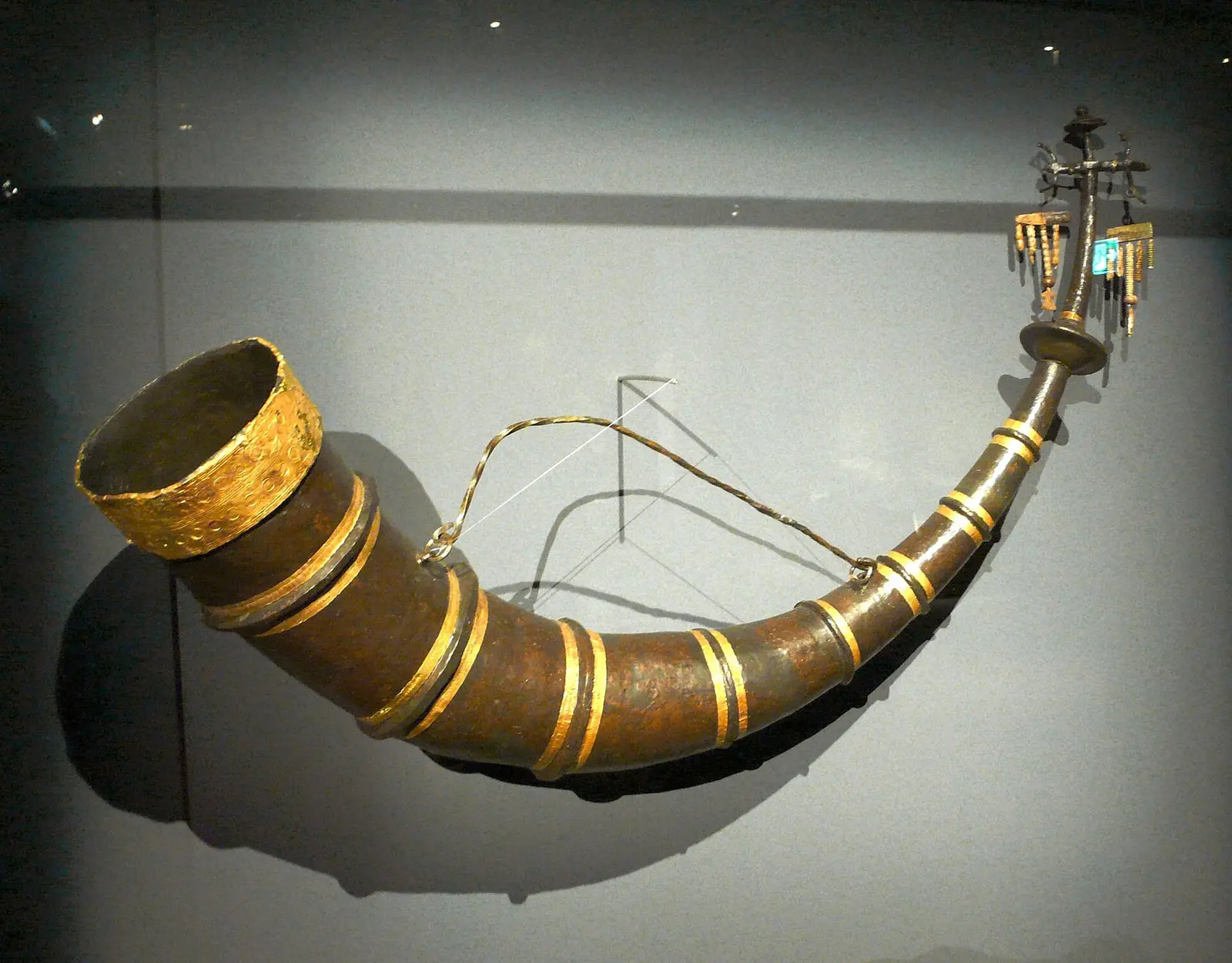
- Early Celtic elites of central Europe: Celtic communities made mead flavored with herbs and flowers; nine drinking horns were found in the early Celtic princely grave at Hochdorf, Germany, dated to around 540 BCE.3,4
- Viking Age Scandinavians: In the Viking Age, beer and mead were brewed for feasts and rituals, women most likely did the brewing, and the mistress of the house filled guests' cups in order of rank.5
- Poles and other West Slavic peoples: A 12th-century biographer of St. Otto described the Pomeranians (called 'Lechites' in the old source) as preferring beer and mead to wine, and mead later graced the Jagiellonian royal table.6
- Lithuanians and Old Prussians (Baltic peoples): Historical sources mention mead in Prussia in the 11th century, and it was served at the courts of Lithuania's rulers and on manors.7
The story
Mead is a wine-like drink made by fermenting honey and water, often spiced with herbs. Denmark's Viking Ship Museum puts its strength at about 8 to 12% alcohol.8
Honey drinks in the north reach back to the Bronze Age. The Egtved Girl was buried in an oak coffin in the summer of 1370 BCE with a bark bucket at her feet that held a fermented drink, probably beer sweetened with honey, made with wheat, cowberries or cranberries and bog myrtle.2,9
Chemical tests at other Danish and Swedish sites, from about 1500 BCE to the first century CE, found a mixed 'Nordic grog' of honey, bog cranberry, lingonberry and cereals, flavored with bog myrtle, yarrow, juniper and birch resin.10
Among the Celts, mead flavored with herbs and flowers cost more than beer but less than imported grape wine. Archaeologist Bettina Arnold describes 'competitive feasting', in which people seeking status tried to outdo one another through feasting.3
In the Viking Age, mead was an exclusive drink, probably saved for special occasions, large feasts and religious rituals, because gathering enough honey took great labor or money.8
In Norse myth, mead is the drink of wisdom and poetry. In the story of the poets' mead, Odin wins it from Gunnlöd, daughter of the giant Suttung, and escapes in the form of an eagle.8
In Poland, mead was served in villages under the Piast dynasty and at the Jagiellonian court. In the 15th century the Venetian diplomat Ambrogio Contarini noted its strength. From the 18th century, cheaper vodka pushed it aside.6
In Lithuania, where it is called midus, mead making flourished until the 18th century. It declined as beekeeping in hollow trees died out and grain went increasingly to spirits and beer.7
How we know
Pollen analysis of the brown crust in the Egtved bucket identified its plant ingredients, including large amounts of lime (linden) pollen. A yarrow flower placed on the coffin shows the burial took place in summer.2,9
A Penn Museum team led by Patrick McGovern analyzed residues from Nandrup (c. 1500 to 1300 BCE), Kostræde, Juellinge and Havor on Gotland using infrared spectroscopy and mass spectrometry, and reported imported grape wine in some vessels as early as 1100 BCE.10
Written evidence comes from the Eddas. Hávamál, a wisdom poem in the Poetic Edda, urges caution with drink, and many poetic terms for women in Snorri Sturluson's Skáldskaparmál allude to drinks and drinking vessels.5
Polish records include a 12th-century life of St. Otto and the 15th-century account of Ambrogio Contarini, while Lithuanian sources mention mead in Prussia in the 11th century.6,7
What it left behind
The Egtved Girl can be seen in the Danish Prehistory exhibition at the National Museum of Denmark in Copenhagen.1
In 2008 the European Union registered four Polish meads as Traditional Specialities Guaranteed. They are named by their honey-to-water ratio: półtorak (1 to 0.5), dwójniak (1 to 1), trójniak (1 to 2) and czwórniak (1 to 3).6,11
Lithuanian mead production was revived in 1959 at the Stakliškės brewery, using a method restored by A. Sinkevičius; the company now makes mead at 12 to 15% as well as stronger mead-based drinks.7
The Penn Museum team notes that many Nordic grog ingredients later reappeared in medieval gruit beers, and names Gotlandsdryka, made from barley, honey and juniper on Gotland, as the drink's closest modern relative.10
Questions people ask
What is mead?
Mead is honey wine: honey and water fermented together, often spiced with herbs. It is made without grapes.7,8
Was the Egtved Girl buried with mead?
Her bark bucket held a fermented drink that the National Museum of Denmark describes as probably beer sweetened with honey, made with wheat, berries and bog myrtle. It is a honey drink, but the museum calls it beer, not mead.2
Did Vikings drink mead?
Yes. Beer and mead were their main brewed drinks. Mead was costly and was probably kept for feasts and religious rituals, and in Norse myth it is the drink of wisdom and poetry.5,8
Sources
- The Egtved Girl, National Museum of Denmark. Accessed 2026-11-18.
- The Egtved Girl's beer, National Museum of Denmark. Accessed 2026-11-18.
- Beer and bling in Iron Age Europe, University of Wisconsin-Milwaukee (via ScienceDaily) (2012). Accessed 2026-11-18.
- Das Museum, Keltenmuseum Hochdorf/Enz. Accessed 2026-11-18.
- The Viking World: Meaningful drinking, Swedish History Museum (Historiska museet). Accessed 2026-11-18.
- Trunek z pasieki rodem, Rzeczpospolita (2008). Accessed 2026-11-18.
- Midus, Visuotinė lietuvių enciklopedija (Universal Lithuanian Encyclopedia). Accessed 2026-11-18.
- Kom og smag visdommens drik – mjød!, Viking Ship Museum (Vikingeskibsmuseet), Roskilde (2021). Accessed 2026-11-18.
- The Egtved Girl's grave, National Museum of Denmark. Accessed 2026-11-18.
- Penn Museum team finds evidence for 3,000+-year-old 'Nordic grog' tradition, University of Pennsylvania Museum (news release via EurekAlert!) (2014). Accessed 2026-11-18.
- Polskie miody chronione znakiem Gwarantowana Tradycyjna Specjalność, e-prawnik.pl (2008). Accessed 2026-11-18.