The people
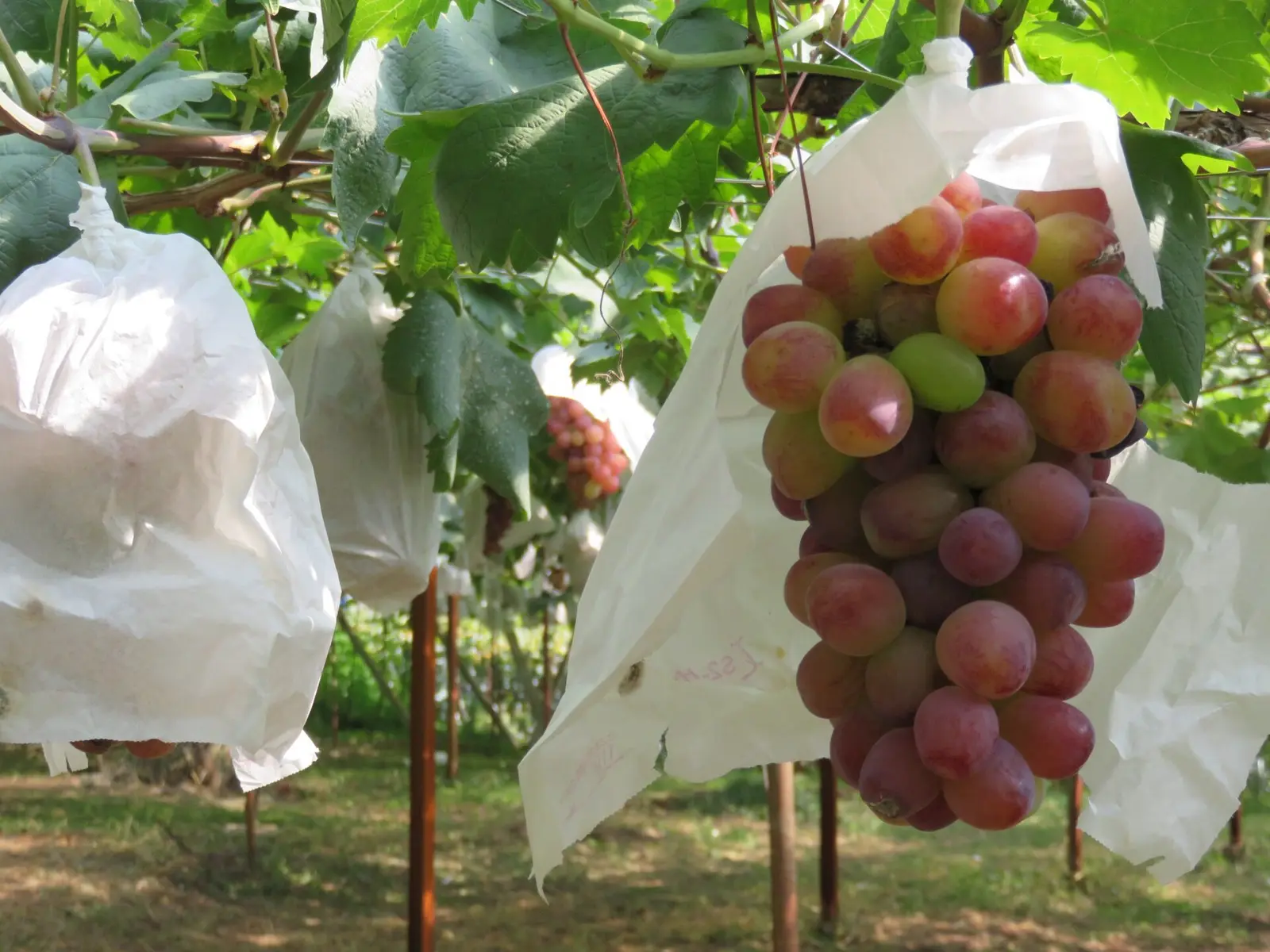
- Grape growers of Katsunuma and the Kofu Basin: Farmers in the eastern Kofu Basin have grown grapes for at least 800 years, and possibly 1,300, using their own Koshu-style overhead trellises suited to Japan's humid climate.1
- Takano Masanari and Tsuchiya Ryuken: Two young men sent to France in 1877 by the new Dainippon Yamanashi Wine Company to learn winemaking. Their knowledge later passed to local people in Katsunuma.2
- Miyazaki Kotaro: A friend and shareholder of the first company who bought its equipment after it failed and started the Kaisan Winery in 1888.3
The story
Grape growing in Japan is said to have begun more than a thousand years ago, but wine was made from grapes only after the Meiji period began in 1868.2,4
According to legend, in 718 the monk Gyoki dreamed of Yakushi Nyorai, the Buddha of medicine, holding a bunch of grapes at Katsunuma. He founded Daizenji temple there and is said to have taught local people to grow the grapes later known as Koshu, for medicine.4,5
A second legend credits a farmer, Amemiya Kageyu, with starting grape growing in the same area in 1186.4
Koshu is not a pure European grape. A 2015 genetic study estimated it is about 70% Vitis vinifera, with the rest most likely from wild East Asian vines, and its maternal line is closest to the Chinese wild grape Vitis davidii.6
In 1877 a private company, the Dainippon Yamanashi Wine Company, was founded in Katsunuma and sent Takano Masanari and Tsuchiya Ryuken to France. The Yamanashi government backed the venture, and wine was also national policy at a time of rice shortages, since rice was needed for sake.2,3
The pair's dry white wine did not sell, because Japanese drinkers were not yet used to it, and the company was dissolved in 1886. Their skills stayed with local growers and opened the way for later Katsunuma wineries.2,3
Miyazaki Kotaro bought the first company's equipment, founded the Kaisan Winery in 1888, and trademarked the Daikoku brand in 1891. Château Mercian traces its roots to the Dainippon Yamanashi Wine Company.2,3
In 2010 Koshu became the first Japanese grape listed by the International Organisation of Vine and Wine (OIV), and in 2013 'Yamanashi' became Japan's first geographical indication for wine. The prefecture has around 80 wineries, a little under half of them in Katsunuma.2
How we know
Researchers used 48 ancestry-informative DNA markers (SNPs) and partial chloroplast DNA sequences to trace Koshu's mixed ancestry. They say the grape's travel along the Silk Road gave many chances for crossing with wild vines, but the timing is unknown.6
Daizenji's main hall was completed in 1286 and is a National Treasure, the oldest surviving building in Yamanashi. Its cherry-wood statue of Yakushi holding grapes is 85.5 cm tall.5
Dates for the start of grape growing differ even in one official source: FAO's heritage listing names 762 CE but also says grapes have been grown in the area for at least 800 and possibly 1,300 years.1
What it left behind
In Koshu City, Miyakoen, Miyazaki's winery built in 1896, is now a museum of Japan's wine history. The Château Mercian Wine Museum next door is housed in a wooden winery building from 1904.3,7
Daizenji, the 'grape temple', still grows grapes and sells wine under its own name, places wine and grapes on its altar as offerings, and shows its Yakushi statue to the public once every five years.4,5
FAO named the Kyoutou fruit growing system of eastern Yamanashi a Globally Important Agricultural Heritage System in 2022, partly for its Koshu-style trellises.1
Katsunuma has nearly 40 wineries, many open for tours, and holds a grape festival on the first Saturday of October.7
Questions people ask
Is Koshu a native Japanese grape?
It has grown in Japan for centuries and is called native, but DNA shows it is about 70% European Vitis vinifera mixed with wild East Asian vines, possibly after travel along the Silk Road.2,4,6
When was Japan's first winery founded?
In 1877, when the Dainippon Yamanashi Wine Company was set up in Katsunuma, Yamanashi. It sent two young men to France to learn winemaking, but closed in 1886.2,3
What is the legend of the Koshu grape?
One story says the monk Gyoki saw the Buddha of medicine holding grapes in 718 and founded Daizenji temple. Another credits the farmer Amemiya Kageyu in 1186.4
Sources
- Fruit Cultivation System in Kyoutou Region, Yamanashi, Japan, FAO, Globally Important Agricultural Heritage Systems (2022). Accessed 2026-11-18.
- The Delicate Flavor of Koshu Wines, Government of Japan, Highlighting Japan (September 2020) (2020). Accessed 2026-11-18.
- Yamanashi wine (staff journal), Yamanashi Tourism Organization (2021). Accessed 2026-11-18.
- Daizenji, the temple in Japan devoted to grapes and wine, AFP via Free Malaysia Today (2022). Accessed 2026-11-18.
- Daizenji Temple, Yamanashi Tourism Organization. Accessed 2026-11-18.
- Genetic Analysis of East Asian Grape Cultivars Suggests Hybridization with Wild Vitis, PLOS ONE (2015). Accessed 2026-11-18.
- Katsunuma, Yamanashi Tourism Organization. Accessed 2026-11-18.