The people
- Zhang Bishi (Cheong Fatt Tze): An overseas Chinese entrepreneur who founded Changyu in Yantai in 1892. His former mansion in Penang, Malaysia, is now a heritage site.1,2,3
- Foreign winemakers in Yantai: Changyu hired European winemakers. Its own history says the first recruit, from Britain, died on the way and the second, from the Netherlands, was judged unqualified, before Max von Balboa, Austro-Hungarian vice-consul in Yantai, became chief winemaker.2,3
The story
For most of Chinese history, alcohol was made mainly from grains such as sorghum, wheat and rice. Historical records of grape wine usually name the 'western regions', today's Xinjiang and Central Asia, as its source.4
Yantai, then known to foreigners as Chefoo, was occupied by an Anglo-French force in 1860 and opened to foreign trade as a treaty port in 1861. The Chefoo Convention of 1876 was negotiated there between Britain and China.5
In 1892 Zhang Bishi founded the Changyu wine company in Yantai. China Daily calls it China's first industrial-scale red wine producer, and the company describes its founding as the beginning of industrial winemaking in China.1,3
Zhang brought in 124 European grape varieties over several years. Changyu says most of the roughly 690,000 imported vines failed, and success came only after grafting them onto local wild vine rootstock.2,3
From 1894 to 1905 the company built a large winery with an underground cellar in Yantai. It is now a cultural heritage site but still holds working barrels.1,3,6
Changyu says it bottled China's first wine in 1899 and its first Chinese brandy in 1914.3
At the 1915 Panama-Pacific International Exposition in the United States, Changyu's wines and brandy won a grand prize, which Robb Report calls the first international grand award for Chinese wine and brandy.2,3
How we know
The original winery buildings survive. China Daily reports they cover 2,666 square meters and hold more than 600 barrels, seven of them made of European oak about 100 years ago.6
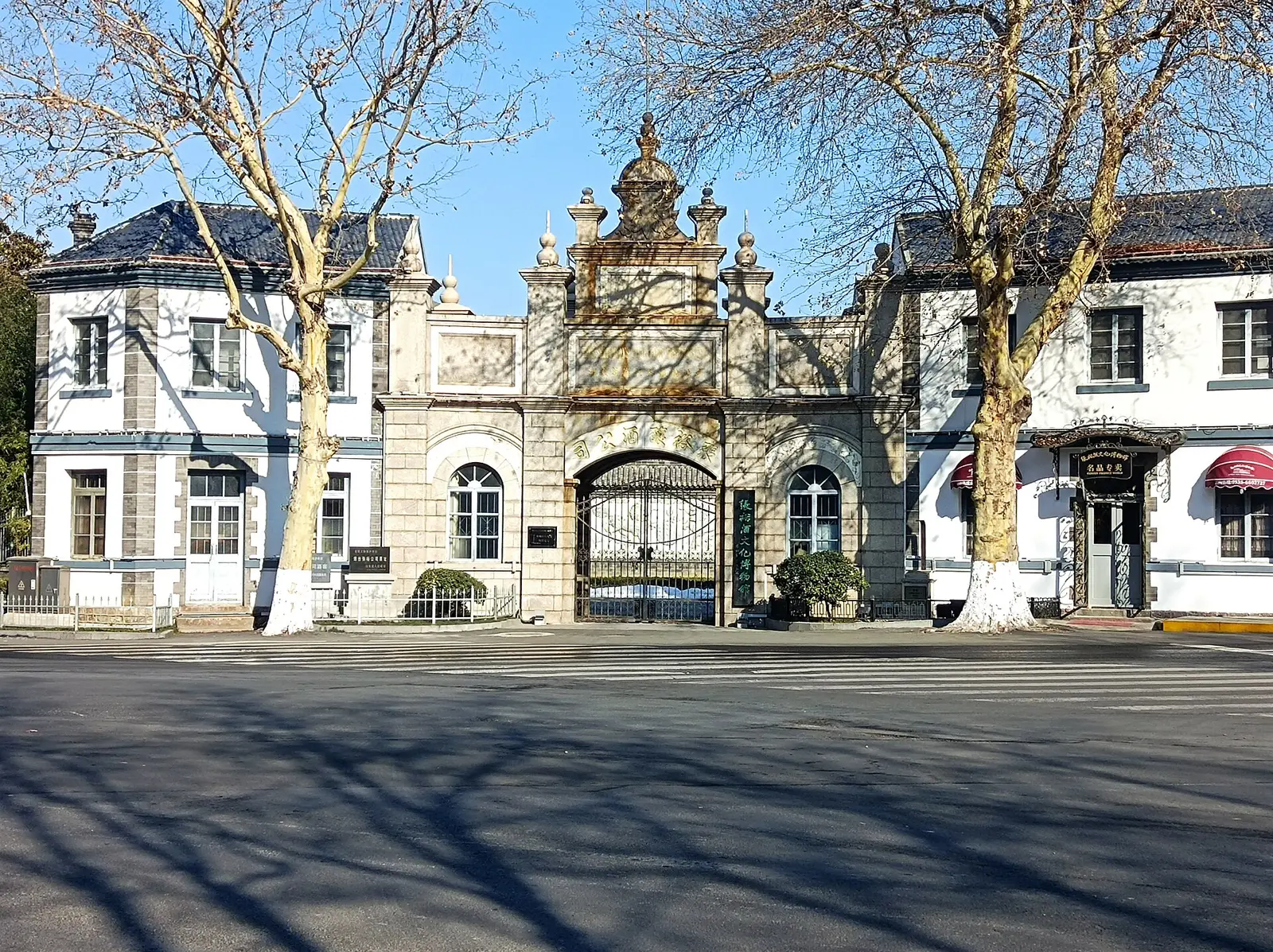
The Changyu Wine Culture Museum keeps historic photographs, artifacts and calligraphy from the company's early years.1
Much of the early detail, such as vine numbers, the winemakers' story and the 1899 first bottle, comes from the company's own history and is repeated in press coverage rather than in independent scholarship.2,3
What it left behind
The Changyu Wine Culture Museum, opened in 1992 at 56 Dama Road in Yantai's Zhifu district, has four halls and a century-old underground cellar kept at about 14°C.1,6
Changyu's 1892 Old Winery Park in Yantai displays antique grape crushers, hand-cart wine pumps and Zhang Bishi's office.7
Zhang's Blue Mansion in Penang, Malaysia, now a heritage site and boutique hotel, marked his winemaking legacy on the 130th anniversary of Changyu's founding.2
Questions people ask
What is China's oldest modern winery?
Changyu, founded by Zhang Bishi in Yantai, Shandong, in 1892. It is widely described as the start of industrial winemaking in China.1,3
Who was Zhang Bishi?
An overseas Chinese entrepreneur, also known as Cheong Fatt Tze, who founded Changyu in 1892. His mansion in Penang, Malaysia, survives as a heritage site.1,2
Was there grape wine in China before Changyu?
Yes, but it was rare. Chinese records usually link grape wine to the western regions, today's Xinjiang and Central Asia, while most alcohol was made from grains.4
Can you visit Changyu's historic cellar?
Yes. The Changyu Wine Culture Museum in Yantai's Zhifu district, opened in 1992, includes the old underground cellar and is open to visitors.1
Sources
- Changyu Wine Culture Museum, China Daily (China Services Info) (2024). Accessed 2026-11-18.
- Cheong Fatt Tze, The Blue Mansion Celebrates Its Founder's Pioneering Winemaking Legacy 130 Years Later, Robb Report Malaysia (2024). Accessed 2026-11-18.
- China's first wine company, Changyu Pioneer Wine Company. Accessed 2026-11-18.
- History snapshot: why China came late to grape wines, South China Morning Post (2016). Accessed 2026-11-18.
- Yantai, Encyclopaedia Britannica. Accessed 2026-11-18.
- Changyu Wine Culture Museum, China Daily (2017). Accessed 2026-11-18.
- Unveiling Yantai's wine wonderland: A journey through Changyu's legacy, China Daily and Information Office of Shandong Provincial People's Government (2025). Accessed 2026-11-18.