The people
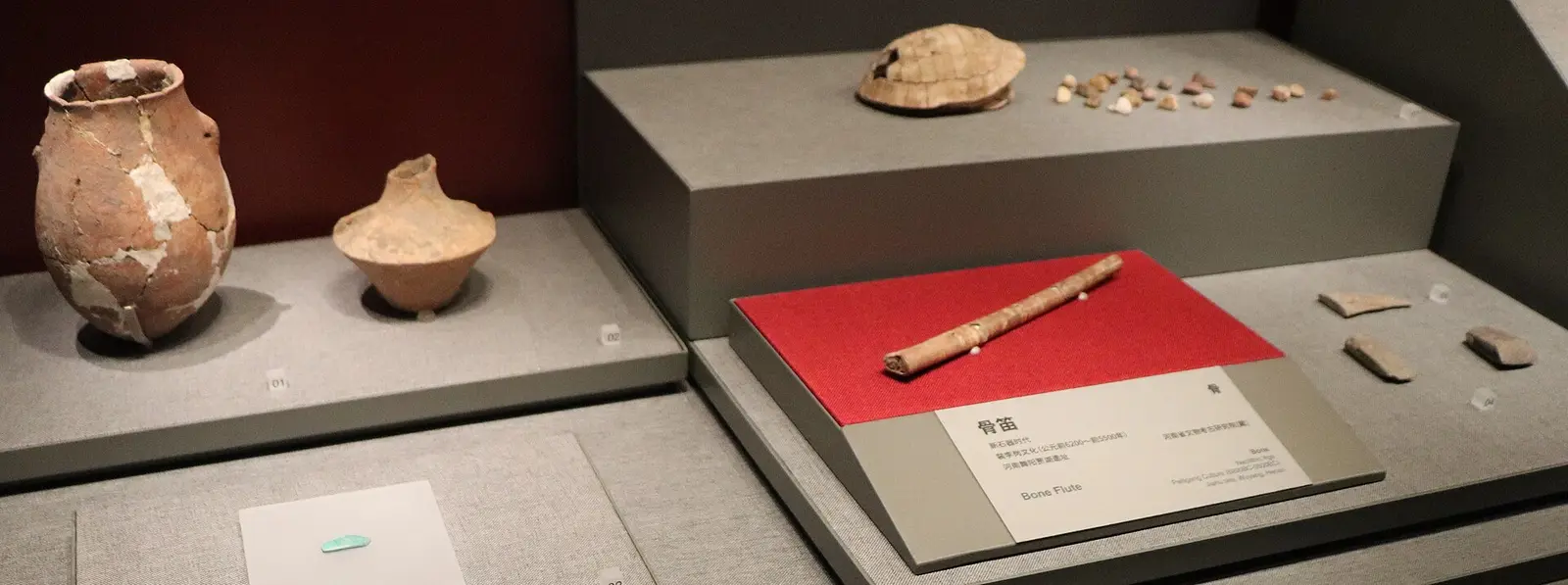
- Peiligang culture: Jiahu is a key site of the Peiligang culture of the Neolithic, dated to roughly 9,000 to 7,500 years ago.1,2
- The people of Jiahu: Jiahu's villagers grew rice, made early pottery and played flutes carved from crane bones. Rice was the only cereal found in the site's plant remains.3,4
The story
Jiahu is an early Neolithic village in Wuyang County, Henan province, in central China. Recent digs show it was a moated settlement of about 65,000 square meters.1,3
In 2004 Patrick McGovern of the Penn Museum and Chinese colleagues reported in PNAS that Jiahu pottery had held a mixed fermented drink of rice, honey and fruit, dating to about the seventh millennium BCE.3,5
The Penn Museum dates the drink to c. 7000–6600 BCE and calls it the earliest known alcoholic beverage, more than 500 years older than the earliest Middle Eastern grape wine known at the time.5
It was not a grape wine. The fruit could have been hawthorn, grape, or both: the paper calls Chinese hawthorn an especially strong candidate, since it holds about four times as much tartaric acid as grape.3,5
Grape is still possible. Seeds of a presumably wild grape are the main ancient fruit remains found at Jiahu, but the authors note that grape wine in China is generally thought to start with the domesticated Eurasian grape, introduced about six millennia later.3
The 2017 study of Neolithic Georgia acknowledged Jiahu as older, and National Geographic described the Chinese drink as made from grains and wild fruit about a thousand years before Georgia's grape wine.6,7
Jiahu is also known for some of the earliest playable musical instruments, the earliest domesticated rice in northern China, and possibly the earliest Chinese pictographic writing.3,5
The same 2004 study analyzed liquids sealed in Shang and Western Zhou bronze vessels from Anyang and the Changzikou Tomb, c. 1250–1000 BCE. They were rice or millet drinks, called jiu or chang, likely made by mold-based brewing, a distinctly Chinese method.3,5
How we know
The team extracted residues from 16 pottery vessels, mostly from their bases, including two-handled narrow-mouthed storage jars and jars with high flaring necks. Thirteen were chemically alike, suggesting they held a similar liquid.3
Methods included gas and liquid chromatography with mass spectrometry, infrared spectrometry, stable carbon and nitrogen isotopes, and spot tests for tartaric acid.3,5
Tartaric acid in all 13 matching samples points to fruit. A run of wax compounds most likely came from beeswax, which the authors read as a sign of honey, though they note plant waxes could give a similar pattern.3
Carbon isotope values fit rice or grape rather than millet. Alcohol itself does not survive, so fermentation is inferred from the yeasts carried by honey and fruit skins.3
What it left behind
The Jiahu Site Museum displays finds from the excavations and is open to visitors. Jiahu is counted among China's top 100 archaeological finds of the 20th century.8
The Henan Museum holds a seven-hole Jiahu bone flute, 23.1 cm long, unearthed in 1987 from Tomb 282. It is one of more than 30 bone flutes found at the site between 1984 and 2001.2
Dogfish Head Brewery in Delaware re-created the Neolithic drink; it was first served at a dinner in New York City on May 19, 2005.5
Excavation continues. Since 2023 the Henan Provincial Institute of Cultural Heritage and Archaeology has found more bone flutes and what are reported as China's oldest wooden coffins, over 8,000 years old.1
Questions people ask
Was the Jiahu drink a wine?
Not a grape wine. It was a mixed fermented drink of rice, honey and fruit. The fruit was Chinese hawthorn, wild grape, or both; the study leaves either open.3,5
How old is the Jiahu fermented drink?
The Penn Museum dates it to c. 7000–6600 BCE, about 9,000 years ago, which makes it the earliest known alcoholic drink.3,5
Sources
- China's oldest wooden coffins uncovered at Jiahu Ruins in Henan, People's Government of Henan Province (from Henan Daily) (2025). Accessed 2026-11-18.
- Jiahu bone flute, Henan Museum (via China Daily) (2024). Accessed 2026-11-18.
- Fermented beverages of pre- and proto-historic China, Proceedings of the National Academy of Sciences 101(51) (via PubMed Central) (2004). Accessed 2026-11-18.
- Brookhaven Lab Expert Helps Date Flute Thought To Be Oldest Playable Musical Instrument, Brookhaven National Laboratory (via ScienceDaily) (1999). Accessed 2026-11-18.
- Jiahu's Neolithic Fermented Drink: The Earliest Known Alcoholic Beverage, Penn Museum. Accessed 2026-11-18.
- Early Neolithic wine of Georgia in the South Caucasus, Proceedings of the National Academy of Sciences (via PubMed Central) (2017). Accessed 2026-11-18.
- Oldest Evidence of Winemaking Discovered at 8,000-Year-Old Village, National Geographic (2017). Accessed 2026-11-18.
- Jiahu Site proves ancient Chinese highly evolved civilization, People's Government of Henan Province (from China Daily) (2024). Accessed 2026-11-18.